Vacation ruined before you even leave the runway? Research from the University of Arizona found that tray tables rank among the germiest surfaces on planes. What if you discovered that the first few minutes after boarding could make or break your flight? Veteran travelers have rituals as set as a pre-flight cocktail. From seat checks to ninja-level bag placement, these micro-moves turn chaos into a Zen cruise. We’ve sifted through the fluff to bring you hacks that are legit, not just aspirational.
1. Seat and Equipment Check
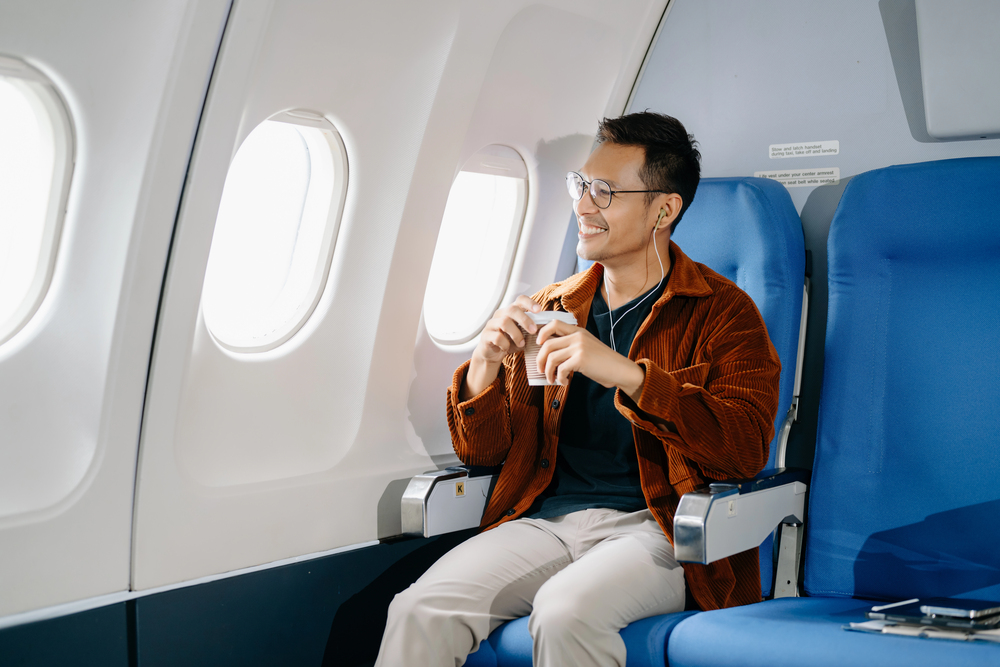
Before settling in, verify your seat number and test everything that matters.
Before settling in, verify your seat number—airlines love a last-minute switcheroo. Then, give that seat a full physical. Recline, tray table, charging outlets—test it all. You wouldn’t buy a used car without kicking the tires, right?
If something’s busted, flag it before those doors seal. Need a seatbelt extender? Ask discreetly; flight attendants have seen it all. And resist the urge to upgrade yourself to an empty row until the crew gives the “all clear”—otherwise, you’re just playing musical chairs with turbulence.
2. Overhead Bin and Bag Organization
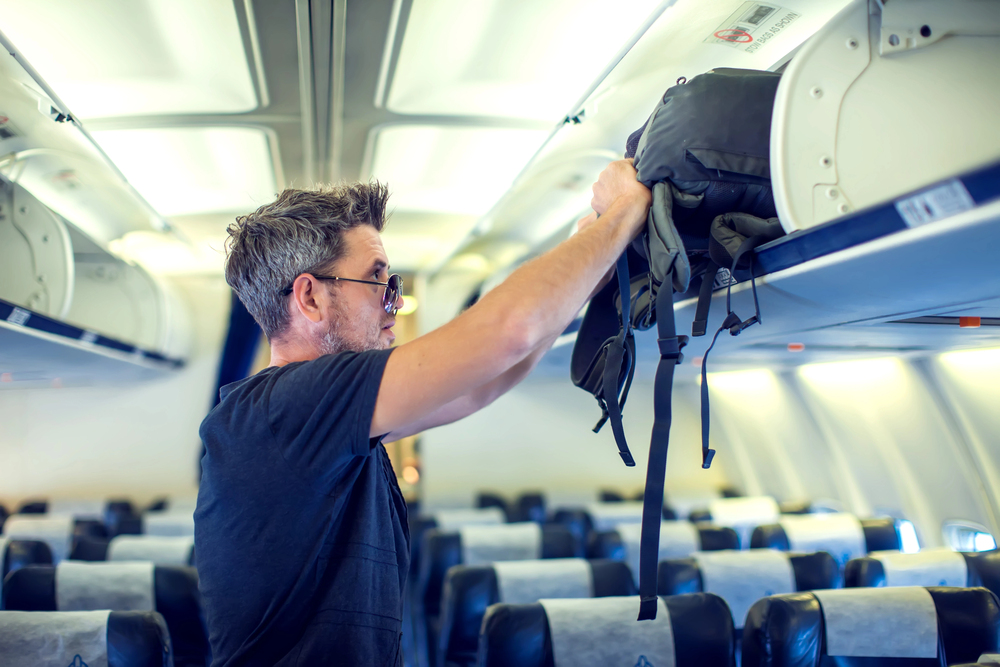
Keep your luggage shenanigans brief and efficient.
Overhead bins aren’t your personal Tetris game, so keep it simple. If you’re lugging a souvenir that resembles a medieval weapon, maybe check that sucker. Wheels-first or handle-first—whatever makes sense given the geometry of the bin.
Don’t be “that” person wrestling bags like you’re auditioning for Cirque du Soleil. Cabin crew aren’t paid to hoist your 50-pound luggage into the overhead—so if you can’t lift it, check it. Stow your essentials under the seat: passport, meds, that emergency chocolate stash. Gate-checking your bag is always a “maybe” situation.
3. Personal Item Preparation and Security
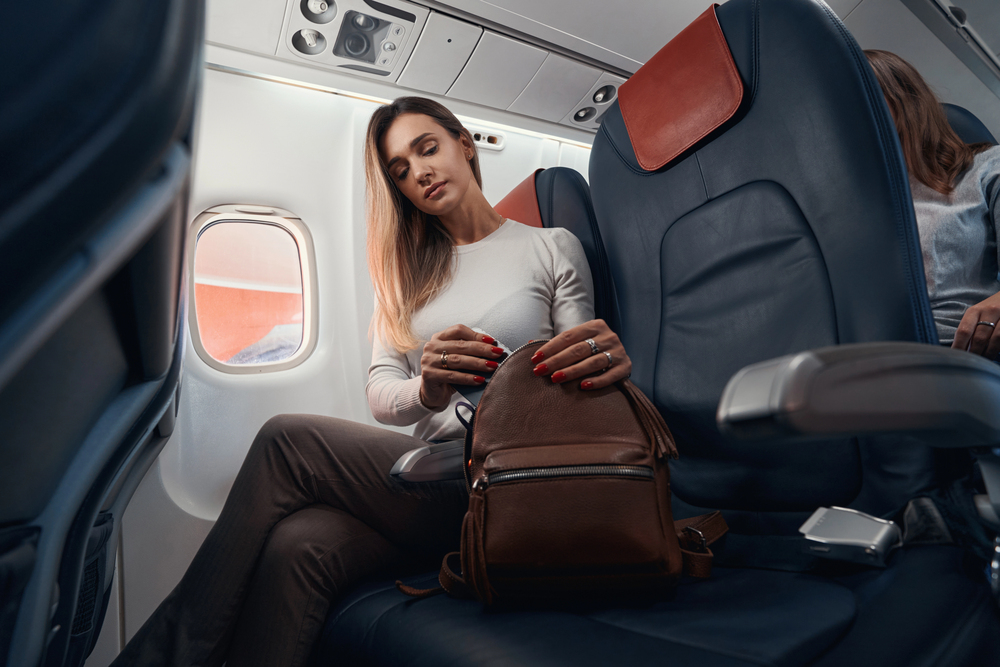
Valuables belong in zippered pockets, not seat pockets or floors.
Turns out, losing your valuables is a surprisingly common travel hazard. The fix is easier than explaining crypto to your grandma. First, stash your passport, wallet, and phone in a zippered pocket. That seat pocket looks tempting, but it’s basically a black hole for valuables—skip it.
Your stuff isn’t safer on the floor either. That liner or pouch you’ve been side-eyeing? It’s now your bag’s bodyguard. Photograph your passport and email it to yourself, just in case some light-fingered traveler decides to upgrade their life with your identity.
4. Sanitization
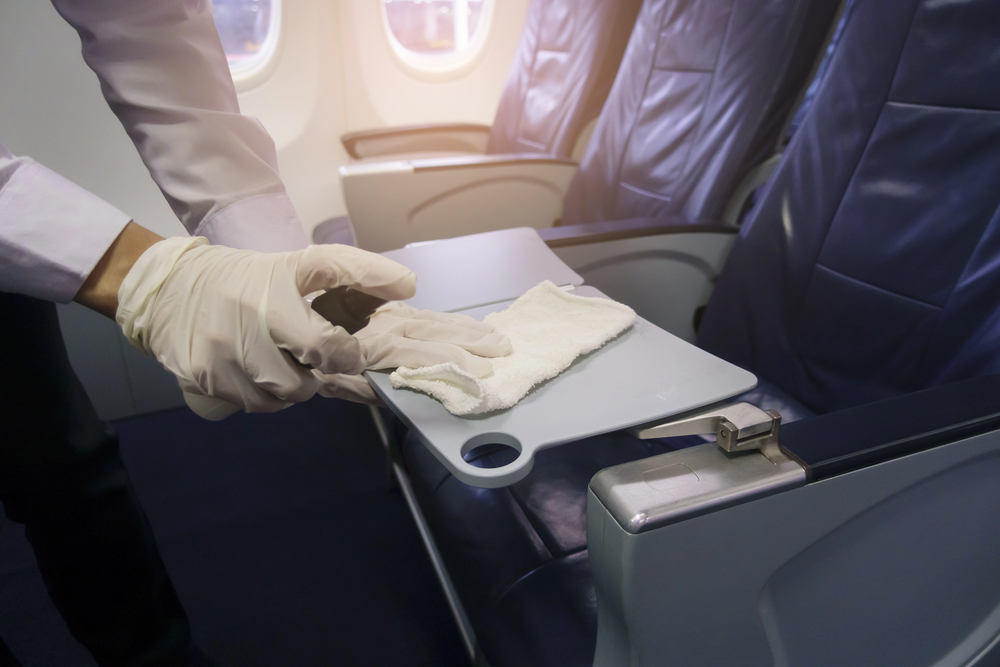
The University of Arizona confirms tray tables are germ factories worth cleaning.
Ever watch your kid lick a tray table? Those tray tables are among the germiest surfaces on planes, so give it a once-over. Your “touch zone”—armrests, seatbelt buckle, the one window shade that actually works—deserves the same wipe-down.
Don’t forget your devices either. They’re basically petri dishes after airport security, so swipe those screens too. Grab some skin-safe wipes for this task (unless you enjoy the faint smell of chlorine on your hands for the next three hours).
5. Quick Safety and Comfort Checks
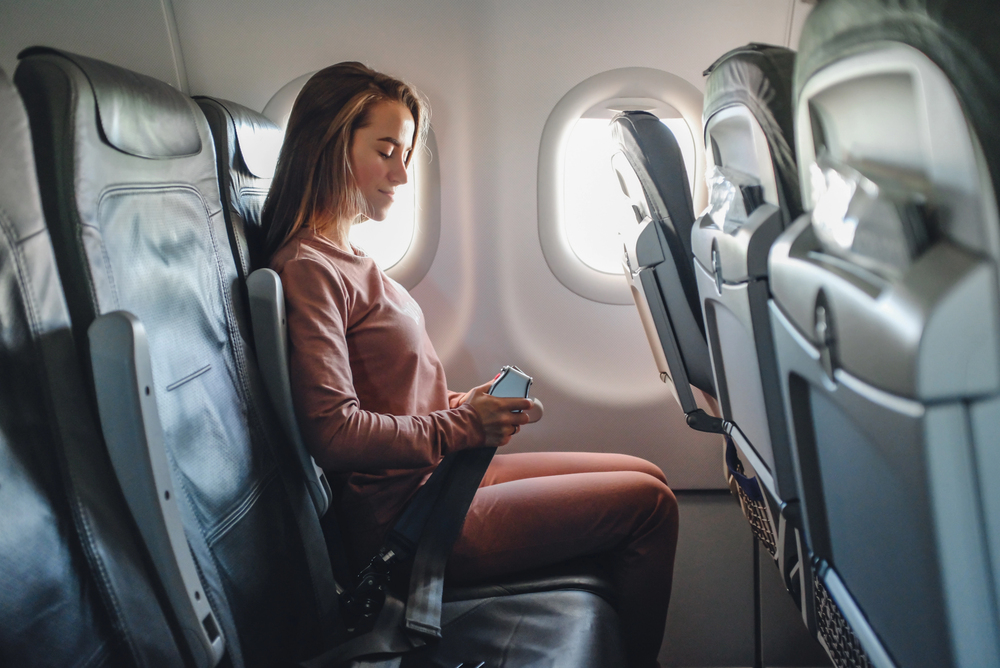
Know your exits and confirm your life vest is actually there.
Scope out those exits—count the rows forward and back, because in an emergency, nobody has time to read. Then, confirm your life vest is actually under your seat; consider it the aerial version of checking if you have clean underwear on a first date: essential.
Crack open the window shade before takeoff; think of it as giving the flight crew a heads-up. According to travel expert Gilbert Ott, knowing your surroundings turns you from a nervous passenger into a zen master of the skies, which beats mainlining mini bottles of chardonnay.
6. Cabin Comfort Controls
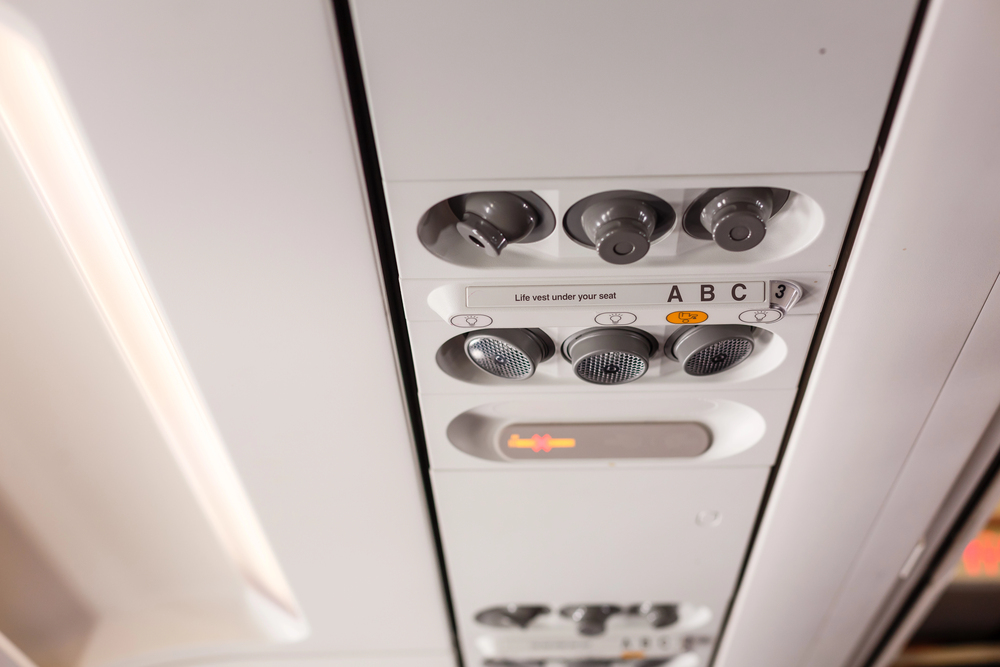
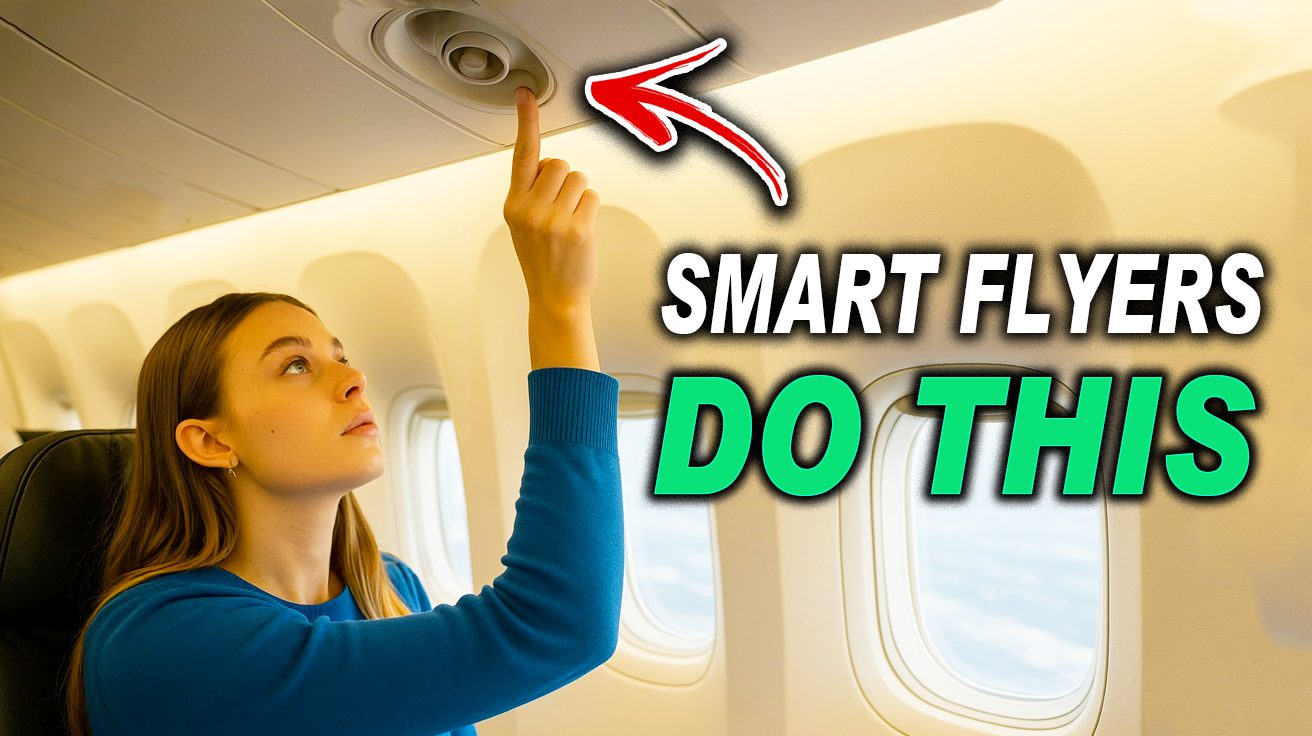
Angle your air vent for optimal flow and comfort.
Ever notice how airplane air feels like you’re trapped in a desert? Instead of blasting the overhead air vent directly at your face—hello, dry eyes and sinus misery—try angling it slightly in front of your chest. This move optimizes airflow for your personal bubble.
Filtered cabin air (often HEPA-level) has roughly 10% humidity. Combat that Sahara vibe with some moisturizer or lip balm. Unless you’re into the whole cracked-lips-and-static-cling look, of course.
7. Hydration Strategy
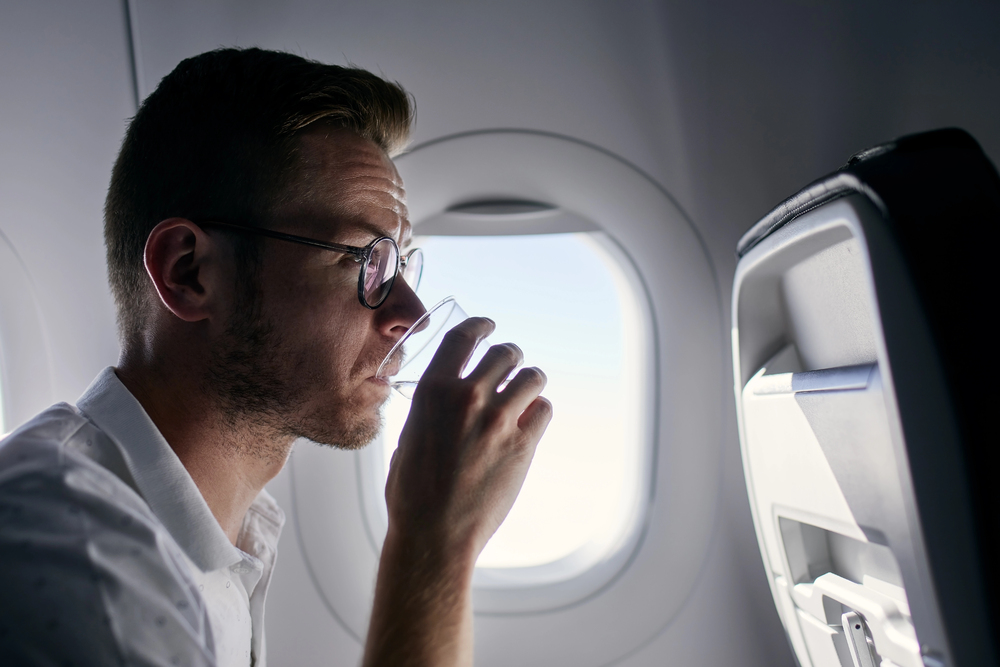
Small, frequent sips beat occasional gulps for beating cabin dryness.
Airplane cabin humidity hovers around 10%, which is basically the Sahara with wings. Unless you want your skin feeling like beef jerky by touchdown, you need a solid hydration game plan.
Drink a little water every 20–30 minutes—think sips, not gulps. Bring your own bottle to refill after security, because who wants to pay $6 for water? For flights longer than a bad rom-com, electrolyte tablets are clutch. Skip the booze and caffeine; they’re basically dehydration ninjas in disguise. Staying hydrated on a flight requires constant effort to maintain some semblance of moisture.