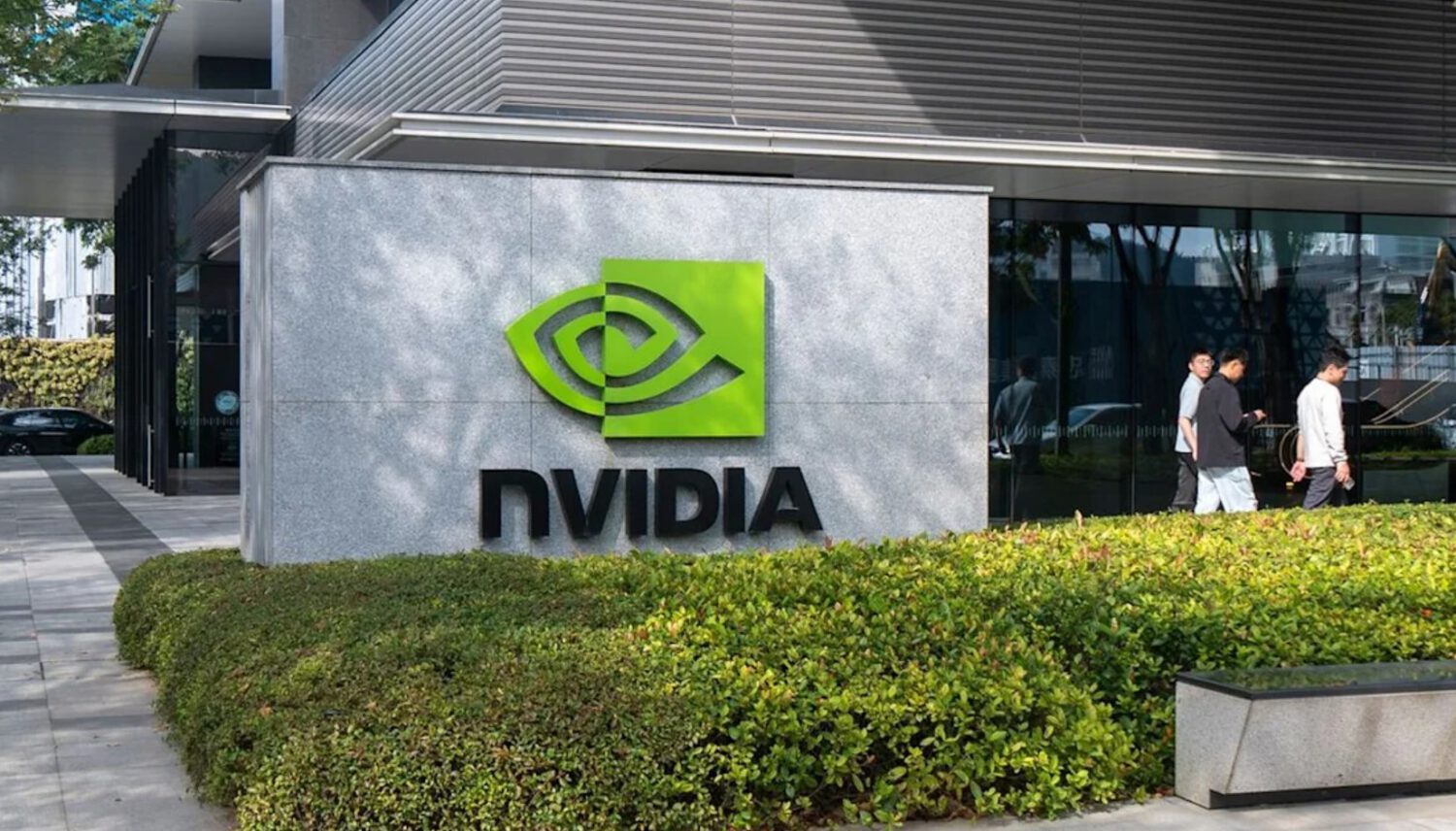
Loan documents filed with Chinese regulators identified Nvidia Blackwell hardware at the Yangtze River Delta Project data centre in Shanghai, according to Bloomberg. The site carries documented links to Alice Huang, founder of Singapore-based Megaspeed, which the US government added to its Entity List this week in connection with a suspected export-control violation investigation.
A 1,500-Kilogram Rack Pledged as Collateral
The serial number on a rack pledged for a $14 million loan led Bloomberg to its manufacturer.
Shanghai Shuoyao pledged a GB300 NVL72 rack as collateral for a 96 million yuan loan (roughly $14 million) from Shanghai Innovation Bank. Bloomberg matched a serial number in November regulatory filings against a public warranty database and identified Taiwan-based Gigabyte as the rack’s manufacturer.
Separately, Shanghai Kezhan described a GB200 server at the same facility in connection with a 90 million yuan loan obtained in late 2025. That company also listed 32 servers containing Nvidia H200 chips, an earlier model already restricted for export to China.
Hardware Subject to US Licensing Requirements
The GB300 NVL72 is one of Nvidia’s most capable AI systems and cannot be legally exported to China without a US licence.
At more than 1,500 kilograms, the GB300 NVL72 is among Nvidia’s most powerful AI systems, combining 72 Blackwell Ultra graphics processors with 36 Grace processors in a rack-scale unit. Exporting such systems to China requires a US licence.
The rack’s reported presence in Shanghai sits uneasily alongside a position Nvidia CEO Jensen Huang has previously stated: that the sheer size and weight of a GB300 rack made it too large to smuggle. That argument, as documented in Bloomberg’s reporting, appears harder to sustain given the hardware’s reported location. The loan documents do not, however, establish whether the rack was diverted illegally or how it entered China.
The Corporate Threads Running Back to Huang
Ownership records and investor presentations connect the Shanghai facility to Huang through multiple documented channels.
NeXPower Japan, which Caixin reported Huang controls, owns 83.3% of Kezhan. Megaspeed also used a rendering identified as the Yangtze River Delta Project when presenting the facility to investors in 2024, and Bloomberg reported that Huang held ties to companies that invested in the project.
Shuoyao confirmed it is one of Megaspeed’s service providers, while characterising the relationship as limited to ordinary commercial cooperation.
What the Documents Prove and What They Do Not
The filings document restricted hardware in connection with the site and financing, but leave the chain of custody unresolved.
The loan filings establish that specified equipment was documented in connection with the Shanghai site and financing arrangements. They do not establish how the equipment entered China, whether it was legally exported, or who originally purchased it.
The documents cover only hardware pledged for loans and may represent a fraction of what the facility could eventually accommodate. Local media have reported a projected capacity of as many as 800,000 servers, though that figure and the facility’s current deployment status are unconfirmed by the filings.
Silence from Nvidia, Denial from Megaspeed
The companies most directly linked to the hardware offered limited responses to Bloomberg’s inquiries.
Megaspeed has denied wrongdoing in the US investigation. Nvidia and Megaspeed did not respond to Bloomberg’s questions about the project. Gigabyte said it operates in compliance with applicable laws and declined to identify the rack’s original buyer.
A New Pressure Point for Regulators
The episode suggests that lending and collateral records may reveal controlled hardware even when ownership and shipping documentation stays opaque.
The case may illustrate how financing records can surface controlled technology when ownership and shipping documentation remains difficult to trace. It may also prompt regulators to look beyond chip exporters and distributors toward lenders, leasing companies, and data-centre operators. Those entities can document the presence of restricted hardware while leaving the chain of custody difficult to reconstruct.