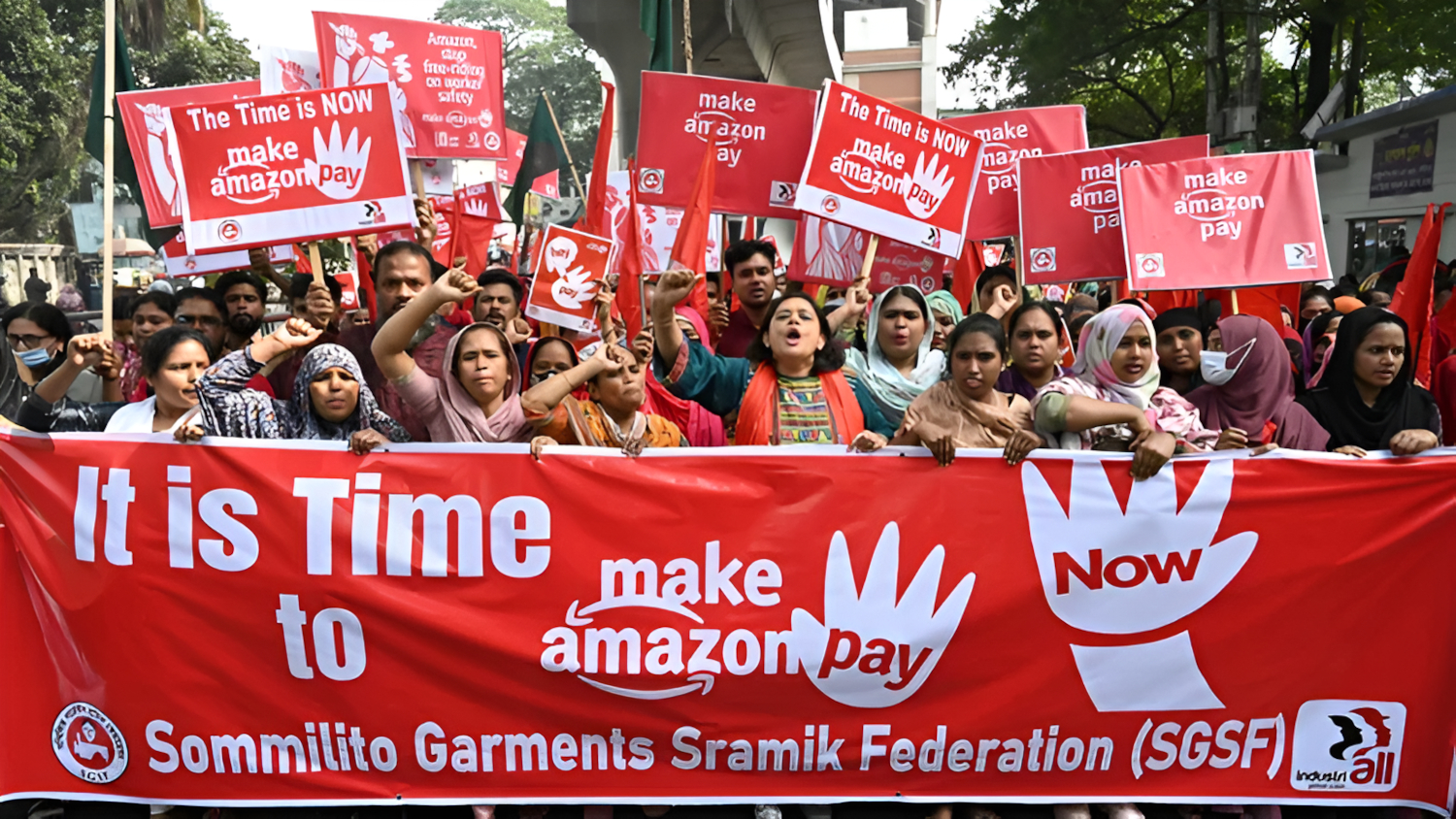
Timing is the strategy. Labor groups across more than 20 countries have coordinated strikes, rallies, and pickets for Black Friday through Cyber Monday, November 27–30, 2026.
The campaign is the sixth annual Make Amazon Pay, co-convened by UNI Global Union and Progressive International. Mobilizations span Germany, the United States, Canada, Australia, India, Bangladesh, Poland, Luxembourg, Brazil, Colombia, Uruguay, Indonesia, Japan, the Philippines, Thailand, Fiji, Singapore, and South Africa, among others.
Verdi Calls Strikes at 11 German Warehouses
German union Verdi is pressing Amazon for legally binding collective agreements across its German logistics network.
Verdi has called strikes at 11 Amazon warehouses on Black Friday: Leipzig, Bad Hersfeld, Dortmund, Werne, Rheinberg, Mönchengladbach, Frankenthal, Gera, Graben, Koblenz, and Achim. The union says warehouse work places considerable physical strain on employees.
Verdi also alleges that Amazon uses digital tracking to closely monitor approximately 40,000 workers in Germany. Amazon denies those claims and says its average starting pay already exceeds Germany’s statutory minimum wage.
U.S. Teamsters Plan Cyber Monday Protests
Teamsters are organizing demonstrations in two major cities as part of a broader campaign for union recognition across Amazon’s U.S. operations.
Teamsters are planning Cyber Monday protests in Los Angeles and Chicago. The union says its members are demanding fair wages, safer working conditions, union recognition, and basic respect on the job.
Workers at Amazon’s JFK8 facility on Staten Island voted to unionize in 2022, becoming the first Amazon warehouse employees in the United States to do so. The National Labor Relations Board found that Amazon unlawfully refused to recognize and bargain with that union and ordered it to do so; Amazon has challenged that ruling.
Canada Produces North America’s First Amazon Contract
Workers at a British Columbia warehouse obtained the first North American Amazon union contract through binding arbitration, over the company’s objections.
Workers at an Amazon warehouse in Delta, British Columbia, obtained the first union contract covering Amazon employees in North America through binding arbitration. The British Columbia Labour Relations Board ordered arbitration despite Amazon’s objections, and an independent arbitrator imposed the three-year agreement over the company’s continued opposition.
The contract includes wages rising to CAD 29 per hour by expiration and an additional week of vacation for employees with 10 years of service. It also provides severance of up to 18 weeks.
Amazon vice president J. Ofori Agboka called the arbitration process improper and unfair. He said the company may challenge the outcome in court.
Amazon’s Counter-Argument
Amazon describes its workplaces as competitive and modern, a characterization unions directly dispute.
Amazon says it provides competitive pay, benefits, and career development from an employee’s first day. The company describes its fulfillment centers and operations facilities as modern, safe, and engaging workplaces.
That position stands in direct contrast to union demands for higher wages, safer conditions, limits on workplace surveillance, and formal collective bargaining rights.
What Comes Next
The campaign’s outcome will depend on whether coordinated international pressure translates into measurable operational disruption or formal bargaining commitments from Amazon.
The immediate question is whether the actions produce measurable disruption to Amazon’s delivery network or primarily demonstrate the campaign’s geographic reach. Longer term, observers will watch whether the Delta agreement accelerates organizing at other North American sites. The parallel question is whether Amazon moves toward formal bargaining or continues contesting recognition orders case by case.