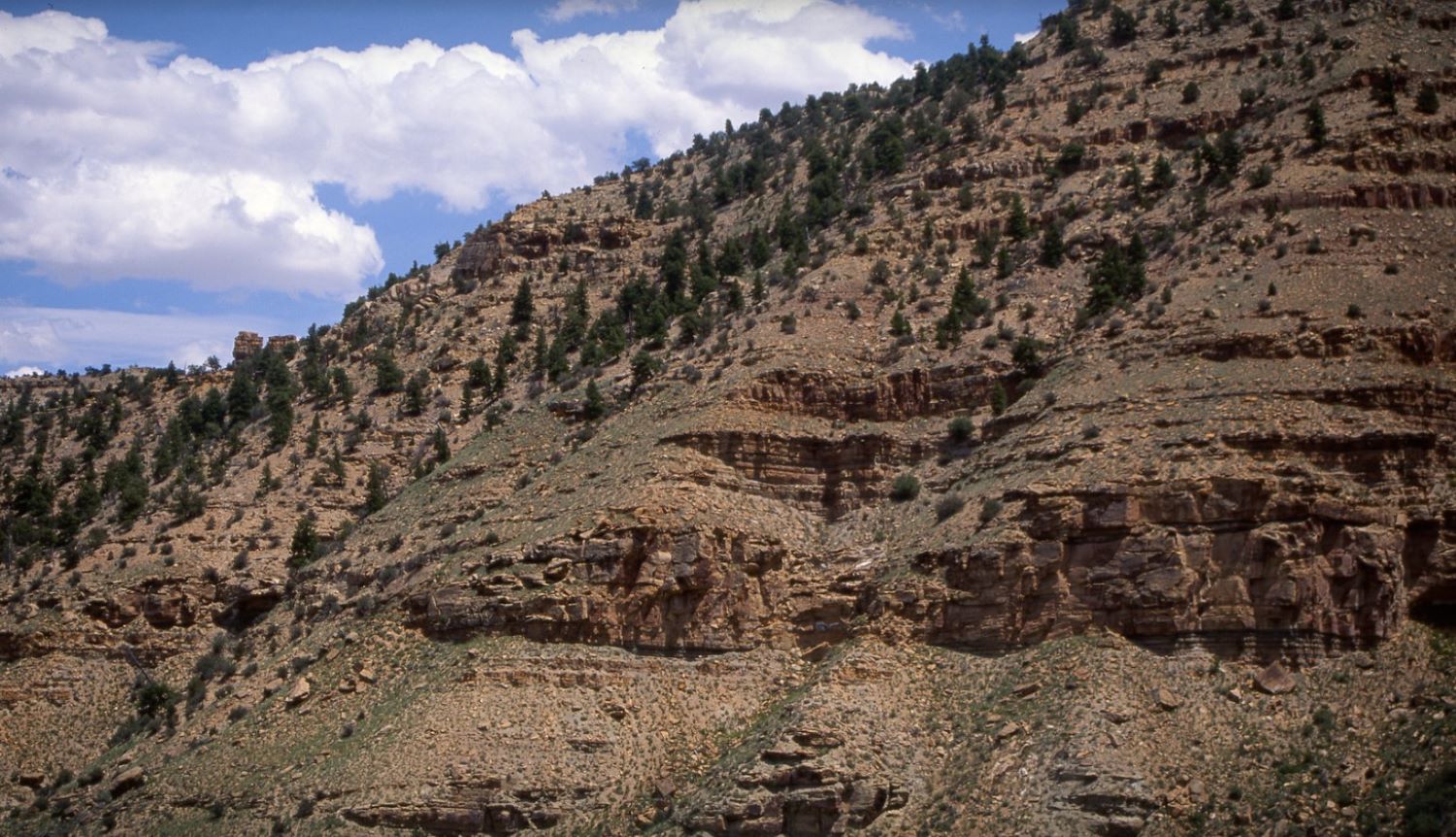
Stretching roughly 46 miles through eastern Utah red rock, Nine Mile Canyon holds a remarkable concentration of Native American imagery, historic inscriptions, and archaeological sites. The Bureau of Land Management has described it as the “world’s longest art gallery.” Gate Canyon, a tributary to Nine Mile Canyon, holds 47 historic sites, 43 of them considered eligible for the National Register of Historic Places, according to BLM documentation cited in a federal lawsuit.
The BLM approved a road-reconstruction project there anyway.
What the Project Actually Involves
Duchesne County’s plan would transform a backcountry route into a heavy-truck corridor through one of Utah’s most archaeological sites.
Duchesne County is pushing a plan to reconstruct approximately 5.3 miles of roadway in Gate Canyon, according to reporting by ABC4. The work would include widening, paving, significant realignment, and removal of canyon walls where necessary. The stated goal is a more direct transportation corridor connecting Uinta Basin oil fields to rail-loading facilities in Carbon County.
The county has also framed the project as a safety improvement, arguing that straightening existing switchbacks reduces risk for drivers. That rationale is not unreasonable on its face. What is harder to square is what the agency approved alongside it.
The Gap the Lawsuit Targets
BLM’s own site count makes its “no significant impact” conclusion difficult to follow.
The plaintiffs’ complaint, filed in U.S. District Court for Utah in October 2026, identifies at least 11 historically eligible sites within feet of the existing dirt road. Those sites include Native rock imagery and inscriptions attributed to 19th-century Buffalo Soldiers and European-American pioneers, according to the complaint and Reuters reporting. The BLM reviewed all of this in April 2026 and concluded the project would produce no significant impact on the environment, recreation, wildlife, or quality of life.
J. Michael Hansen, president of the Nine Mile Canyon Coalition, described the situation to ABC4: “It’s like constructing a highway through the Louvre Museum.”
The Legal Claims and Who Filed Them
Three conservation groups are challenging the BLM’s approval under four federal statutes, with the federal government yet to respond.
The Nine Mile Canyon Coalition, Southern Utah Wilderness Alliance, and Center for Biological Diversity filed the suit in October 2026. They brought claims under four federal statutes: the National Environmental Policy Act, the Endangered Species Act, the Federal Land Policy and Management Act, and the National Historic Preservation Act.
Plaintiffs allege the BLM rushed its review, curtailed public participation, and failed to analyze the cumulative effects of increased heavy-truck traffic through the canyon. Project documents, as reported by Mother Jones, suggest that traffic could reach hundreds of trucks daily, though that specific volume should be confirmed against the controlling BLM project document. The complaint also raises concern about potential Mexican spotted owl habitat, citing an earlier BLM assessment, and should be read as a plaintiff allegation rather than a final agency determination.
As of the Reuters report published October 8, 2026, the federal government had not filed a response. All plaintiff allegations remain contested claims before the court.
What Rigorous Review Should Look Like
NEPA requires honest analysis and genuine public participation before decisions are locked in, not a search for reasons to approve.
Under the National Environmental Policy Act, the BLM is required to assess what the evidence shows and allow meaningful public input before major decisions are finalized. When an agency documents 43 National Register-eligible sites and still issues a “no significant impact” finding, that conclusion deserves scrutiny. The plaintiffs allege that at least 11 eligible sites sit within feet of the existing road, a claim the court will now evaluate against the agency’s own record.
The complaint states that the project “will facilitate increased traffic through Gate Canyon and the adjoining Nine Mile Canyon, threatening some of the state’s most important cultural and scenic values in the larger Nine Mile Canyon region.” A court will now decide whether the federal agency’s analysis was adequate to those claims.
The outcome could influence how rigorously federal agencies must evaluate cultural and ecological consequences before approving energy transportation corridors on public land. The inscriptions in Gate Canyon, some carved by Buffalo Soldiers more than a century ago, cannot be reconstructed once they are gone.