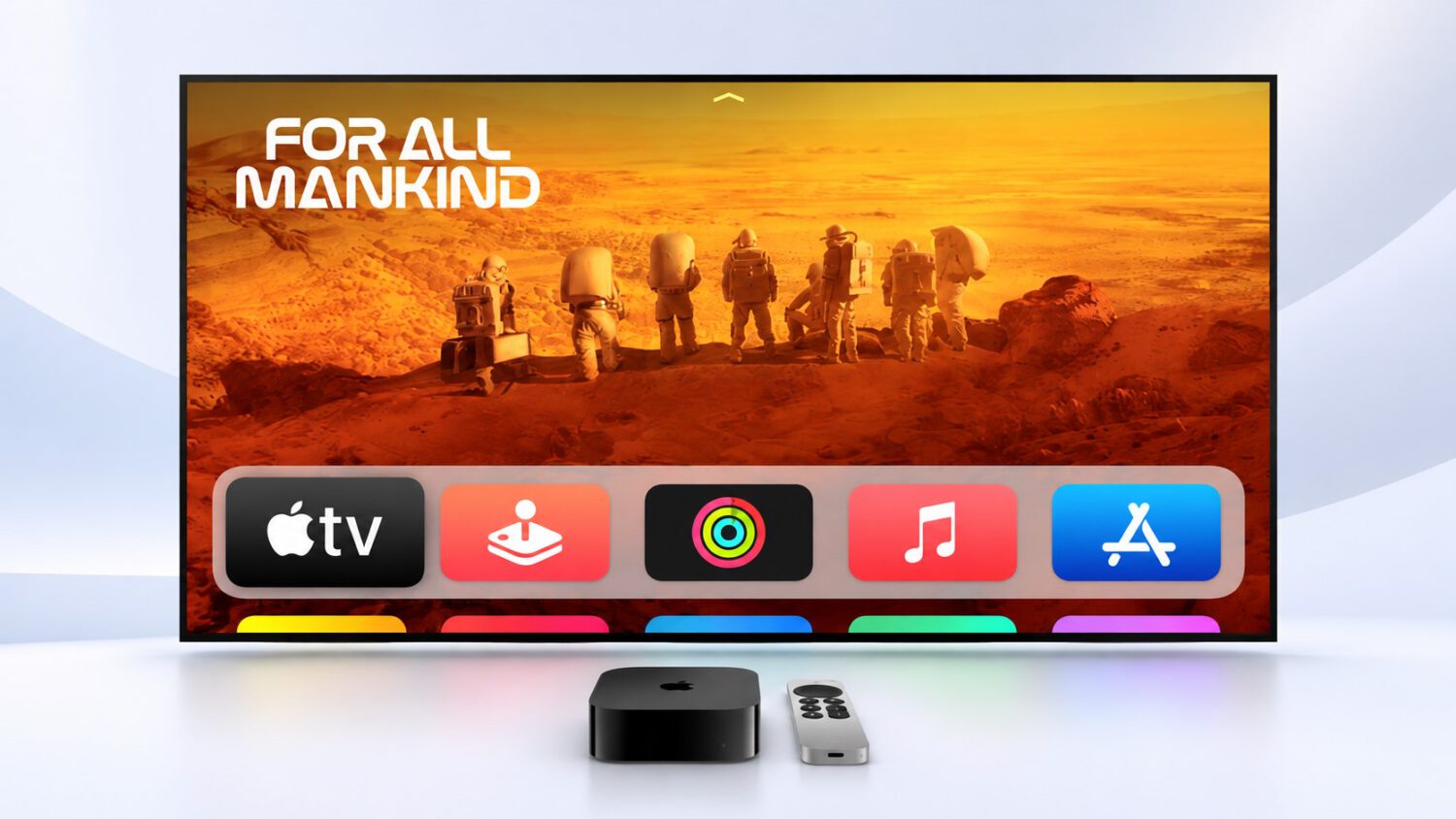
Apple’s fourth-generation Apple TV 4K is priced at $299 in the United States, up from $199 for the 64 GB third-generation model and $249 for its 128 GB configuration. The new device is sold in a single configuration: an A19 chip, 8 GB of RAM as reported by MacRumors and Macworld, and 128 GB of storage.
Apple claims up to 50% faster CPU performance and up to twice the GPU performance compared with the third-generation model. Those figures, taken at face value, represent substantial gains for a device that also doubles the system memory reported for the base previous-generation model.
The Gap Between System RAM and What Apps Can Actually Use
Eight gigabytes of RAM is on the box; two gigabytes is what any single app can use.
tvOS caps each app at approximately 2 GB of memory, regardless of how much RAM the device physically contains. According to independent reporting by 9to5Mac, the system force-quits an app when its process exceeds that threshold.
Apple’s own developer memory-reporting API also returns a 2 GB limit, matching the figure available to apps on the previous generation, according to reports by Macworld and SSBCrack. That means roughly 6 GB of system RAM is not accessible to any individual application.
Who Feels It and Who Does Not
Conventional streaming apps are unlikely to hit the ceiling; developers building graphically demanding games will.
Streaming applications typically operate well within the 2 GB limit, so users who primarily watch video are unlikely to notice the restriction. For that group, the more tangible benefits are faster navigation and improved system responsiveness, which Apple directly promotes.
For developers building graphically demanding games, the ceiling is a harder constraint. Modern titles use memory to hold high-resolution textures, world geometry, shaders, and background systems. A faster GPU accelerates how quickly assets are processed. It cannot compensate when the application cannot load more data into memory in the first place.
A Chip Configured Differently Than Its Phone Counterpart
The A19 inside the Apple TV appears to differ from the version shipped in the iPhone 17.
Diagnostic data attributed to developer @itspdfu, reported by MacRumors and Notebookcheck, indicates the Apple TV’s A19 has two performance cores and three efficiency cores. The iPhone 17 version of the same chip reportedly carries two performance cores and four efficiency cores. The canonical source post from @itspdfu was not independently verified in the available material.
The GPU reportedly has five cores. Apple has not disclosed the efficiency-core difference in its published specifications for the Apple TV.
Storage Limits Follow the Same Pattern
The device ships with 128 GB of storage, but tvOS limits any single app bundle to approximately 4 GB.
That per-app ceiling means the larger storage capacity benefits the system and a library of installed titles more than it frees space for any one large game. Developers can deliver additional content through separately downloaded asset packages, though that requires extra engineering effort.
The Question Apple Has Not Answered
Software policy, not silicon, will determine what buyers actually received for $299.
Because the 2 GB memory ceiling is a tvOS restriction rather than a hardware constraint, Apple could raise it through a software update. The company has not publicly announced any change to either the memory or storage limits.
Whether the fourth-generation Apple TV 4K justifies its price depends less on the A19’s performance figures. What matters more is whether Apple updates those limits. Until that happens, the gap between the hardware Apple is selling and the resources developers can access remains open.