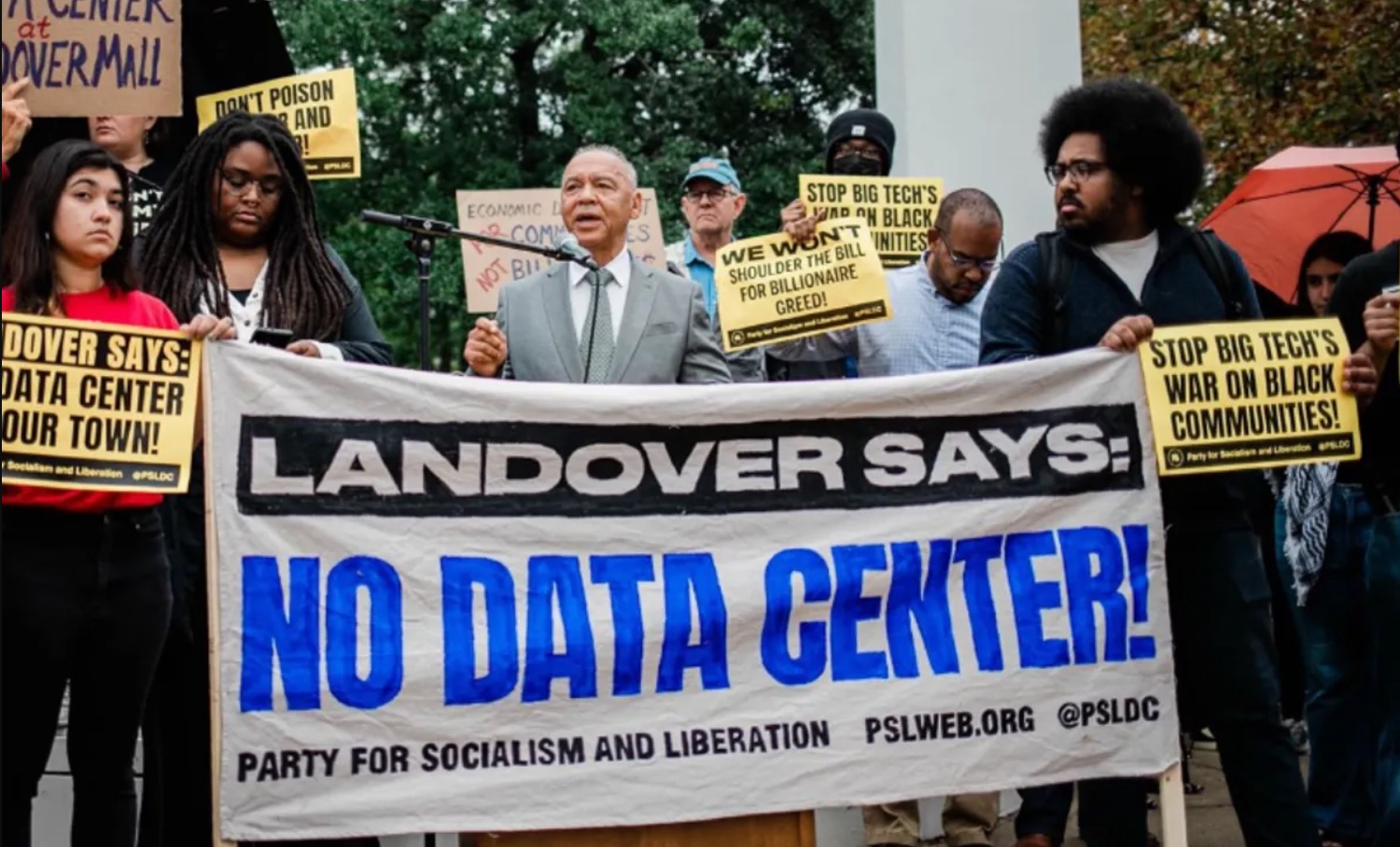
A data center is not an abstraction. It draws large amounts of electricity, can consume substantial water for cooling depending on facility design, generates noise, and reshapes land that neighborhoods had other plans for.
According to a study by researchers at George Washington University and American University’s Center for Security, Innovation & New Technology, that decision lands disproportionately on communities of color. Analyzing roughly 81,000 U.S. census tracts and location data for 5,291 data centers, the researchers found that majority-Black neighborhoods had 2.2 times the odds of hosting a data center compared with white neighborhoods in the same state.
The Numbers Hold Up Under Scrutiny
The racial disparity is wider for Hispanic and Asian neighborhoods, and it persisted after controlling for a range of economic and geographic factors.
Majority-Hispanic neighborhoods had 2.6 times the odds of hosting a data center. Majority-Asian neighborhoods had 4.2 times the odds, according to 404 Media’s reporting on the study.
Those figures held after the researchers controlled for household income, education, land costs, population, and proximity to major transmission lines. The racial pattern persisted even after accounting for the site-selection factors most commonly cited in infrastructure development.
Why This Happens Without Anyone Deciding It Should
The researchers point to structural causes rooted in history, not to deliberate targeting by developers.
Co-author Dhanaraj Thakur told 404 Media he doubted developers were deliberately seeking out communities of color. His explanation is more structural. Race is intertwined with the historical and economic factors that drive site selection, including land availability, existing power infrastructure, and historical development patterns.
That inheritance matters. Transmission corridors and power lines were often routed through majority-Black neighborhoods during the same era that federal redlining policies were cutting those communities off from investment. Data centers frequently seek locations with convenient access to reliable, high-capacity power, and that often means following an infrastructure grid shaped by decades of unequal decisions.
The Benefits Flow Somewhere Else
The largest, most economically visible data-center projects tend to land in communities that look very different from those most likely to host them.
Large hyperscale campuses, like Meta’s planned $50 billion project in rural Louisiana, are frequently promoted for their economic returns. Developers projected roughly 1,000 permanent jobs for that project, and local officials in the region reported notable increases in sales-tax revenue, according to 404 Media.
The study notes that communities of color are more likely to host smaller co-location facilities rather than hyperscale campuses. These facilities function as network hubs and computing warehouses, and they tend to receive less public scrutiny and generate fewer visible community benefits. The costs are local; the most prominent economic upside tends to surface somewhere else.
What Motivated the Study, and What It Found on the Ground
Individual cases in Memphis and Taylor, Texas, illustrate how land-use decisions accumulate into a larger pattern.
Pollution concerns tied to data-center development in Memphis, Tennessee, helped push the researchers toward a nationwide analysis, according to 404 Media. In Taylor, Texas, the reporting describes land donated by a white family for a park intended to serve a Black neighborhood. The park was never built. The site was later slated for data-center development.
These are individual cases, not a universal blueprint, but they illustrate how specific land-use decisions can reflect and reinforce broader structural inequalities.
What Needs to Change
The researchers propose concrete reforms, though none has been enacted as a nationwide requirement.
The study recommends data-center-specific zoning regulations, racial equity incorporated explicitly into siting decisions, and required racial-impact statements before facilities receive approval. The study presents these as recommendations, not a nationwide regulatory requirement.
The broader argument is harder to set aside. Technology policy shaped primarily by companies and infrastructure developers does not reliably produce neutral outcomes. The researchers call for bringing governments and affected communities into those negotiations, which is consistent with how decisions about AI data centers and other forms of consequential infrastructure have long been expected to work.