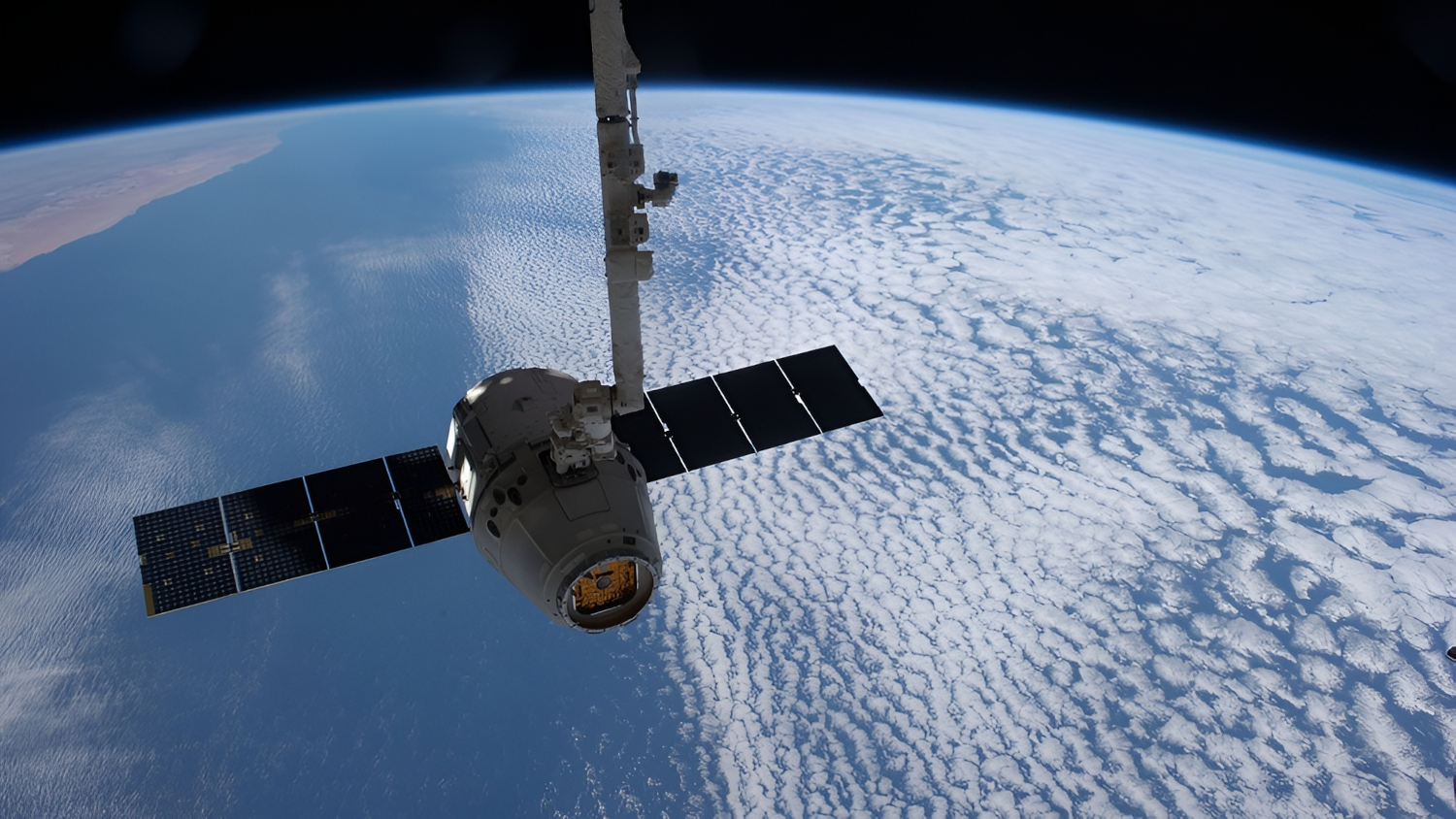
Over a typical U.K. town, the analysis estimated that the number of satellites crossing the sky at any given moment exceeds the number of stars visible to the naked eye from that same location. That comparison holds under the assumptions and dates the analysis examined, not as a universal constant.
The figure of roughly 710 satellites above the horizon at once requires an immediate qualification. Most are invisible because they are traveling through Earth’s shadow. Engineering firm Accu Components, using U.S. Space Force tracking data published through CelesTrak, estimated that only about 105 of those spacecraft are sunlit and potentially visible at any given time. The analysis examined data from October 12 and 18 and has not been peer-reviewed.
The Sky Floods Twice a Night
Satellite visibility swings sharply from dusk to midnight to dawn, driven by straightforward orbital physics.
Dusk and dawn create two distinct visibility windows each night. Accu Components estimated roughly 300 sunlit satellites near dusk, fewer than 20 around local midnight, and roughly 300 again before dawn.
Satellites in low orbit catch sunlight long after the ground goes dark, then disappear into shadow as the night deepens, then re-emerge as dawn approaches. The sky fills and empties twice before morning.
12,000 Satellites in a Single Night
The cumulative traffic across a full night is far larger than the per-moment snapshot suggests.
Approximately 12,891 different satellites pass over an average U.K. town across a full night, according to the analysis. Equatorial skies see fewer overhead at any one moment, around 490. That gap reflects Starlink’s orbital inclinations, which concentrate coverage over mid-latitudes between roughly 40 and 50 degrees north or south.
What You Actually See From Your Backyard
Where you live shapes the comparison between satellites and stars more than any other factor.
Light pollution sets the baseline for any comparison. From London or New York, artificial glow limits naked-eye stars to a few dozen. Suburbs and small towns can reveal several hundred, while genuinely dark rural skies can show thousands. Against that backdrop, roughly 105 potentially visible satellites near dusk is a meaningful presence, particularly for observers already contending with washed-out skies.
How the Sky Got This Crowded
The scale of low-Earth-orbit traffic reflects a deployment surge concentrated in one constellation.
Accu Components tracked 15,833 active satellites in low Earth orbit below 2,000 kilometers. SpaceX’s Starlink constellation is the dominant driver, though the analysis does not independently verify the precise share attributable to each operator.
What It Means for Professional Astronomy
Ground-based observatories face a concrete and measurable interference problem, not merely a theoretical one.
Satellite trails reflect sunlight into telescope exposures, rendering some images unusable and adding unwanted light interference across others. The European Southern Observatory estimated that certain observatory configurations could see 30 to 40 percent of wide-angle telescope images compromised during the first and last hours of the night.
Forecasts Point to Greater Disruption
Published projections suggest the problem worsens substantially if planned constellations are completed.
A study published in Nature projected that completed proposed constellations could affect roughly one-third of Hubble Space Telescope images. The same research forecast that more than 92 percent of exposures from some future space telescopes could contain satellite trails. These are projections based on planned deployments, not measurements of the current sky.
No Clean Solution Yet
Technical workarounds exist, but no internationally binding rules require operators to limit satellite brightness before launch.
One study found that shutter-closure maneuvers timed to satellite trajectory data could help observatories avoid some predicted satellite crossings. The same research concluded that large constellations remain a significant and continuing challenge for ground-based survey astronomy. No universally binding international framework yet requires satellite operators to meet brightness limits before launch.