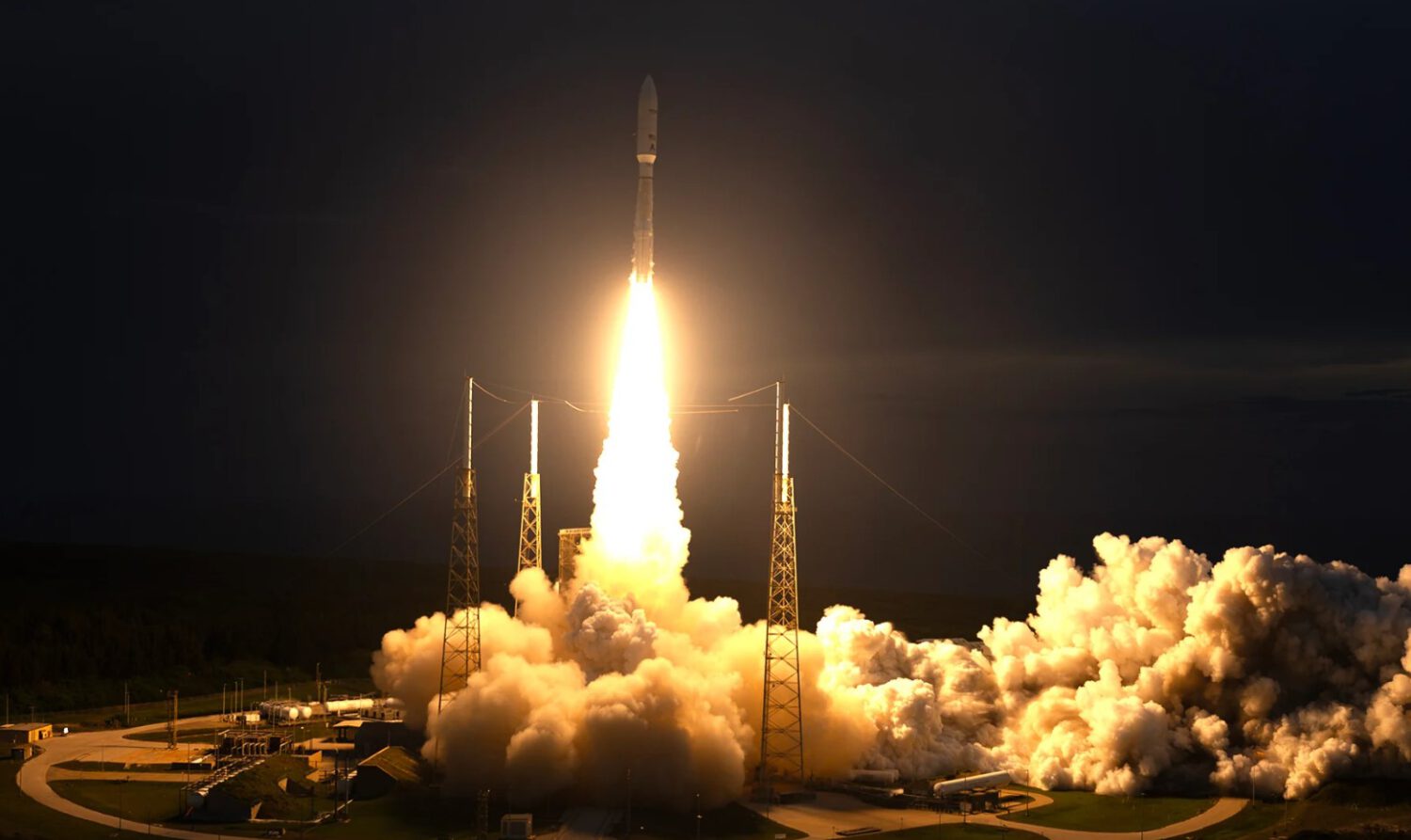
ULA had never lost a mission in its 20-year history. That changed when its Vulcan Centaur rocket suffered an anomaly roughly 10 minutes after liftoff from Space Launch Complex 41 at Cape Canaveral Space Force Station, failing to deliver 40 Amazon Leo broadband satellites to orbit.
It was ULA’s first total mission failure since Boeing’s Delta program and Lockheed Martin’s Atlas program merged to form the company in 2006.
What Happened, and What Remains Unknown
Vulcan was returning from a nine-month stand-down when the failure occurred, and the cause has not been identified.
Vulcan’s fifth flight since its 2024 debut came after a nine-month stand-down for investigations into the rocket’s solid rocket boosters and BE-4 engines. ULA confirmed the failure but has not identified the cause.
“Based on data received by our Launch Director, we confirm that the Vulcan vehicle launched from Space Launch Complex 41 suffered an anomaly 10 minutes into the flight and failed to deliver the Amazon mission to orbit.” United Launch Alliance, via the official Amazon Leo account.
Whether the BE-4 engines contributed to this failure remains unresolved. ULA said it would use flight data to investigate.
Previous Vulcan flights experienced booster-related anomalies but still delivered their payloads successfully. An earlier investigation traced one problem to the BE-4’s main oxygen valve, after which Blue Origin developed modifications and ULA retrofitted its engines.
A Significant Setback for Leo’s Timeline
The lost payload was the largest Amazon had attempted on a single Leo flight.
The 40 satellites were the largest single Leo payload Amazon had attempted. Before the failure, Amazon had placed 398 Leo satellites in orbit across 14 missions. That total represents about 12% of the 3,236 satellites the company says it needs for full global coverage.
Amazon had targeted the start of initial Leo internet service during 2026. Repeated launch setbacks had already complicated that target, and this loss further strains the timeline.
Amazon acknowledged the difficulty while expressing confidence in ULA: “There is risk with any launch, and that’s especially true for inaugural missions like LV-01. ULA has been a trusted partner for Amazon, and we believe they’ll learn from this mission and deliver on their long-term plans for Vulcan.”
Amazon’s Launch-Provider Dependency
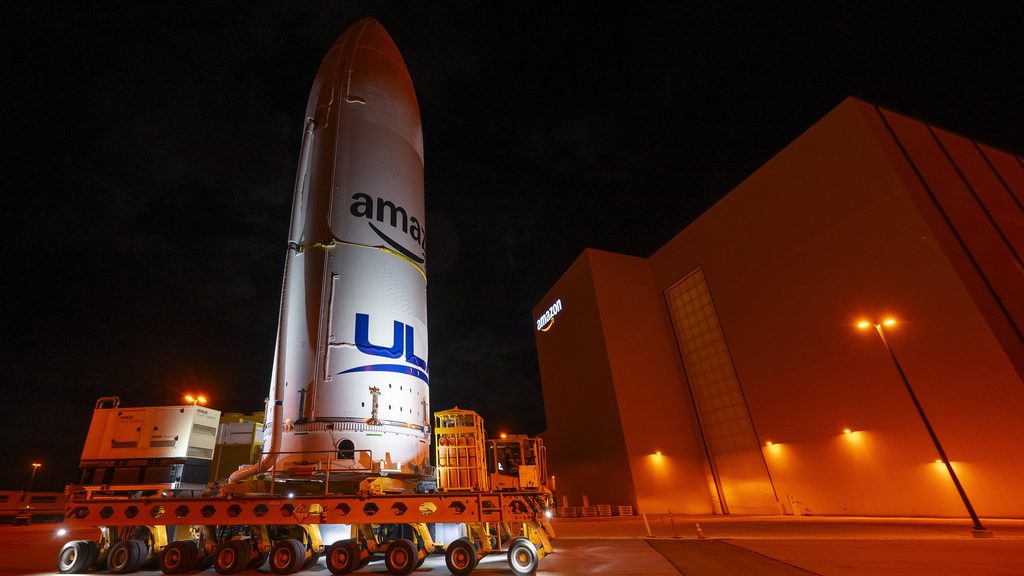
Unlike SpaceX, Amazon depends entirely on outside launch providers to build its constellation.
Amazon contracts launches across multiple providers, including ULA, Arianespace, Blue Origin, and SpaceX. That diversity offers some scheduling flexibility. Even so, every investigation that grounds one rocket delays the constellation’s growth on a schedule Amazon does not fully control.
SpaceX builds Starlink satellites and launches them on its own Falcon 9 rockets. That vertical integration gives it greater control over launch timing and cadence than any rival relying primarily on external providers. As of the latest available reporting, Starlink operated more than 11,000 satellites and served millions of customers. ULA holds a contract for 38 Leo missions in total; this was the first.
Government Launch Capacity Also at Risk
The failure arrives as the Space Force awaits additional Vulcan flight data before proceeding with national-security clearance decisions.
The Space Force had already paused Vulcan’s national-security launch certification pending further operational data. This Amazon flight was intended to provide some of that data before military clearance decisions moved forward.
A lengthy investigation now puts pressure on both Amazon’s deployment schedule and U.S. government launch capacity. The expected next developments are the preliminary failure-investigation findings, the Space Force’s response on Vulcan certification, and Amazon’s revised Leo deployment schedule. As of the initial reports, none of those questions had been answered publicly.