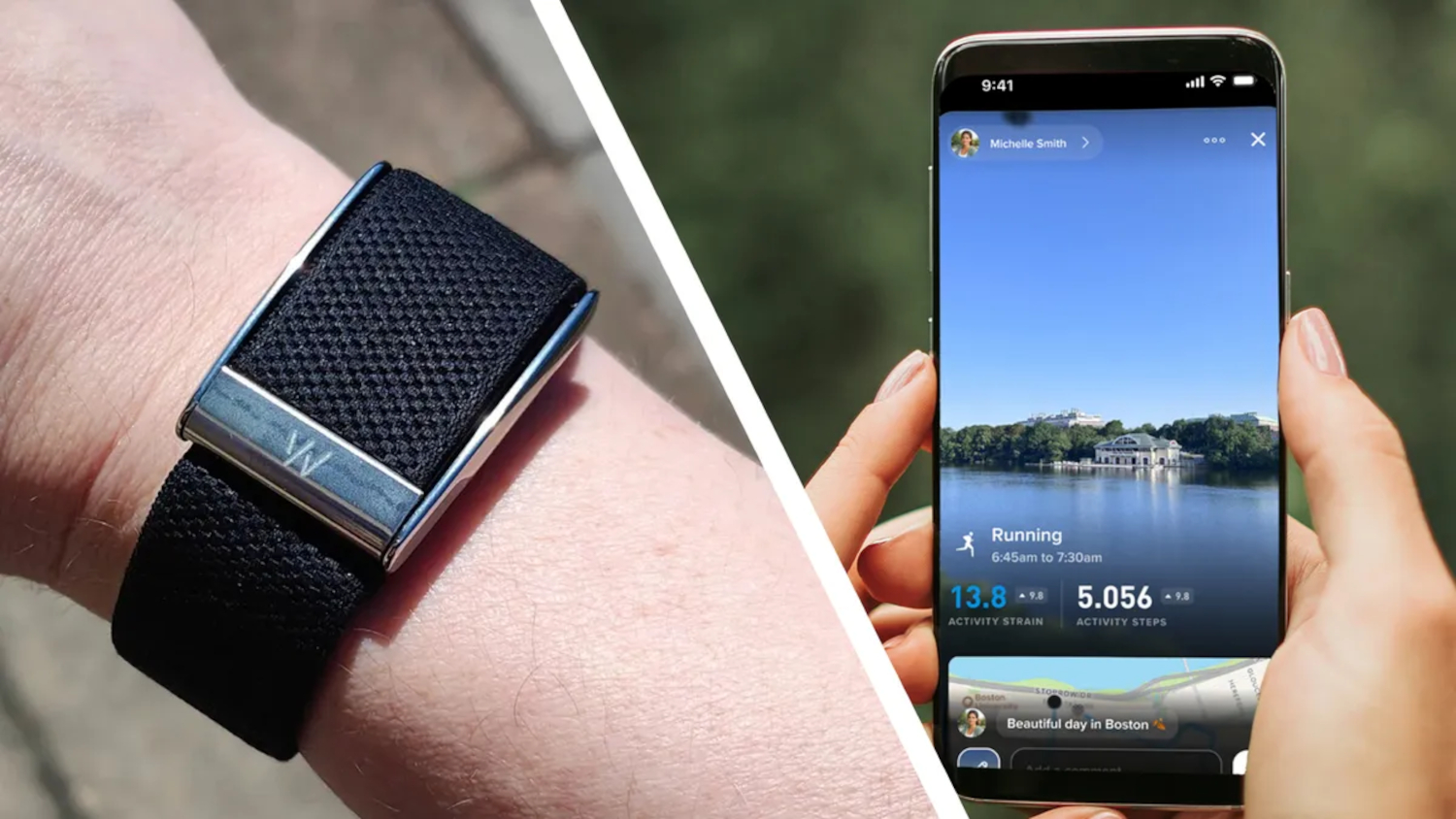
WHOOP launched WHOOP Humans on November 12, 2026, adding a social network layer directly inside its app. The network is built around data generated by WHOOP hardware rather than free-form posting, which is what separates it from conventional fitness communities. Members can follow friends and family, share wearable-generated data, and react to or comment on one another’s progress.
The shared content is specific to WHOOP hardware output: sleep scores, Recovery, Strain, activities, achievements, heart-rate variability, and resting heart rate. A separate feature called WHOOP Moments lets members attach workout photos and captions to their updates, with the option to keep those private.
WHOOP Teams, the company’s existing group leaderboard feature, remains available separately. Humans is designed for personal following relationships rather than structured group competition.
The “Verified Heartbeat” Claim
WHOOP says the underlying data is human in origin, but the scope of that claim is narrower than it sounds.
This is the most verifiably human network ever launched.
Will Ahmed, founder and CEO of WHOOP
The logic behind that claim rests on data provenance. Because content originates from a physical wearable tied to a person’s body, WHOOP argues each account represents a real human with a “verified heartbeat,” according to the official announcement.
That claim has a defined scope. The wearable confirms that physiological data was recorded by a WHOOP device. It does not independently verify the photos, captions, interpretations, or context that members attach to that data, which remain entirely user-generated.
Privacy Controls and What They Don’t Resolve
Opt-in sharing gives members meaningful control, but health data carries real weight in social contexts.
Participation is voluntary, and members choose which metrics, activities, and achievements to surface. Available controls include follower management, selective sharing of workout types and achievements, and a Stealth Mode for temporary hiding, in addition to ongoing preference updates.
WHOOP Moments can also be kept completely private. Even so, sleep patterns, recovery trajectories, and resting heart rate can reveal sensitive health and lifestyle information when shared with acquaintances, and granular controls may reduce but do not eliminate that exposure.
Where It Fits and Who It’s For
Strava has connected athletes through activity data for years, but WHOOP is making a more specific argument about authenticity.
WHOOP Humans draws a natural comparison to Strava, and TechRadar has described the new feature in those terms. WHOOP’s positioning is distinct: wearable-generated health data serves as the content layer, offered as an explicit alternative to feeds increasingly shaped by bots and automated accounts. Ahmed stated in the official press release, “In a world that’s becoming increasingly artificial, we’re building something deeply human.”
There is also a retention logic embedded in the product. Friends and training partners who build relationships inside WHOOP Humans may gain a social reason to stay subscribed beyond personal tracking alone, though no adoption or retention data has been released.
The feature’s appeal is likely concentrated among high-engagement athletes and quantified-self enthusiasts. Casual members may not find a friend’s Strain score or overnight HRV compelling enough to check daily, and that is an open question the product’s real-world engagement will need to answer.
The Longer Question
Whether physiological data can sustain a social network remains unresolved for anyone outside the most committed fitness communities.
WHOOP Humans is designed to give committed fitness communities an accountability layer with people who understand the numbers. Whether wearable data can hold broader social engagement over time, or whether the product remains most useful to the deeply committed subscriber, is a question that adoption will eventually answer. The practical test is simple: a social feed is only as useful as the people populating it for any given user.