
Recommending products was the easy part. With ChatGPT Wallet, OpenAI’s “dots” agents can now discover items, build a cart, and check out, handling shopping tasks within a conversation until the moment payment is required.
Who Gets Access First
Eligibility is narrow by design, limited to Pro subscribers in the U.S. with cards from a short list of networks.
The initial rollout covers ChatGPT Pro subscribers in the United States who are 18 or older and hold eligible U.S.-issued cards from American Express, Mastercard, Visa, or certain Chase-issued products. OpenAI says the limited availability is intentional, giving the company room to monitor real-world compatibility with merchants and banks before expanding.
How a Purchase Actually Works
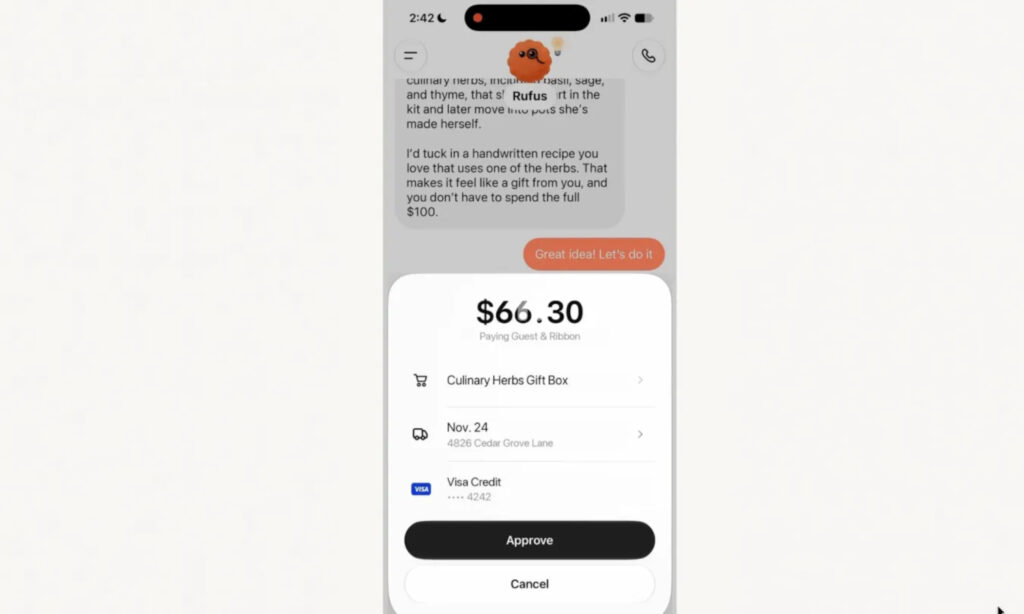
The agent surfaces products and presents a total; users approve with a biometric check before anything is charged.
A user describes a shopping goal, and the dot draws on conversational context and memory to surface relevant products. Before any charge goes through, the agent presents the selected items, total cost, and the card on file, then requires a Face ID or fingerprint scan to confirm.
Payment Tokens Replace Your Actual Card Details
Merchants and the agent see substitute credentials generated by the payment network, not the user’s real card numbers.
The payment network generates a token containing substitute credentials, including a card number, security code, and expiration date. Neither the merchant nor the agent receives the user’s actual card details, though OpenAI’s privacy notice indicates it may receive tokenized credentials and limited card information through its payment infrastructure.
OpenAI describes this as the first wallet that lets an AI agent pay without accessing real card information while requiring a security check on every purchase. That claim has not been independently verified across the broader market.
Your Existing Protections Stay In Place
Card rewards and dispute rights carry over, and every approved transaction generates an authorization record.
OpenAI says users retain existing card rewards and dispute protections for eligible purchases, including claims involving defective goods.
Each approval creates a clear record of the purchase the user authorized the agent to make.
OpenAI
The Gap Between Approving and Understanding
When an agent interprets preferences and selects products, accountability for mistakes becomes complicated.
A conventional digital wallet typically executes a payment a user explicitly initiates. An agentic wallet interprets preferences, navigates merchant sites, and selects items before asking permission. That distinction raises real questions about wrong quantities, unintended substitutions, or variants a user never chose.
The available launch materials do not fully address how refunds, returns, or agent errors are handled. Those gaps remain open.
Training Wheels, For Now
Per-purchase approval keeps this launch short of full autonomy, with more independent controls planned for later.
OpenAI has indicated that future versions could include spending caps, category restrictions, and time-based parameters for more granular control. In the standard launch flow, users review and approve each transaction, meaning ChatGPT Wallet is not yet a fully autonomous system.
The launch marks a concrete first step toward AI-executed shopping, constrained deliberately while OpenAI works through the merchant, banking, and consumer-accountability questions that broader autonomy would require.