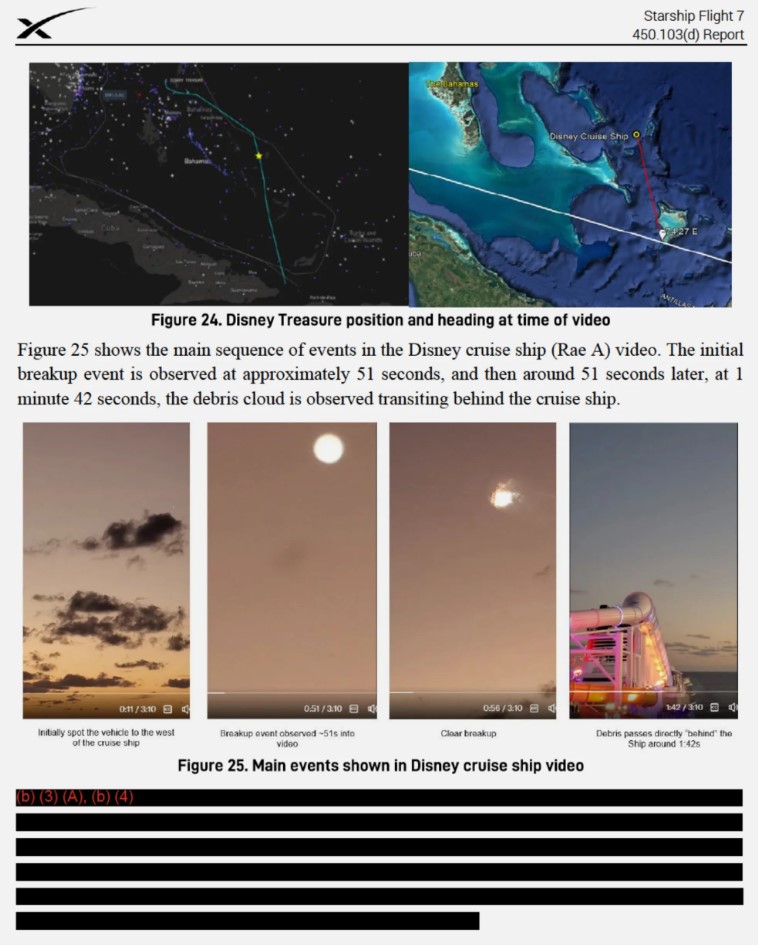
Passengers on a Disney cruise ship, a Royal Caribbean vessel, and guests at a Club Med resort were recording what looked like a spectacular light show. Their recordings later became evidence reviewed during the mishap investigation. According to FAA records obtained by ProPublica through a Freedom of Information Act request, SpaceX incorporated those bystander videos into its analysis of debris from the Starship Flight 7 breakup. The finding raises pointed questions about how well the company’s formal tracking systems performed when it mattered most.
What Happened Over the Caribbean
Starship broke apart roughly eight and a half minutes into Flight 7, and the consequences reached well beyond the launch corridor.
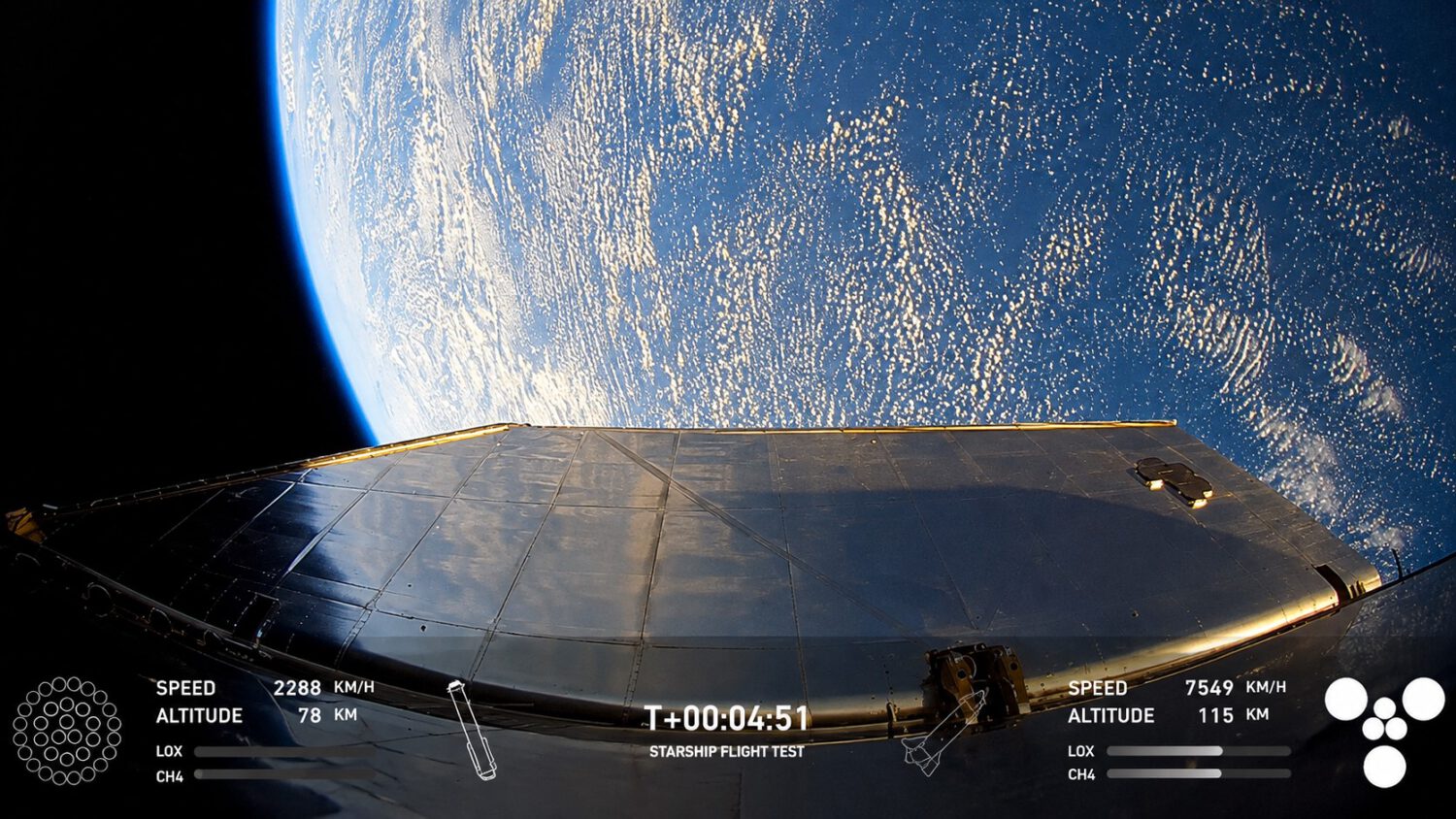
SpaceX launched Starship from its Starbase facility in Texas on January 16, 2025. The vehicle lost telemetry at roughly 8.5 minutes and suffered what the company termed a “rapid unscheduled disassembly,” meaning it broke apart mid-flight. The FAA activated a Debris Response Area, slowing or rerouting commercial aircraft and leaving several flights in holding patterns long enough that crews requested diversions due to low fuel. The agency later attributed the loss to stronger-than-expected vibrations that stressed propulsion hardware. Investigators confirmed one report of minor vehicle damage in the Turks and Caicos Islands, with no public injuries reported.
Why SpaceX Needed Your Vacation Footage
When official telemetry goes dark, footage from a cruise ship deck can become a meaningful data point for investigators.
The FAA records show SpaceX used footage from three bystander locations to reconstruct what happened after the vehicle broke apart:
- A Disney cruise ship captured the initial fireball and debris cloud.
- A Royal Caribbean cruise ship recorded the debris cloud passing behind the vessel at 1 minute and 42 seconds into the debris event, giving investigators a time-and-location reference point.
- A Club Med resort provided additional ground-level imagery of the debris shower.
SpaceX’s report included maps showing where each video was recorded. Aerospace experts cited by ProPublica said the footage could help confirm or improve the company’s breakup and debris models. Those experts also suggested the reliance on public recordings may indicate that internal tracking did not provide a complete picture during the debris-cloud phase, though that remains expert interpretation, not an explicit FAA conclusion. The FAA withheld SpaceX’s debris estimates under confidential business-information exemptions. That makes full independent verification of its preflight predictions impossible from the released records.
A Pattern, Not an Outlier
Three consecutive Starship flights ended in mishaps, and the heavily redacted records make a complete accounting difficult.
FAA records obtained by ProPublica show Flights 7, 8, and 9 all involved mishaps. The released reports were substantially redacted. The Flight 8 report stated that SpaceX lacked a test stand capable of testing engines for a full Starship mission before that flight’s failure. Aerospace experts cited by ProPublica said that gap suggests some engine behavior may have been verified during flight rather than on the ground, though the surrounding context in the document was redacted.
Before Flight 9, the FAA nearly doubled prelaunch airspace restrictions. An aerospace professor quoted by ProPublica said that expansion suggests earlier safety margins may have been inadequate, rather than the prior incidents being attributable to unrelated bad luck. SpaceX maintains that the vehicle stayed within its designated launch corridor and that surviving debris fell within areas identified in preflight analysis shared with the FAA and air-traffic controllers.
The question the redactions leave unresolved is whether SpaceX’s debris predictions matched what tourists actually recorded falling from the sky. As the company seeks more frequent launches, regulators face a concrete choice. They can treat crowdsourced vacation footage as an informal supplement to formal debris tracking, or build something more systematic before the next flight puts more aircraft, more passengers, and more phones in the mix.