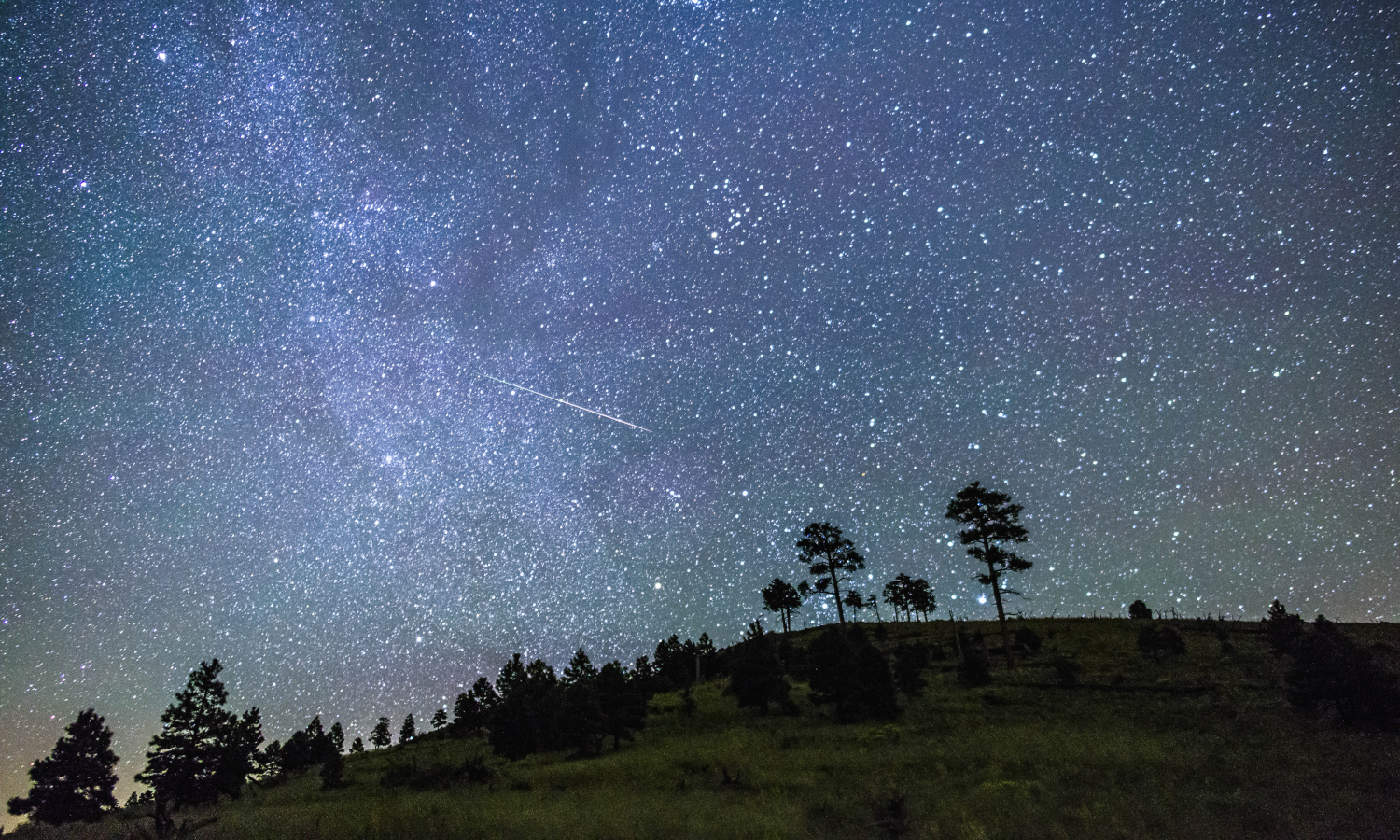
A sky that once showed you 250 stars may now reveal barely 100 from the same spot. A peer-reviewed study published in Science in 2023 found that artificial night-sky brightness increased roughly 9.6% per year across the study’s participating locations between 2011 and 2022, with North America tracking even faster at 10.4% annually.
That is not a rounding error. At that pace, each passing decade quietly erases a significant share of what the naked eye can see overhead.
The Measurement Problem
Satellites are missing what your eyes already know.
The data came from Globe at Night, a citizen-science project managed by the National Science Foundation’s NOIRLab. More than 50,000 observations were submitted by naked-eye stargazers between 2011 and 2022, allowing researchers to estimate how skyglow, the diffuse brightening of the sky background, had changed across thousands of locations.
The numbers came in higher than earlier satellite-based estimates. The reason matters: many orbital sensors are less sensitive to the blue wavelengths produced by modern LED lighting, which means satellite measurements can understate the human-visible skyglow that ground observers actually experience.
Efficiency Is Not the Same as Darkness
A city can swap every bulb and still make its night sky worse.
LED conversion reduces electricity use per fixture. The International Dark-Sky Association identifies the actual drivers of harmful outdoor lighting as improper direction, excessive brightness, excessive duration, and inappropriate color temperature. Energy efficiency addresses none of those four factors directly.
A city can replace every streetlight with a brighter, bluer LED and add more fixtures running all night. Its energy bill improves. Its sky does not.
Flagstaff, Arizona, recognized this early. It adopted outdoor lighting controls in 1958 and was recognized as the world’s first International Dark Sky City in 2001, offering a policy model for any municipality willing to treat darkness as infrastructure worth protecting.
Who and What Loses Darkness
The cost lands on wildlife, sleep, and anyone who cannot simply drive away.
Migratory birds disorient under bright urban skies. Nocturnal insects concentrate around lamps rather than the plants they pollinate. Sea turtle hatchlings move toward illuminated development instead of the ocean.
The National Park Service notes that light originating outside a protected area can still degrade the habitat inside it.
For people, the concern centers on circadian disruption. Artificial light at night, particularly blue-rich light, can suppress melatonin and interfere with sleep timing. Individual outcomes vary based on intensity, duration, spectrum, and personal sensitivity, so the evidence warrants caution rather than alarm.
Experiencing a genuinely dark sky increasingly requires travel, transportation, and money. For urban residents without those options, access to natural darkness is already severely limited.
What Actually Works
The tools exist; the gap is purchasing decisions and political will.
Shielded fixtures that direct light downward, warmer color temperatures, motion sensors, dimmer settings, and curfews on nonessential lighting are all available today. None require waiting for new technology.
If the measured rate continues, the next generation of urban residents may never know what 250 stars look like from their own backyard. That outcome is not inevitable. It is a choice being made, light fixture by light fixture, in purchasing departments and zoning offices right now.