1,300 Americans dying prematurely every year from pollution tied to the data centers running your AI tools? The Basel Action Network‘s white paper “The Coming AI Waste Wave” projects that AI-driven equipment retirements could reach 8.6 to 13.1 million metric tonnes per year by 2030. McKinsey puts cumulative data-center capital outlays at nearly $7 trillion by that same year, with 4,871 new US facilities already in the construction pipeline. The global recycling system, meanwhile, properly handles only about one-fifth of e-waste today.
The Scale Nobody Is Talking About
BAN’s projections dwarf every prior estimate because they count far more than the servers making headlines.
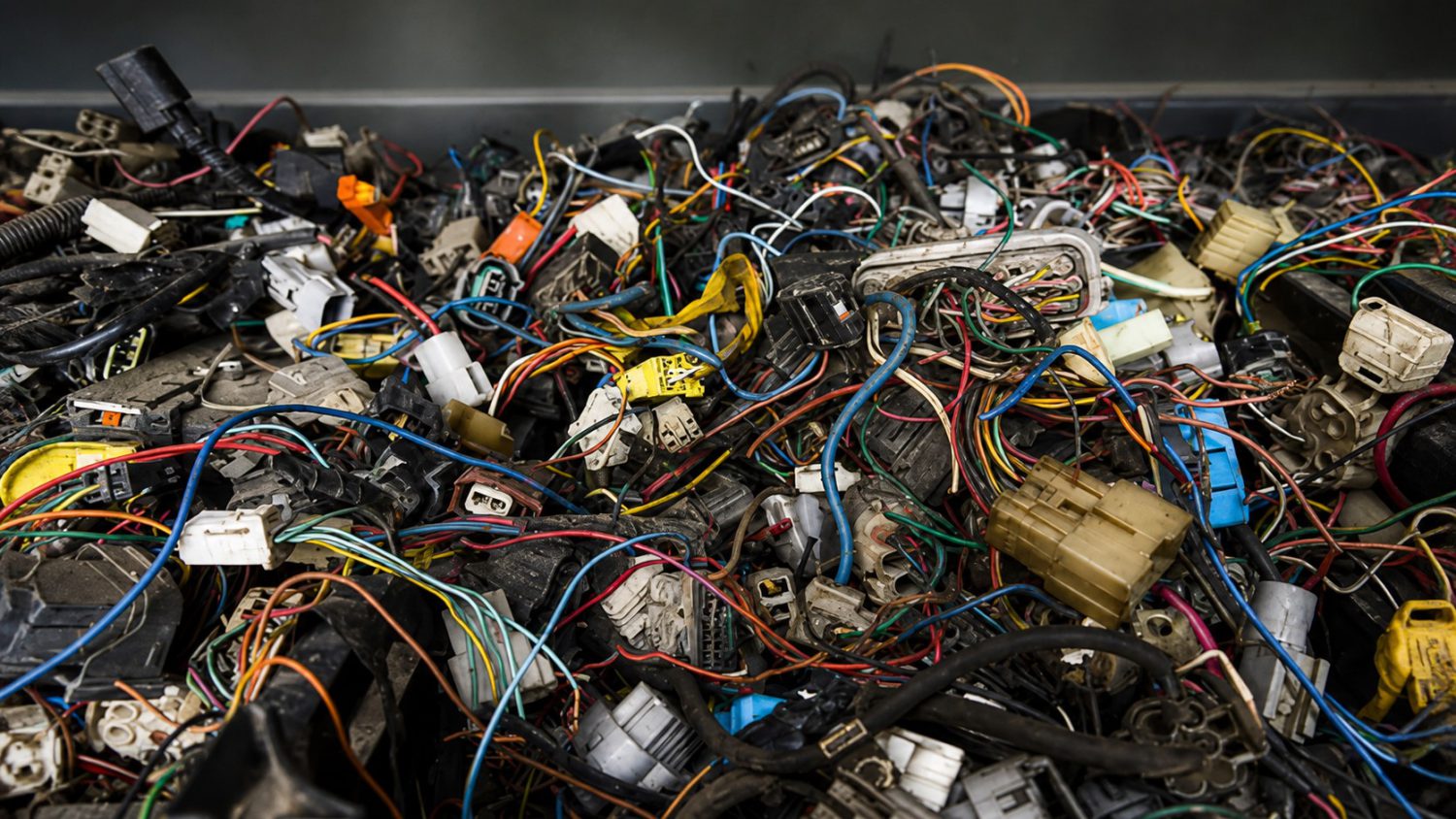
BAN’s accounting extends well beyond servers and GPUs to include networking gear, power distribution systems, cooling equipment, copper cabling, and storage. Each rack of servers weighs roughly 1,360 kg, and BAN estimates about 70,000 metric tonnes of e-waste per gigawatt of data-center capacity.
McKinsey projects data-center demand will reach 220 gigawatts by 2030, a nearly six-fold increase from 2020, growing at a 22% compound annual rate. That trajectory translates directly into future scrap heaps at a scale the industry has no credible plan to manage.
BAN frames the $7 trillion in AI infrastructure spending as roughly the cost of ending world hunger for 75 years.
BAN also introduces a “contagion” argument: AI’s accelerating compute demands, the report contends, will push consumers to replace phones, laptops, and PCs sooner than they otherwise would. Some analysts consider the behavioral assumptions speculative, and that skepticism is fair. Even the conservative scenario, focused on direct data-center waste at about 2.8 million metric tonnes annually by 2030, still dwarfs prior estimates by a wide margin.
The People Paying the Real Price
The communities closest to power plants and waste sites are absorbing costs they had no hand in creating.
Researchers at UC Riverside, Caltech, and Rochester Institute of Technology, cited by the Environmental Protection Network (EPN), model roughly 600,000 asthma symptom cases and 1,300 premature deaths per year in the US by around 2028. Annual public-health costs from those impacts are projected at $11.7 to $20.9 billion, driven by PM2.5 and nitrogen oxides from the power plants and backup generators supplying AI data centers.
The communities absorbing that burden are not the ones running the AI platforms. Lower-income and minority neighborhoods near power plants and waste-disposal sites bear the pollution load, while workers in countries receiving exported hardware face direct exposure to lead, mercury, cadmium, and PFAS compounds during informal recycling.
Former EPA officials organized as the EPN warn that roughly 30 federal environmental rollbacks since early 2025 are effectively letting data-center operators and their power suppliers avoid accountability for emissions. That regulatory retreat compounds every projected health impact.
“We’re doing a terrible job of handling e-waste in the US. Some of it gets dumped overseas. Most of it just gets dumped in landfills.” , Vince Beiser, author of Power Metal, as quoted in The Guardian
What the Industry Should Actually Do
Concrete policy frameworks already exist; what is missing is the pressure to adopt them at the scale the projections demand.
The EPN’s Data Center Health Protection Pledge offers a credible starting point. Its core demands are restoring Clean Air Act standards, requiring proper emissions monitoring for data centers and their on-site generators, and rebuilding the scientific infrastructure to track health outcomes before the wave crests.
On the hardware side, BAN calls for right-to-repair mandates, extended producer responsibility that makes manufacturers own the end-of-life cost, and strict waste-export controls to keep toxic shipments out of poorer nations. Both the Biden and Trump administrations formally acknowledged that data centers pose public-health risks from electricity generation and backup power. Neither moved at the scale the projections demand.
Every cloud query, every AI-generated image, every ChatGPT session runs on hardware built to a two-to-five-year replacement cycle. The question is not whether the waste wave arrives. It is whether the companies profiting from the build-out are held responsible for cleaning it up.