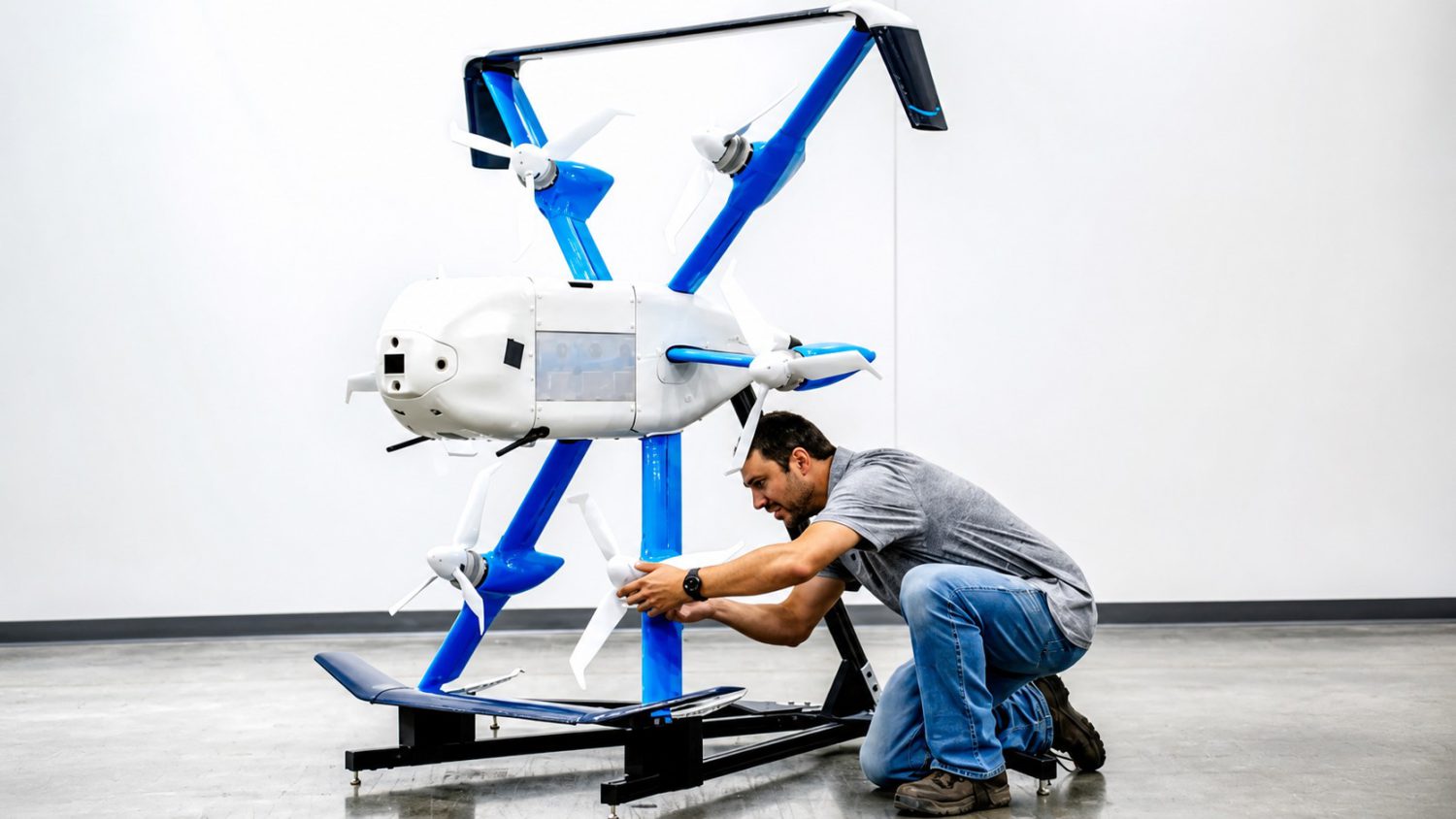
Ibuprofen in a Chicago backyard, 28 minutes after checkout. No driver, no doorbell — just a drone descending and a package hitting the grass. Amazon Prime Air will expand to nearly 500 U.S. cities and towns by year-end, a sixfold increase from its current 11-metro footprint. This isn’t a pilot program anymore. It’s an operational layer of Amazon’s last-mile network, and it’s arriving whether neighborhoods are ready or not.
From Backyard Experiment to National Footprint
The numbers behind Amazon’s drone buildout are bigger than the headline suggests — and the fine print matters.
One million drone deliveries. That’s what Prime Air VP David Carbon told staff at an internal all-hands meeting in March, describing the program as “the highest demand drone delivery service in the industry,” according to CNBC. The math behind “500 cities” deserves a second look: each hub covers roughly 175 square miles, so most of those municipalities fall within existing service radii rather than requiring 500 separate drone bases. The 7.5-mile delivery radius handles packages under 5 pounds, which Amazon says covers 60% of its most-purchased items.
What Prime Air actually means for you:
- Deliveries targeting 60 minutes or less, with some arriving within minutes of checkout
- New metros include Chicago, Atlanta, Cleveland, Syracuse, and Boise
- Robotic sort centers expand eligible products to include groceries and fragile items
- A “gentle delivery” tether is being tested as a potential alternative to the current 13-foot drop
- Amazon’s decade-end target: 500 million drone deliveries per year
The regulatory unlock arrived in 2024. The FAA approved BVLOS operations — beyond visual line of sight, meaning drones fly without human spotters tracking them from the ground — and without that approval, scaling to expand to nearly 500 cities remained out of reach.
“Customers continue to demand faster delivery times — we have yet to reach diminishing returns when it comes to how fast we deliver.” — David Carbon, VP, Amazon Prime Air (according to CNBC)
The Part Amazon Would Rather Not Mention
A string of real-world incidents reveals the gap between controlled testing and operational reality.
Buried in the expansion announcement is a rougher track record. Two Prime Air drones collided with a crane in Tolleson, Arizona — NTSB and FAA investigations followed, and Amazon retrained its detection algorithms after real-world obstacle avoidance fell short of lab performance. Carbon called it a “humbling experience.” A separate Waco, Texas drone snapped an internet cable mid-ascent. A UK drone crashed into a garden in Darlington, England, which Amazon attributed to contact with an object extending above a moving vehicle. No injuries were reported in any case, but the pattern points to meaningful distance between controlled testing and street-level chaos.
Community concerns add another layer. Residents near early markets in Dallas and Phoenix have raised worries about drone noise, persistent overflight, and privacy — some flagging potential impacts on property values, though those remain concerns rather than quantified outcomes. Meanwhile, Alphabet’s Wing has already crossed 1 million commercial deliveries across roughly 20 U.S. markets through Amazon and Google partnerships, per Wing’s own announcements. Zipline has logged approximately 2 million deliveries across four continents. Amazon is chasing competitors with a meaningful head start.
Jeff Bezos first promised 30-minute drone delivery in 2013 — the same year he spent a segment of 60 Minutes explaining to America what a drone actually was. Thirteen years later, the infrastructure is finally catching up to the pitch. The question isn’t whether drone delivery scales. It’s whether the skies above your neighborhood are ready for what comes next.