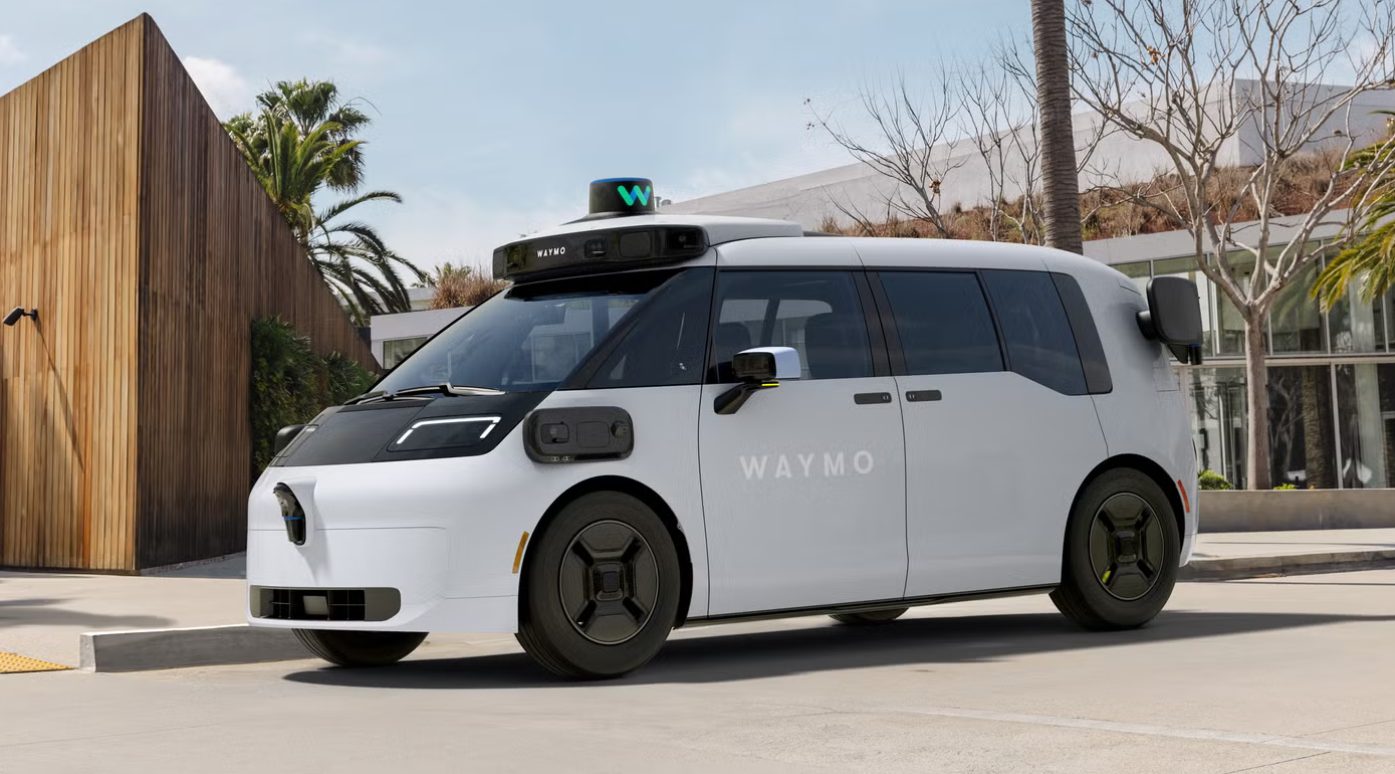
Summoning a driverless ride in San Francisco could mean climbing into a spacious minivan that was assembled in China, and that’s exactly what has Congress worried. Waymo‘s new Ojai robotaxi offers expanded cabin space for autonomous rides, but its Chinese manufacturing has turned a tech upgrade into a geopolitical flashpoint.
The Tech That Actually Matters
Multiple sensors and purpose-built design mark a major leap from retrofitted consumer cars.
Ojai debuts Waymo’s sixth-generation Driver system, packing 13+ cameras, six radar sensors, and four lidar units into a vehicle designed from scratch for autonomous operation. Unlike the retrofitted Jaguar I-Pace fleet that Waymo currently operates, Ojai offers a larger cabin with flat floors, multiple charging ports, and grab bars for easier entry. The 268-horsepower electric motor and 93 kWh battery run on an 800-volt architecture that enables faster charging—critical for keeping fleet vehicles in service longer.
“This is designed for long-term growth across multiple vehicle platforms,” says Waymo engineering VP Satish Jeyachandran, emphasizing the system’s adaptability to harsh winter climates and diverse global markets.
The Chinese Connection Controversy
Waymo argues its Chinese-made base vehicles don’t violate new US security rules.
Here’s where things get messy. Chinese automaker Zeekr builds the Ojai’s base vehicle in Ningbo, then ships it to Waymo’s Arizona facility where all autonomous systems get installed. Waymo insists this structure sidesteps 2027 US rules banning Chinese-connected vehicle technology because only “non-connected base vehicles” cross the Pacific—no telematics, no software, no data collection capabilities.
Critics aren’t buying it. During congressional hearings, a Republican senator accused Waymo of “getting in bed with China” over the Zeekr partnership. The controversy reflects broader US-China tensions over supply chains in strategic technologies, making every Ojai ride a small test of whether America can benefit from Chinese manufacturing efficiency while maintaining tech sovereignty.
What This Means for Your Commute
Initial deployment offers glimpse of robotaxi future amid regulatory uncertainty.
You can hail Ojai rides for free through the Waymo app in Los Angeles, San Francisco, and Phoenix while the company awaits California approval to charge fares. Recent safety setbacks—including a freeway service pause after construction zone issues and flooding problems in Atlanta—show that scaling autonomous fleets remains challenging despite impressive hardware advances.
Waymo plans to expand into 20+ global regions including London and Tokyo, with Hyundai Ioniq 5 vehicles joining the mixed fleet alongside Ojai and existing Jaguars.
Your future robotaxi experience may depend on how regulators resolve this supply chain puzzle. The stakes extend beyond ride-hailing convenience to fundamental questions about technological independence in an interconnected world.