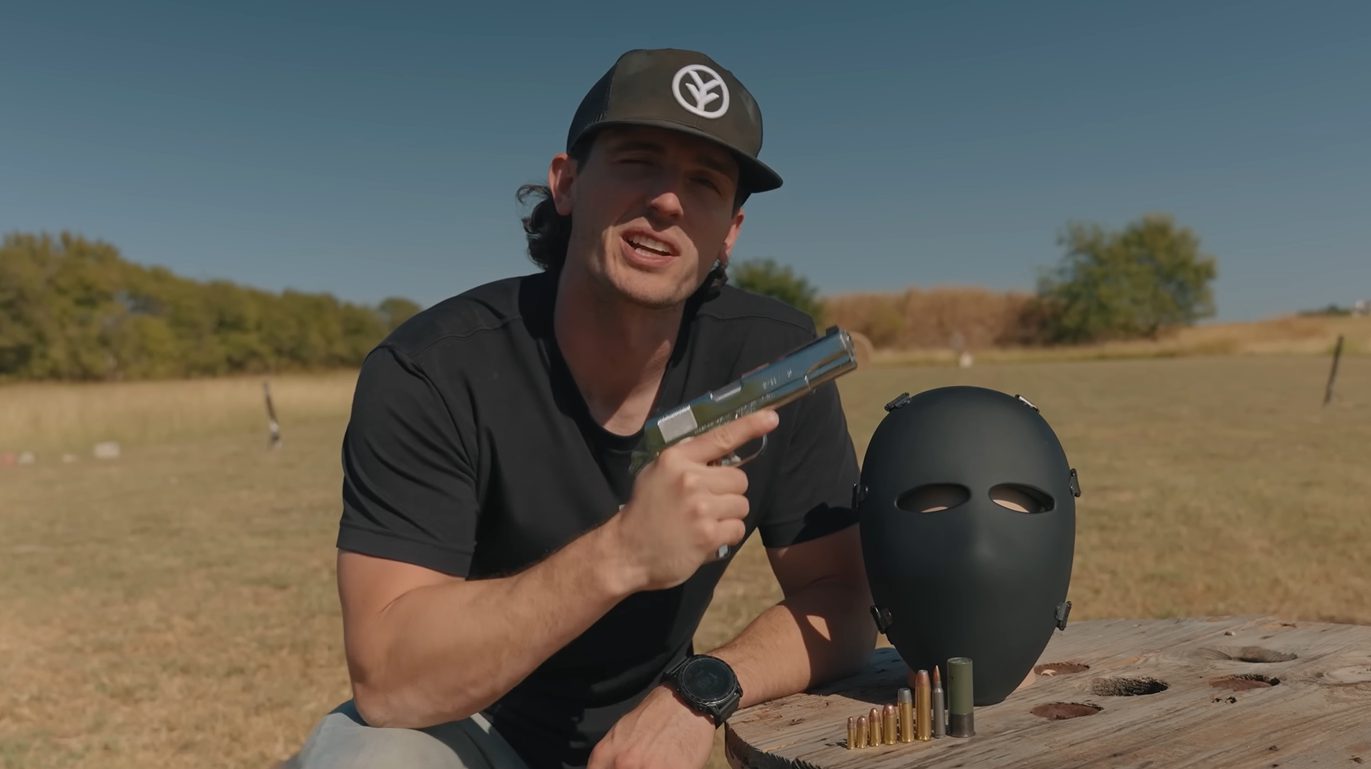
Marketing departments love the word “bulletproof,” but ballistic face masks are bullet-resistant at best. These tactical accessories can stop a .44 Magnum or 9mm handgun round through NIJ Level IIIA certification, but real-world performance tells a more complex story than manufacturer promises suggest.
What NIJ Level IIIA Actually Protects Against
NIJ Level IIIA certification means survival against specific handgun threats:
- .44 Magnum at 1,400 fps
- 9mm rounds
- .357 SIG rounds
The testing involves clay headforms, zero perforation tolerance, and maximum back-face signature depth of 44mm. Certification standards require surviving multiple angled hits during controlled testing.
What it doesn’t stop? Rifle rounds. That AR-15 or AK-47 scenario you’re imagining? These masks are ineffective against rifle velocities. Think Call of Duty protection levels, not Captain America shield durability.
YouTube Reality Check Reveals Performance Gaps
Tactical YouTube channels regularly demonstrate these masks stopping .45 ACP and 9mm rounds, but the aftermath reveals important limitations. Post-impact photos show:
- Severe deformation
- Cracked materials
- Compromised structural integrity
While NIJ standards mandate multi-hit survivability during certification, real-world demonstrations consistently show substantial degradation after single strikes.
The 10mm Kevlar construction with shock-absorbing padding provides certified protection, but practical durability raises questions about repeated use scenarios.
Heat, Vision, and Comfort Trade-offs
Strapping on a ballistic face mask feels like wearing tactical equipment that prioritizes protection over comfort. Vision restriction through narrow slits, heat buildup during extended wear, and claustrophobic fit create real usability problems. The adjustable suspension systems and anti-fog features help, but you’re still trading peripheral awareness for protection.
Airsoft players report fogging issues during extended use, while actual tactical applications require careful consideration of environmental factors and operational duration.
Who This Gear Actually Serves
Bulletproof masks serve specific niches effectively:
- Close-quarters law enforcement scenarios
- Military breaching operations
- Specialized tactical training
For civilian home defense or prepper applications, the protection-to-practicality ratio becomes more complex.
Atomic Defense and Bulletproof Zone price these masks between $200-600, competing directly with quality body armor that offers broader protection. Unless you’re specifically facing handgun threats in confined spaces, traditional helmets with face shields provide better versatility without the single-threat focus these masks represent for self-defense.