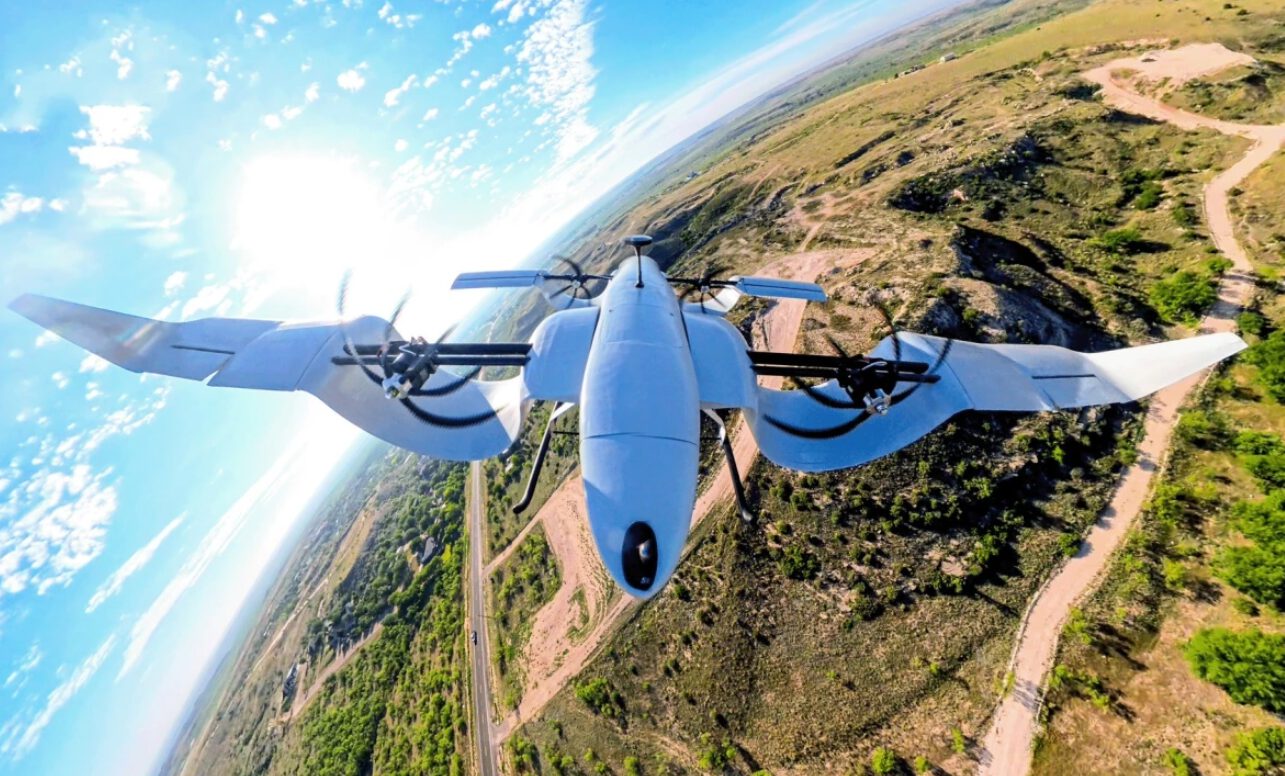
Nearly 100 years after Willard Ray Custer first conceived channel wing aircraft in 1925, this radical propulsion concept is finally ready for commercial deployment. While most aviation experts assumed every breakthrough had been discovered by the 1960s, Custer’s design was simply waiting for the right technological moment. HopFlyt’s Cyclone drone proves that sometimes the future arrives a century late—equipped with pivoting semicircular channels that generate vertical lift using one-third less power than conventional VTOL designs.
Digital Controls Unlock Century-Old Innovation
Modern flight computers enable dynamic channel positioning that wasn’t possible in Custer’s era.
HopFlyt’s pivoting channel system represents the crucial breakthrough. During takeoff, channels face rearward for maximum lift generation. During cruise flight, they pivot beneath the wing for aerodynamic efficiency. “It’s kind of a funny thing, but I’ve heard people say that by the 1960s in aviation people had already thought of everything,” explains Neil Winston, HopFlyt’s Chief Engineer. “But the technology wasn’t quite there to make everything work.” Digital flight controls now handle the complex channel positioning that would have been impossible with mechanical systems.
Efficiency Claims That Sound Too Good to Be True
HopFlyt promises 90% cost reduction and 50-fold emission improvements over traditional VTOLs.
Performance numbers read like marketing fantasy:
- 90% lower operational costs
- 50-fold CO₂ reduction
- Less than three gallons of fuel consumption per hour
Yet the Cyclone’s 800-mile range with 250-pound payload capacity positions it perfectly for the cargo missions HopFlyt is targeting. If these claims hold up in real-world deployment, channel wings could reshape the entire eVTOL market’s economics.
Naval and Offshore Markets Drive 2027 Launch
Initial deployment focuses on remote resupply operations where efficiency matters most.
HopFlyt isn’t chasing the crowded passenger eVTOL market. Instead, they’re targeting naval resupply, offshore energy platforms, and medical logistics—sectors where operational cost reductions translate directly to mission viability. The 2027 deployment timeline puts them ahead of most passenger-focused competitors, though commercial cargo operations offer fewer regulatory hurdles than carrying people.
Channel wings join tilt-rotors and multirotor designs in the expanding toolkit of VTOL architectures. Whether Custer’s century-old concept can finally achieve commercial success depends on translating impressive engineering claims into reliable field performance. Sometimes the most revolutionary innovation is just good timing meeting great engineering.