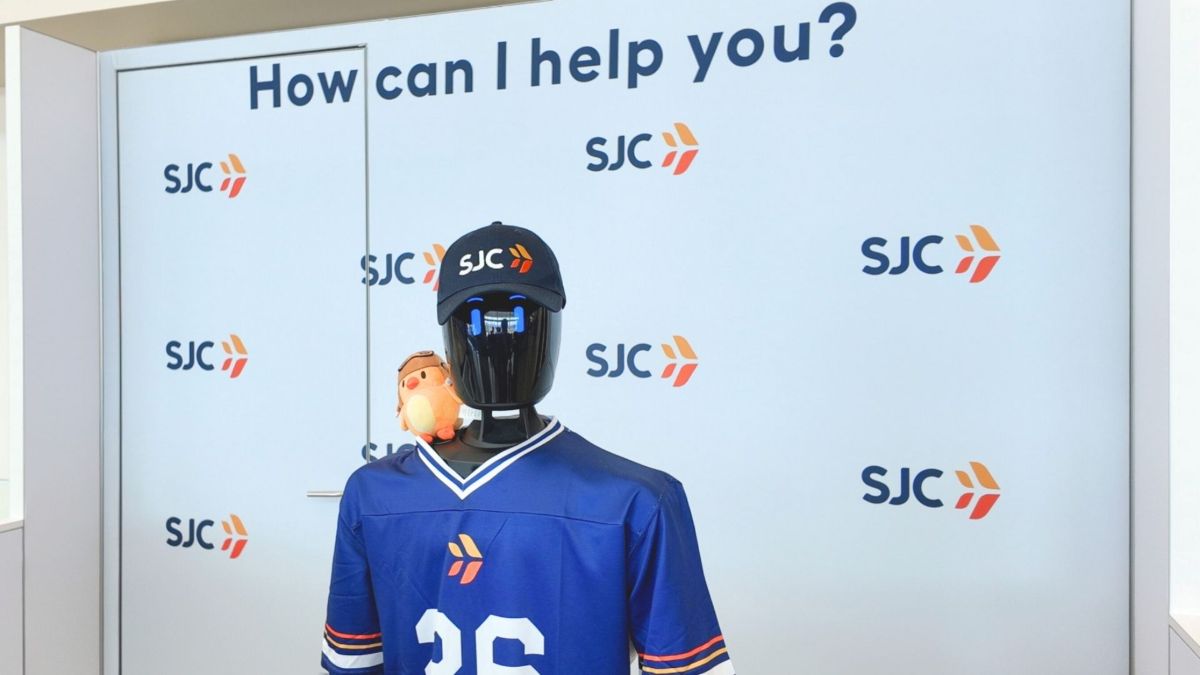
Lost in an airport terminal, frantically searching for your gate while announcement speakers crackle in three languages you don’t understand? San José Mineta International Airport thinks it has your answer. Meet José, a humanoid AI robot from Silicon Valley startup IntBot, now stationed at Terminal B Gate 24 to help passengers navigate the chaos with multilingual support and real-time information.
FIFA-Timed Testing Ground
The four-month pilot targets international visitors during peak travel season.
José’s deployment isn’t coincidental timing. With FIFA World Cup visitors expected, Mayor Matt Mahan explained the strategy: “We expect thousands of visitors from around the world for the FIFA World Cup, and thanks to IntBot, they’ll receive clear directions, real-time terminal information, and answers in more than 50 languages.” The robot can autonomously navigate busy terminal environments while greeting passengers and answering questions — essentially turning SJC into a real-world stress test for socially intelligent AI.
Beyond Airport Kiosks
IntBot positions José as breakthrough in “social intelligence” for physical AI systems.
This isn’t your typical airport information kiosk with a touchscreen. José represents what IntBot CEO Lei Yang calls “defining the category of social intelligence for physical AI, building the foundational layer that enables robots to understand human intent, context, and behavior in real-world environments.” The robot combines vision, audio, and language processing to operate in complex public settings — think C-3PO meets customer service, minus the neuroses.
Silicon Valley’s Testing Laboratory
The deployment reflects broader automation trends in transportation infrastructure.
San José’s choice as testing ground makes perfect sense given its Silicon Valley location and history of tech pilots. SJC Aviation Director Mookie Patel frames this pragmatically: “This is just a pilot program to test out what our future might look like.” Success here could accelerate similar deployments across major transportation hubs facing staffing shortages and capacity challenges. The question isn’t whether robots will handle more airport functions — it’s how quickly other airports follow suit.
The Verdict: Your Future Flight Experience
If José proves reliable during high-traffic FIFA season, expect similar robotic at airports nationwide. Your next international trip might involve getting directions from a multilingual AI rather than hunting down human staff. Whether that improves or complicates travel depends on how well José handles the inevitable passenger who asks where the bathroom is while simultaneously complaining about delayed luggage — the ultimate test of social intelligence.