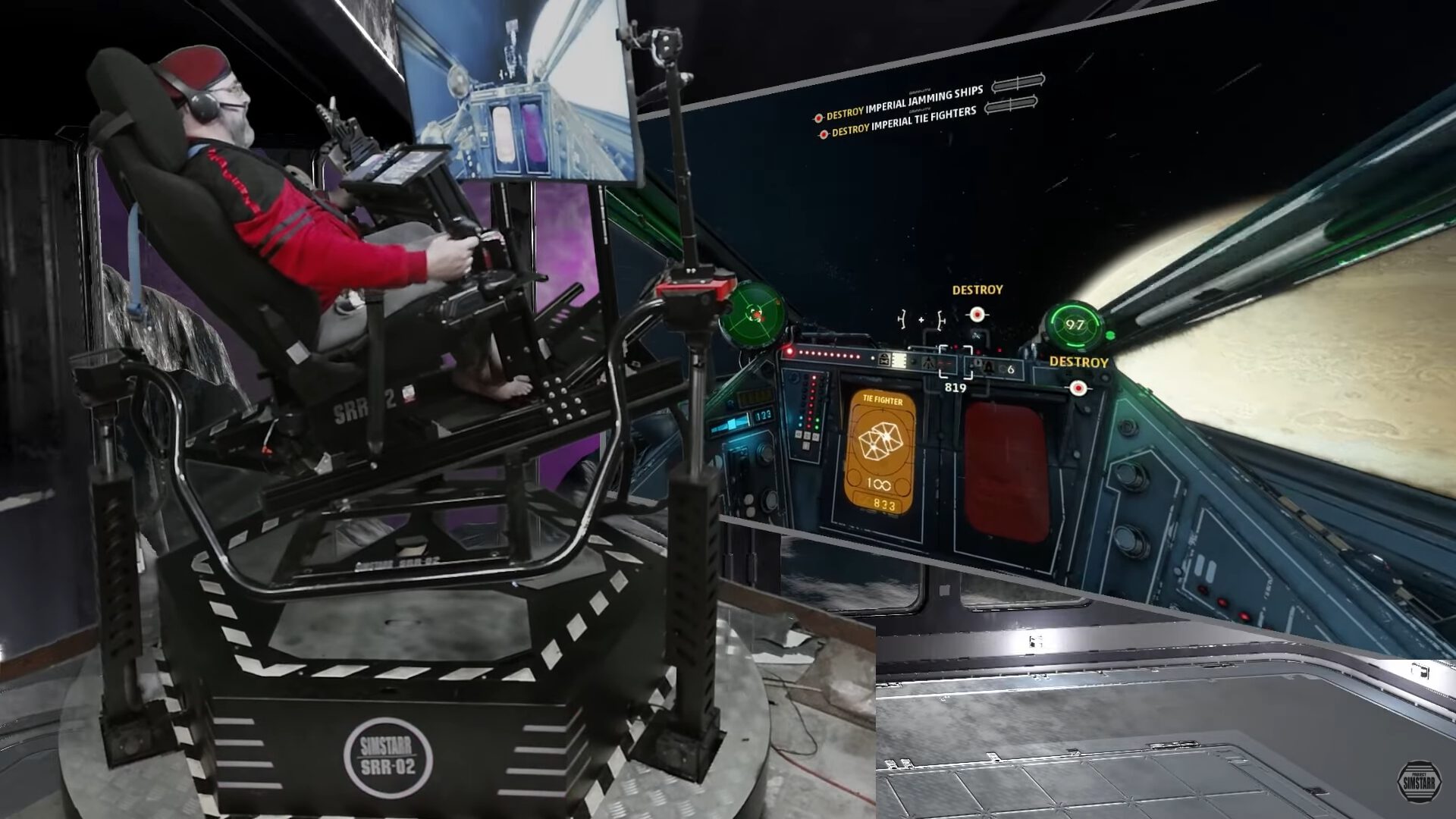
Racing through asteroid fields in Elite Dangerous while your chair stays perfectly still feels like ordering a steak and getting a photo of beef. Enter CMDR Wacko, whose SimStarr rig solves this immersion gap by recycling an actual VR roller coaster platform into a motion-enabled cockpit that tilts with your joystick and jolts when you crash into planets.
From Theme Park Scraps to Space Sim Glory
The pandemic killed countless VR attractions, flooding Facebook Marketplace and eBay with industrial motion platforms priced between zero and $3,000. CMDR Wacko seized this opportunity after 30 years of tinkering—his obsession traces back to experiencing Back to the Future: The Ride in 1991.
What started as pizza-box prototypes evolved into rejecting VR headsets entirely. He chose physical motors and curved screens for superior brain-fooling immersion over virtual reality alternatives.
Motion That Actually Matches the Madness
Streaming demos showcase SimStarr’s violent swings during FSD jumps and planetary rover sessions. Your joystick inputs trigger real tilting while combat impacts create genuine jolts—transforming Elite Dangerous from a desktop sim into something resembling actual spaceflight.
The setup supports any game with telemetry output, with claimed plans expanding to Star Wars: Squadrons and MechWarrior 5 recreations.
Engineering Meets Gaming Obsession
The technical magic happens through elite-vr-cockpit GitHub mods enabling motion controller interaction with virtual switches via SteamVR overlay. Combined with vJoy axis binding for yaw, pitch, roll, and throttle, the system creates seamless physical-digital integration.
This complexity explains why commercial sim chairs range from $100 to $10,000. Scrapping roller coasters dramatically undercuts that market.
DIY Motion Revolution
CMDR Wacko represents a broader maker movement where flight sim communities build pendular yokes and modular controls for Microsoft Flight Simulator and DCS. These 6DOF (six degrees of freedom) platforms focus on subtle brain-tricking movements rather than full roller coaster replication.
The approach democratizes immersion technology that major studios spend millions developing, proving garage engineering can rival corporate R&D when passion meets pandemic-era scrap availability.