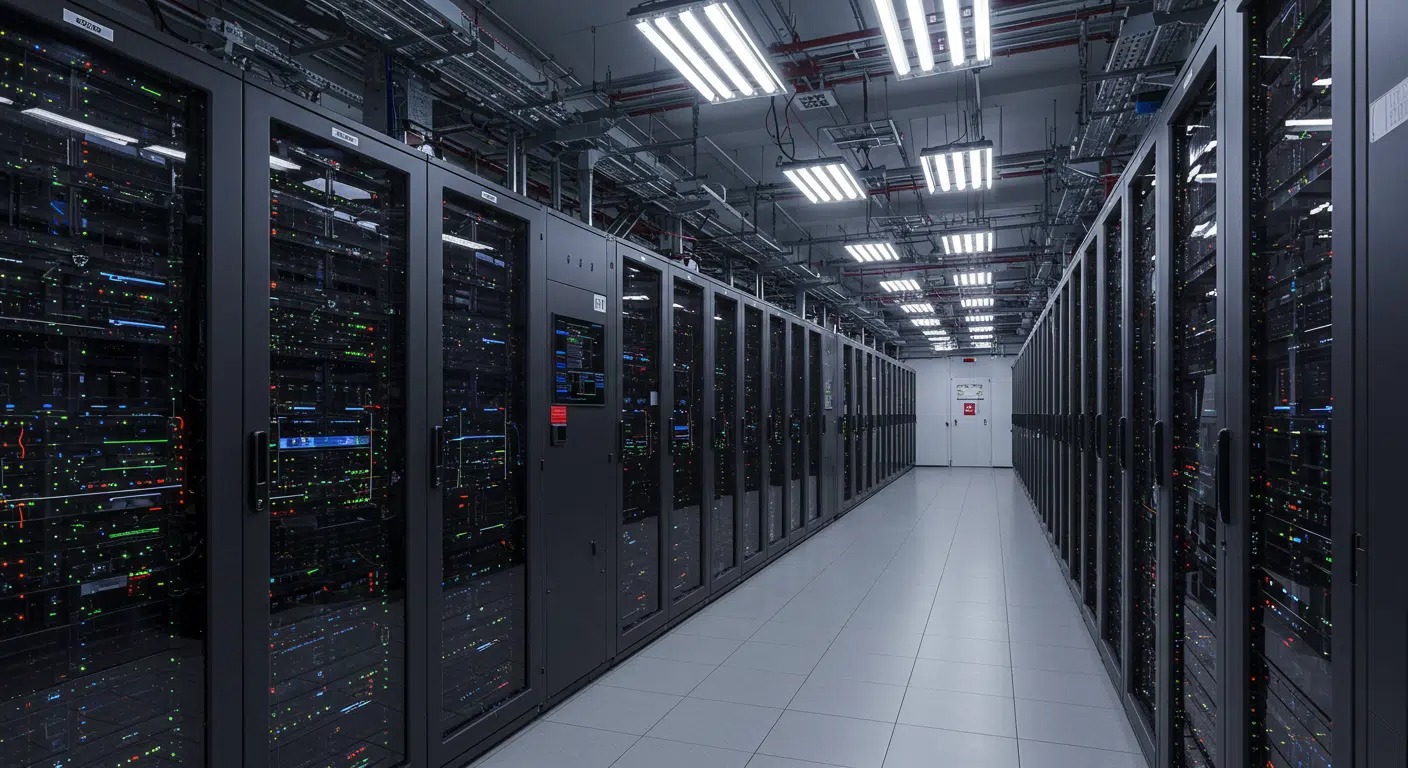
Your AI chatbot might be powered by a ticking time bomb. In July 2024, sixty data centers in Northern Virginia—consuming enough electricity for over a million homes—simultaneously vanished from the power grid after a lightning arrestor failed. The sudden disappearance of 1,500 megawatts forced grid operators into crisis mode, frantically cutting power generation to prevent voltage surges that could have triggered widespread blackouts. Think of it like sixty massive factories instantly shutting off their machines while the power plant keeps churning at full capacity.
The Reverse Problem Nobody Saw Coming
Data centers protecting themselves create new grid vulnerabilities that threaten everyone else.
Engineers spent decades preparing for demand spikes, not demand crashes. When data centers detect voltage fluctuations, they automatically disconnect to protect sensitive AI servers—but getting back online requires manual intervention. A February 2025 incident saw 40 data centers drop 2,000 MW simultaneously. “What we’re worried about is, what if that happens for 3,000 megawatts or 5,000 megawatts?” warns PJM’s Mike Bryson.
The grid infrastructure supporting your Netflix streams and ChatGPT queries wasn’t designed for these digital disappearing acts. Each sudden disconnect forces operators to scramble, balancing supply and demand in real-time to prevent cascading failures.
Your Energy Bills Are About to Explode
AI’s appetite for electricity will cost families $70 more monthly by 2028.
Virginia’s data centers will devour 57% of the state’s electricity by 2030. Nationally, these facilities could consume 17% of all U.S. power within five years, up from today’s 4%. That growth translates directly to your utility bill—families face an estimated $70 monthly increase by 2028 as utilities build new infrastructure to feed AI’s endless hunger.
Meanwhile, you’re also risking blackouts during peak demand periods when the grid can’t balance these massive, unpredictable loads. The convenience of AI comes with hidden costs that show up in your monthly statements.
The Industry Scrambles for Solutions
Tech giants and utilities develop “ride-through” technology to prevent future grid chaos.
Dominion Energy now collaborates with tech companies on systems that keep data centers online during minor grid disturbances—essentially better UPS backups for entire facilities. NERC hosts conferences with Google and other operators, while regulators consider requiring data centers to fund grid upgrades before connecting. The race is on to prevent PJM from facing shortages by 2027, though solutions remain theoretical while AI expansion accelerates at breakneck speed.