Tesla’s car business just posted its first-ever annual revenue decline, but Elon Musk claims salvation lies in robots that don’t exist yet. The company’s Q4 2025 earnings revealed a brutal reality: automotive revenues plummeted 11% year-over-year to $69.53 billion, while total vehicle deliveries dropped 8.6% to 1.636 million units. Meanwhile, BYD cruised past Tesla as the world’s top EV maker, selling 2.26 million vehicles compared to Tesla’s shrinking numbers.
The most telling stat? Europe, where Tesla’s sales cratered 37.2%—the worst performance among all automakers, even as the broader EV market grew. Your Tesla stock might have rebounded 4% post-earnings, but that’s mainly because Musk spent the call talking about anything except cars.
The Great Pivot to AI Fantasy
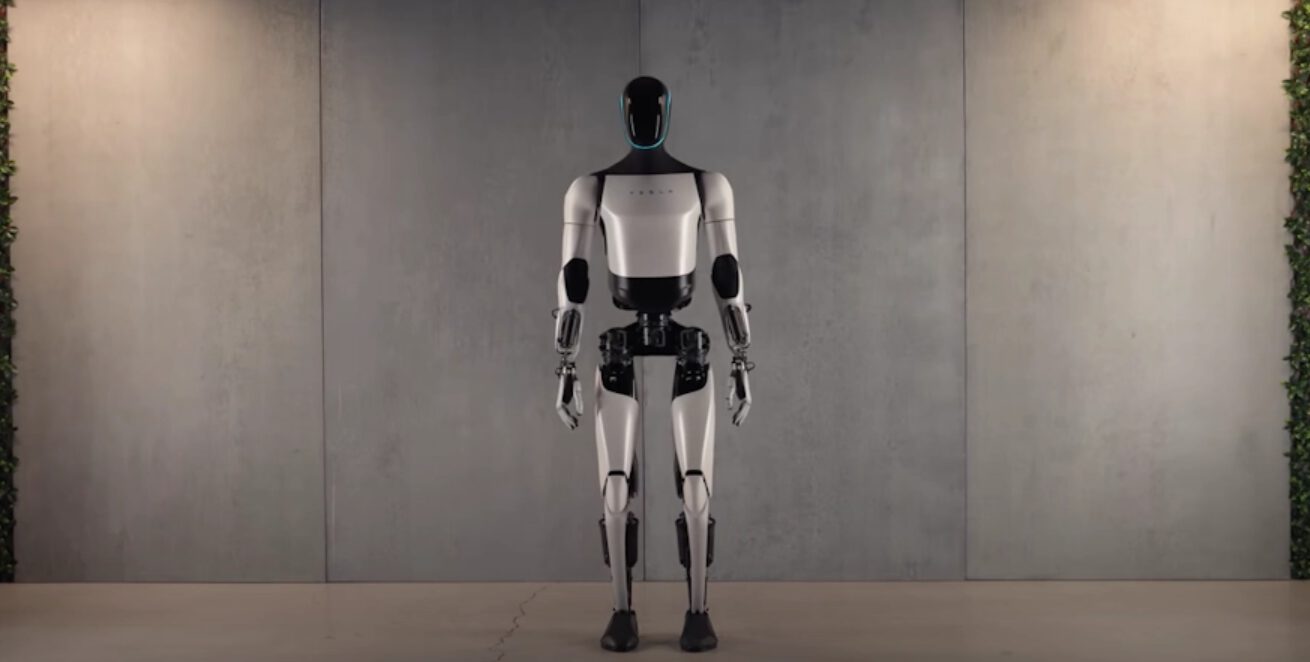
Musk positions Tesla as a “physical AI company” banking on unproven robotics technology.
Instead of addressing why customers increasingly choose cheaper alternatives, Musk doubled down on his AI pivot. Tesla pumped $2 billion into his separate venture xAI, promising mysterious “collaboration frameworks.” The star of this show? Optimus humanoid robots, which Musk claims will enter production before 2026 ends and reach public sales by 2027.
He’s calling it the “biggest product ever” with poverty-ending potential—basically the tech equivalent of promising world peace through household appliances. The Robotaxi program, once Tesla’s golden ticket to autonomy riches, has quietly stalled. Those “unsupervised” tests that generated headlines? They’ve vanished faster than a TikTok trend.
Reality Bites Back
Declining sales across all markets expose the risks of chasing sci-fi dreams over current products.
Your Cybertruck enthusiasm apparently wasn’t shared—sales dropped 48% as the angular pickup failed to capture mainstream appeal. “2025 marks the year Tesla lost the BEV crown to BYD… a 620,000-unit gap,” noted Howard Yu from IMD Business School.
This pivot represents Silicon Valley’s ultimate moonshot mentality: when your core business falters, promise revolutionary technology that’s perpetually “just around the corner.” Tesla’s betting shareholders will stay patient while competitors like BYD offer reliable, affordable EVs today. Whether Musk’s robot army materializes or becomes another Hyperloop-level distraction remains the trillion-dollar question keeping investors awake at night.