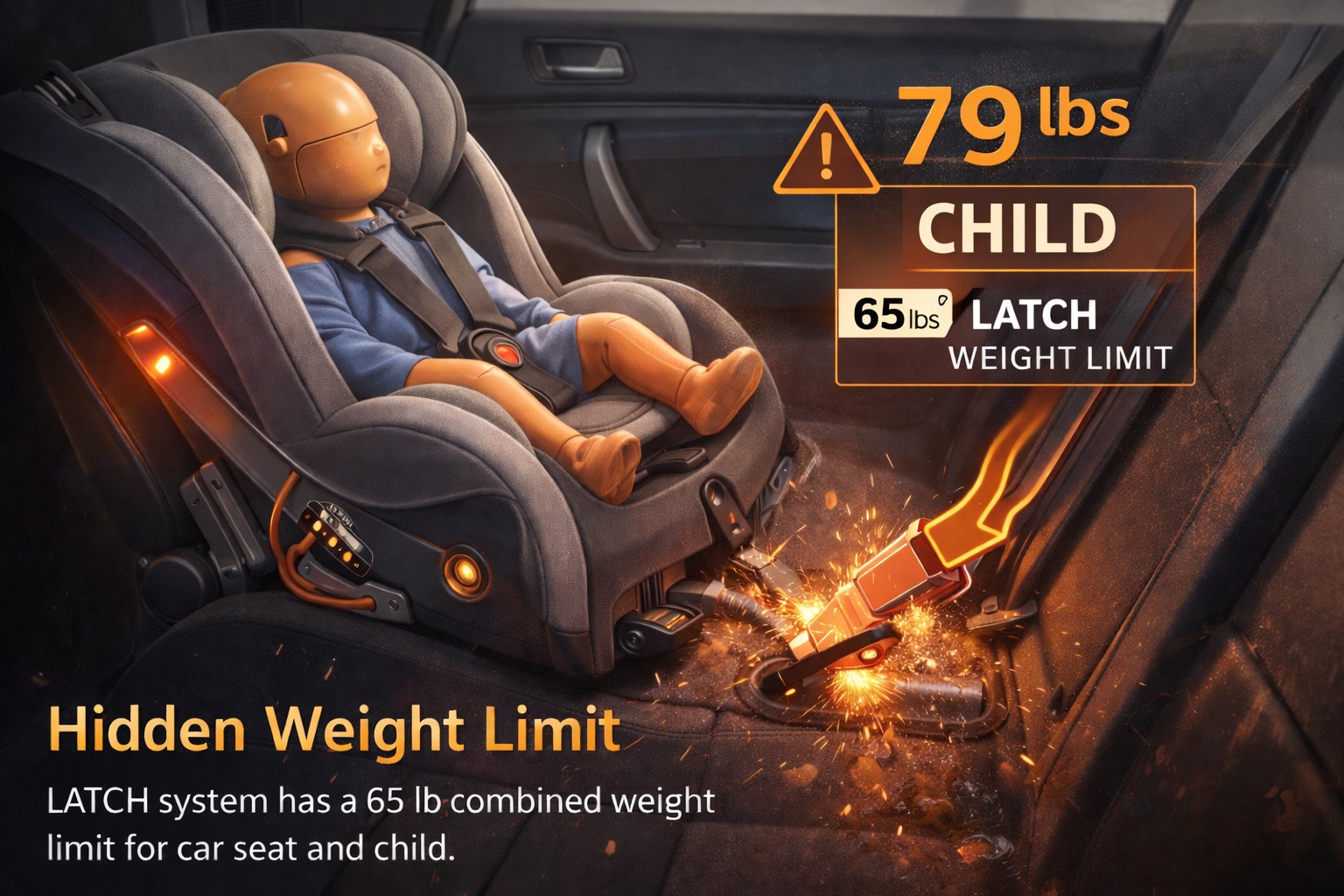
Your child’s car seat might look perfectly installed with that reassuring LATCH connector click, but here’s what manufacturers don’t advertise: you could be unknowingly putting your kid at deadly risk. The LATCH system—those convenient lower anchors that replaced wrestling with seat belts—carries a hidden 65-pound combined weight limit that most parents discover way too late. Exceed this threshold, and crash tests show anchor systems can fail catastrophically.
The math that’ll keep you up at night
Convertible car seats weigh 20-30 pounds before your child even sits down.
Here’s where things get concerning. That convertible seat already weighs 20-30 pounds, leaving just 35-45 pounds for your actual child—a limit most kids hit around age four, years before they’re ready for boosters. Children approaching this weight range are probably already pushing the envelope while parents remain completely unaware of the hidden restriction.
Why car companies finally came clean
Lab tests revealed anchor failures that prompted emergency federal labeling rules.
NHTSA mandated weight limit labeling on all car seats after February 27, 2014 because lab crashes kept showing the same terrifying pattern. Test dummies weighing 79 pounds combined with their seats generated forces exceeding 14,922 Newtons—enough to rip anchors clean out or deform them beyond function. No real-world failures have been reported yet, but the physics don’t lie.
The solution that’s been there all along
Vehicle seat belts handle 150+ pound adults and work perfectly for heavier car seats.
Switch to seat belt installation once you hit the weight limit, and you’re actually in safer territory. Seat belts are designed for full-grown adults and have zero weight restrictions. Forward-facing seats still need that top tether, but the installation is just as secure—maybe more so. Some parents resist because seat belts require tighter adjustments than LATCH’s fool-proof clicking, but your child’s life is worth the extra effort.
Check your limits before your next drive
Your car seat manual, vehicle specs, and federal limits might all differ—use the lowest number.
Pull out your car seat manual tonight and find the exact weight limit (it’s usually buried in fine print). Review your vehicle manual too—some manufacturers cap child weight at just 48 pounds for their anchor systems. Always use whichever limit is lowest: your seat’s specification, your car’s rating, or the federal 65-pound default. Your kid’s safety depends on parents who actually read the instructions everyone else ignores.