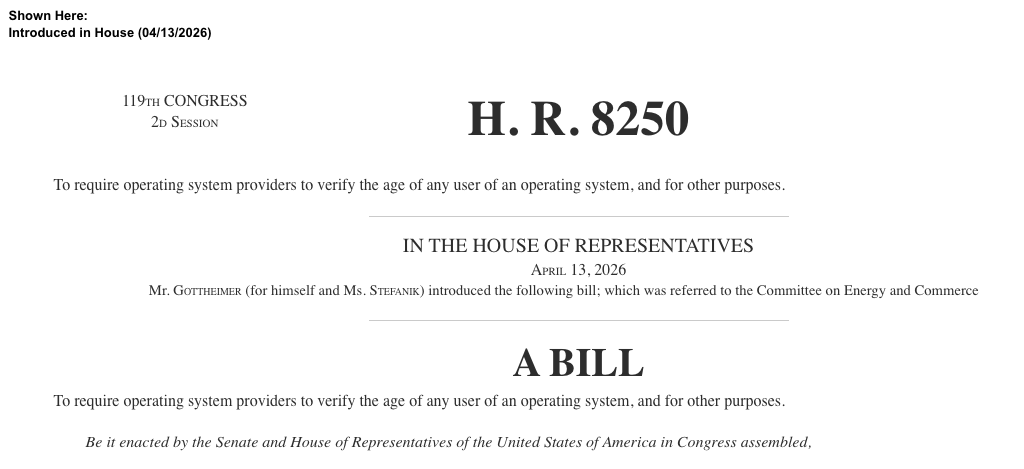
Your laptop might soon demand proof of age before letting you browse freely. H.R. 8250, a federal bill winding through Congress, requires every operating system provider in America to verify user ages and expose that data through APIs. This isn’t limited to social media apps—we’re talking about the core software running your PC, smartphone, and smart home devices.
The bill mirrors California’s A.B. 1043, which passed unanimously and takes effect January 2027. Similar legislation is advancing in Colorado, Illinois, Louisiana, New York, Texas, and Utah. The pattern is clear: age-gating is coming to your desktop whether you like it or not.
Your Internet Gets the Training Wheels Treatment
Apps default to most restrictive settings when operating systems can’t provide age signals.
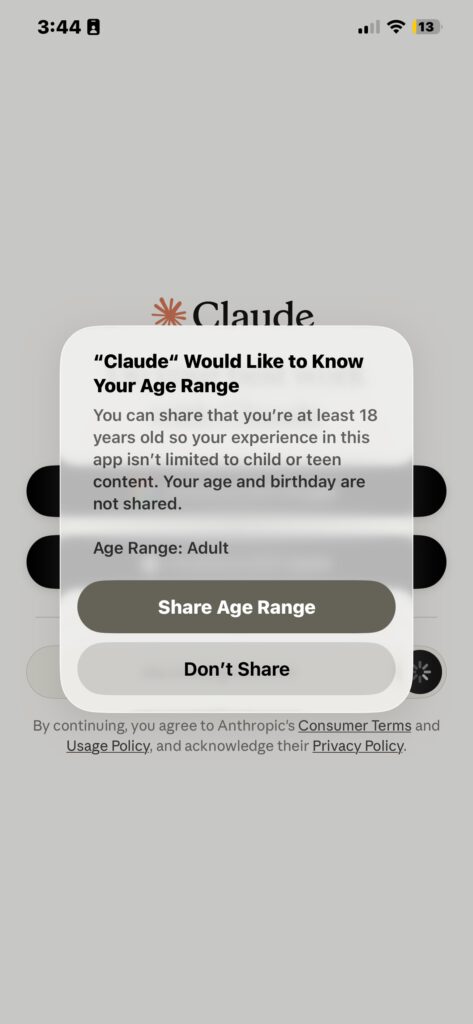
Here’s where things get dystopian. Under these laws, apps and websites query your OS for age bracket information. No signal? You get treated like a child regardless of your actual age. System76, a Linux manufacturer, warns that “Linux distributions that do not provide an age bracket signal will result in a nerfed internet.”
You are trying to access news sites, streaming services, or productivity tools only to hit content restrictions designed for elementary schoolers. Open-source operating systems—beloved by developers and privacy advocates—face impossible compliance burdens. Small Linux distributions can’t afford the infrastructure for age verification, potentially facing fines up to $7,500 per violation.
The Surveillance State Wears a Child Safety Mask
Critics argue the legislation enables government monitoring while failing to protect minors.
The Electronic Frontier Foundation argues these mandates strike at “the foundation of the free and open internet.” They’re not wrong. Creating government-mandated user tracking systems affects everyone, not just kids. Your age verification data becomes another point for potential surveillance abuse.
The cruel irony? This probably won’t protect children. Savvy teens already use virtual machines and fake birthdates to bypass restrictions. Meanwhile, legitimate users face privacy invasion and restricted access to information.
Your Computing Freedom Hangs in the Balance
Device fragmentation and compliance costs could reshape how Americans interact with technology.
If H.R. 8250 passes, expect your device costs to rise as manufacturers build compliance infrastructure. Operating systems might fragment between “verified” and “unverified” versions. The free, open internet that made modern computing possible gets replaced by walled gardens and government oversight.
This represents a fundamental shift from personal computing freedom to state-supervised digital experiences. Your choice: accept surveillance as the price of internet access, or watch your devices become increasingly hobbled by regulations disguised as child protection.