Half a million gallons of water daily sounds manageable until your community utility starts doing the math. The Ypsilanti Community Utilities Authority just imposed an unprecedented 12-month moratorium on water and sewer services to hyperscale data centers, effectively blocking the University of Michigan and Los Alamos National Laboratory’s $1.2 billion computing facility.
This isn’t your typical NIMBY resistance. The April 2026 decision represents the first known case of a municipal utility wielding infrastructure access as leverage against major tech expansion.
The Blocked Supercomputer Project
Nuclear weapons stewardship meets local water politics in southeastern Michigan.
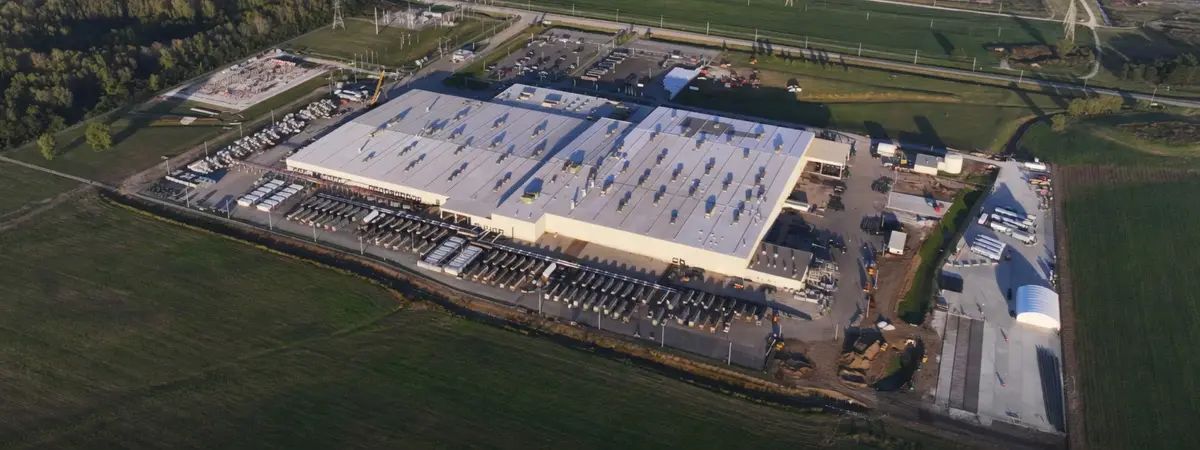
The proposed 220,000-square-foot facility would house one of two 55-megawatt supercomputers designed for what U-M and LANL call “nuclear weapons stewardship”—computational modeling that supposedly eliminates the need for physical testing. The water demand would strain local capacity even though sourcing comes from the Great Lakes Water Authority, not the Huron River.
U-M insists no nuclear materials would be stored or handled on-site. Township Attorney Douglas Winters wasn’t buying it, calling the facility “the digital brain” that makes it “a high value target.”
Community Pushback Goes Beyond Security
Housing developers and residents fear capacity competition from tech infrastructure.
Opposition extends beyond nuclear anxiety. YCUA has 4-5 million gallons daily in excess wastewater capacity, but multiple proposed data centers could exhaust that buffer. The utility’s presentation referenced American Water Works Association research labeling hyperscale facilities as “high-impact customers” that fundamentally alter infrastructure planning.
Local housing and business development faces direct competition for utility capacity—a resource constraint that Oracle’s nearby $16 billion facility already highlighted.
The New Infrastructure Chokepoint
Municipal utilities emerge as unexpected gatekeepers in the AI boom.
Your local water authority just became the latest bottleneck in America’s AI infrastructure race. The YCUA moratorium affects all hyperscale data centers, AI computing facilities, and high-performance centers seeking new connections. This creates a template other communities could follow as data center demands surge nationwide.
U-M and LANL plan to break ground despite the moratorium, setting up a potential legal showdown between federal research priorities and local infrastructure governance. The outcome could determine whether communities retain veto power over the computing facilities reshaping American landscapes—one water line at a time.