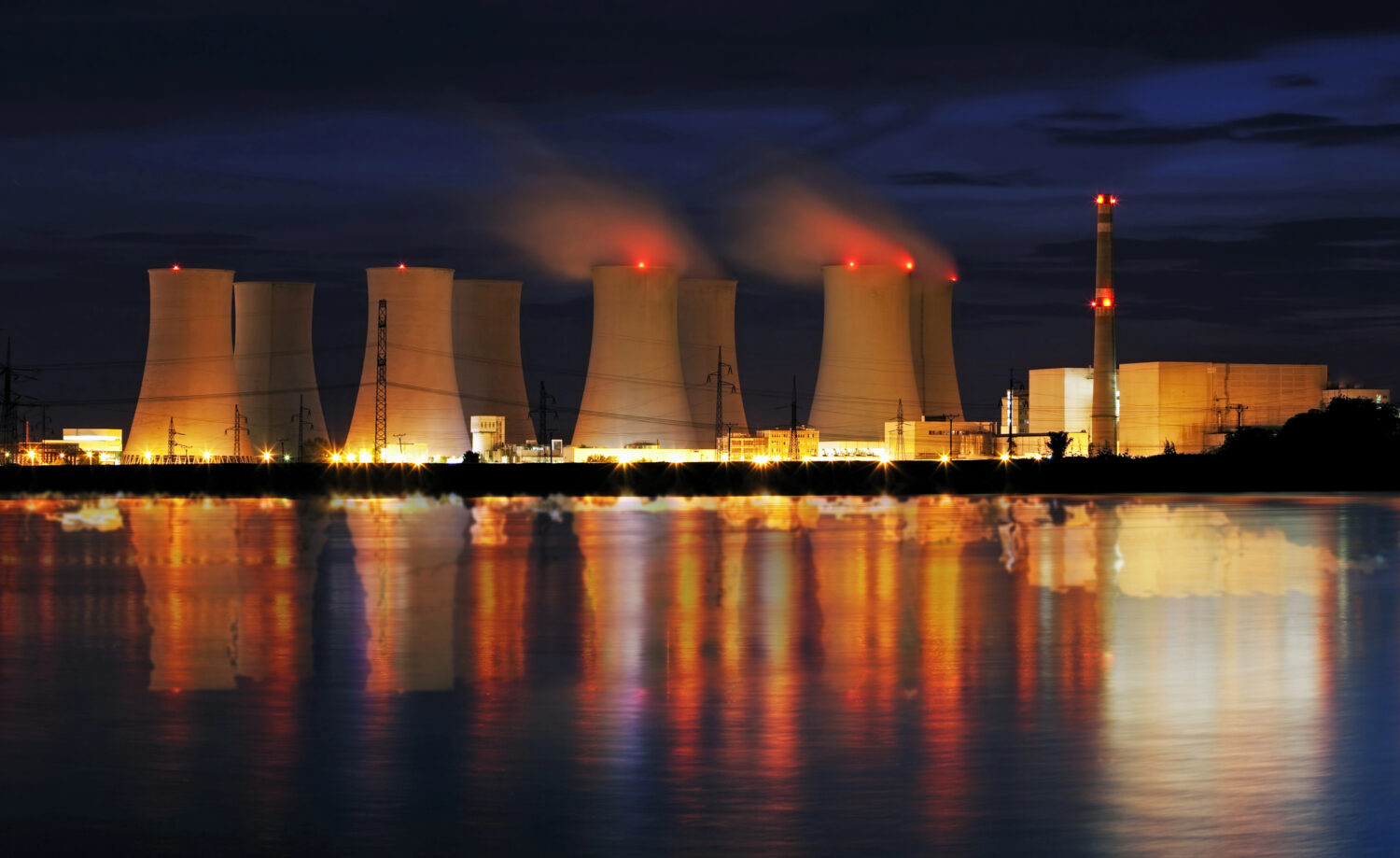
Every AI query you run draws on data centers that need firm, around-the-clock power. Amazon is now betting on reactor technology that has never been commercially operated to supply it, announcing a joint effort with American Electric Power and X-energy to evaluate a 12-unit nuclear facility at the former Breed Generating Station in Sullivan County, Indiana.
The proposal is a development commitment, not a construction announcement. A construction start date, commercial-operation target, final investment decision, and capital budget have not been publicly disclosed.
What the Deal Actually Is
Amazon would fund development and purchase power, while AEP would operate the facility and X-energy would supply its Xe-100 reactor technology.
Twelve Xe-100 reactors, each rated at 80 megawatts, would combine for a total output of 960 MW at the Sullivan County site. Amazon would fund development and intends to purchase the plant’s electricity through a long-term contract, with AEP in the operator role and X-energy providing reactor technology.
Unlike a privately isolated arrangement, the plant would supply both the regional grid and Amazon’s data centers. The Indiana project is the second commercial deployment announced under Amazon and X-energy’s collaboration, which targets more than 5 gigawatts of new U.S. nuclear capacity by 2039.
Amazon led X-energy’s $700 million Series C-1 financing round in 2024. That capital is directed toward reactor-design completion, licensing, and a planned fuel-manufacturing facility in Tennessee.
For Amazon, the appeal is firm, low-carbon electricity for data centers whose demand keeps growing with cloud computing and AI workloads. The intended power-purchase arrangement also gives the project a prospective commercial customer before construction begins.
What Is Not Settled
Several critical questions remain unanswered, starting with the fact that no commercial Xe-100 reactor has yet been completed or operated.
No commercial Xe-100 has been completed or operated anywhere. X-energy’s first planned deployment, four reactors at Dow’s Seadrift chemical site in Texas, has not broken ground. The construction-permit application was submitted to the Nuclear Regulatory Commission in 2025, and the NRC has since issued an environmental assessment with a finding of no significant impact, though the full permit decision remained pending as of publication.
Seadrift would be an important reference project for X-energy’s commercialization strategy, and Indiana’s timeline would benefit from demonstrated construction and operating experience there. The Seadrift project carries additional complications: Texas officials filed a lawsuit against the site alleging repeated water and solid-waste violations. Those allegations concern the host industrial facility, not X-energy’s reactor design or nuclear safety record.
Recent large-reactor construction in the United States, most visibly the Vogtle expansion in Georgia, ran billions of dollars over budget and years behind schedule. SMR developers argue that standardized, factory-produced reactors will break that pattern. The argument is widely cited within the industry, but the cost and schedule benefits have not been demonstrated at commercial scale.
Market Context
X-energy shares rose sharply after the Indiana announcement before surrendering most of those gains.
X-energy went public on Nasdaq at $23 per share and rose roughly 27% on its first trading day. According to TechCrunch, shares subsequently fell nearly two-thirds from the offering price before this announcement, then climbed about 10% in premarket trading after the Indiana news before giving back most of those gains by the time markets opened.
What to Watch
The Seadrift project in Texas is the clearest near-term indicator of whether X-energy can move from licensing into construction.
The decisive milestone is whether X-energy can advance Seadrift from regulatory review into actual construction and operation. If that project is built and operates successfully, Indiana becomes a credible next step. If Seadrift is delayed, Indiana would remain a feasibility-stage project with no announced construction schedule or operating date.