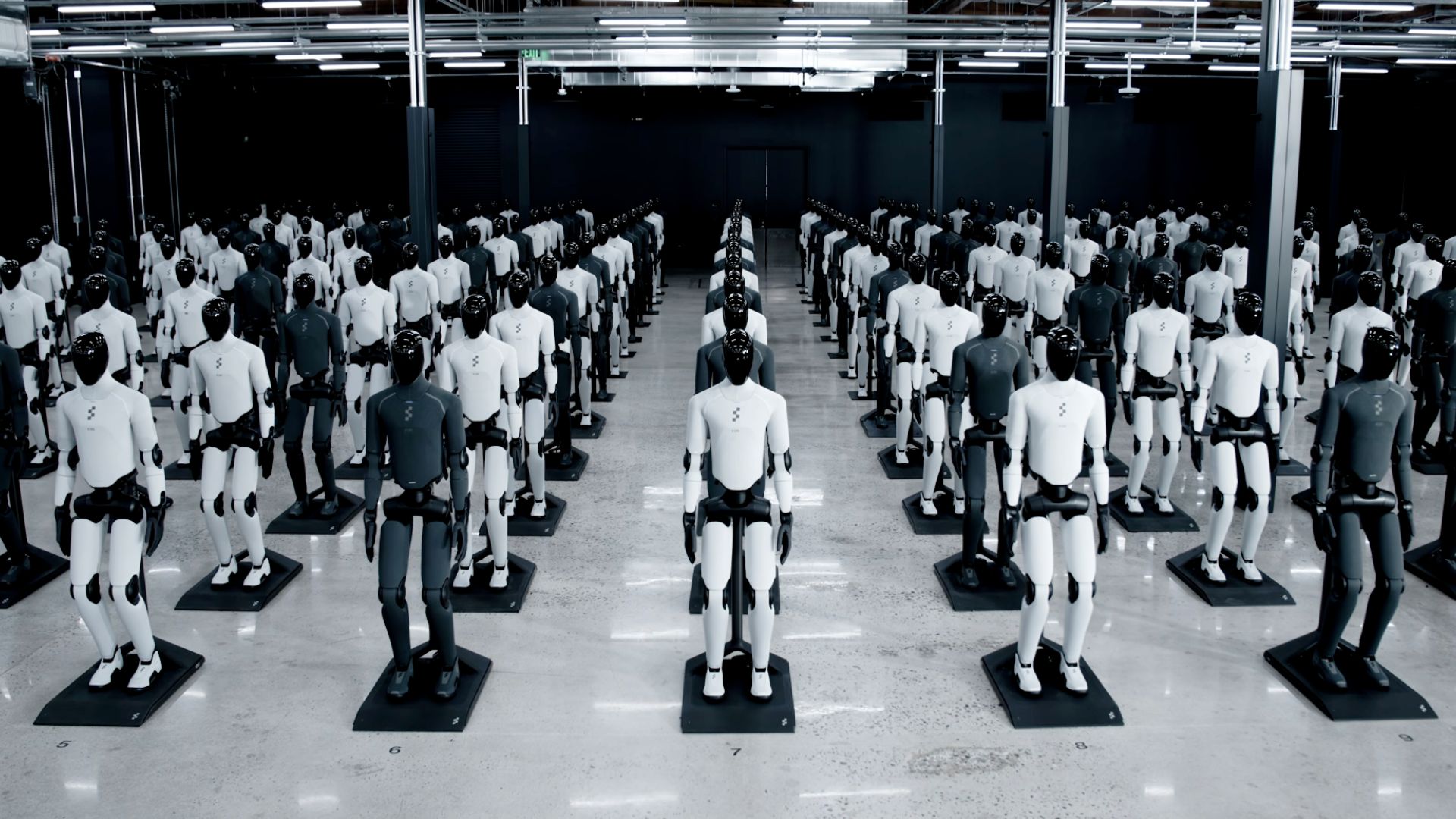
Scaling robotic manufacturing from one unit per day to one per hour sounds like Silicon Valley fever dream territory, but Figure AI just pulled it off in under four months. That 24x production increase at their BotQ facility represents the kind of manufacturing breakthrough that separates actual robotics companies from PowerPoint presentations with venture funding.
From Prototype Hell to Production Paradise
Figure’s California facility now churns out 55 Figure 03 humanoids weekly with 80% first-pass yields.
The numbers tell the story of serious manufacturing chops. Over 350 Figure 03 units have shipped, each surviving 80 functional tests including robotic squats and jogging sessions that would humble most gym bros. Battery production hits 99.3% yield rates while custom actuators roll off dedicated lines. This isn’t garage-built hardware anymore — it’s industrial-grade production with over 150 networked workstations running custom manufacturing software.
Walking, Talking, and Actually Working
The Helix System 0 upgrade gives Figure 03 robots zero-shot stair navigation without human intervention.
Here’s where things get genuinely impressive. The latest Helix AI integration combines stereo vision with proprioception — basically giving robots the spatial awareness to navigate stairs and uneven terrain without prior mapping. Trained through reinforcement learning in simulation, then deployed directly to real-world robots, this represents the sim-to-real transfer that robotics engineers have been chasing for years. No more robots tumbling down staircases like expensive metal pinballs.
The Reality Check You Actually Need
Figure’s targeting 12,000 units annually, scaling toward 100,000 over four years for commercial applications.
Before you start budgeting for your robot butler, consider the timeline and economics. Figure’s initial production volume suggests these machines will serve industrial and commercial applications rather than suburban driveways. CEO Brett Adcock’s weekly production targets sound ambitious, but the proof lives in consistent delivery rather than press releases.
Manufacturing Milestone Worth Watching
This production scale-up could position Figure competitively in the expanding humanoid robot market.
The real test comes when field deployments generate enough data to refine the Helix AI model through edge-case failures and real-world scenarios. If Figure maintains this production cadence while improving functionality, they’ve solved the hardest part of the humanoid robot equation: building them reliably at scale.