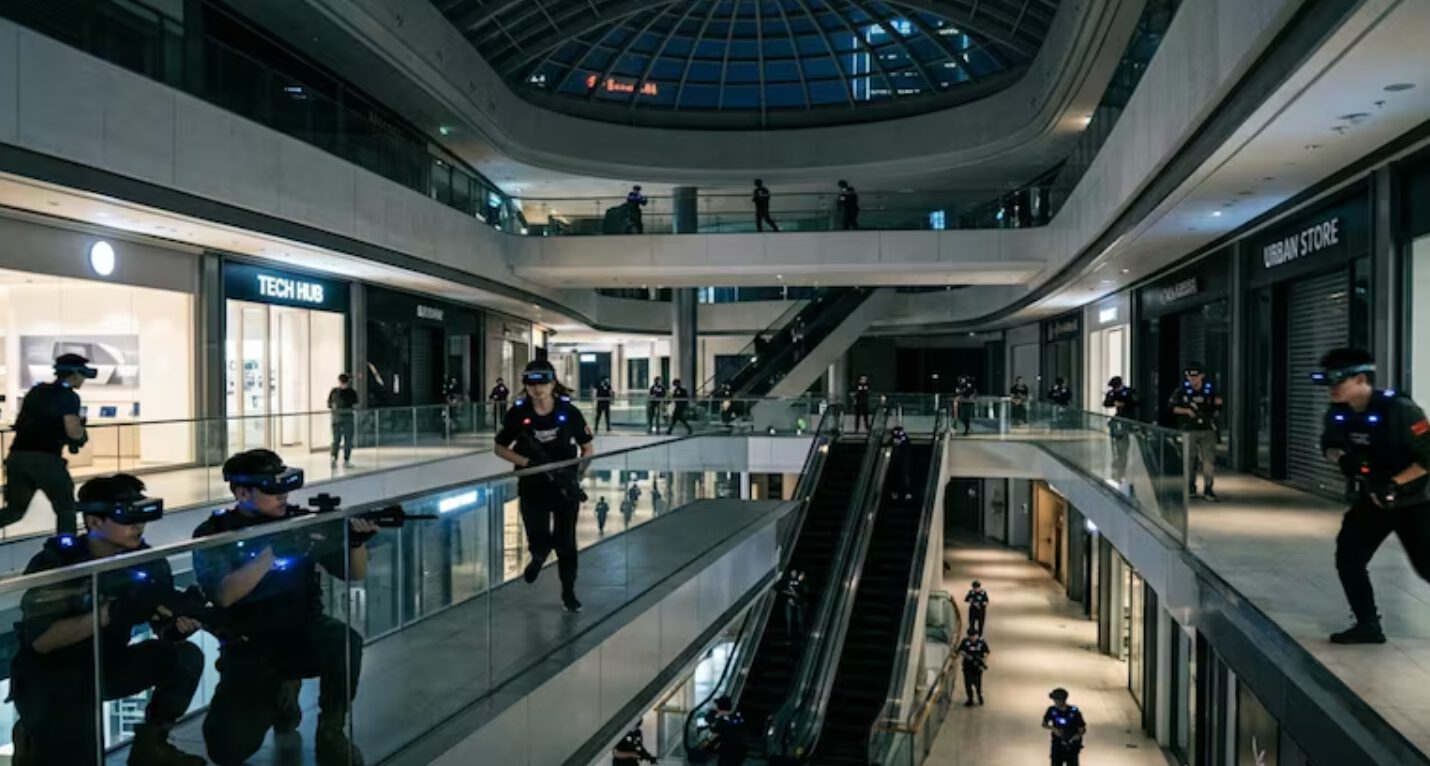
You know that eerie feeling when you walk through a half-empty mall, past shuttered stores and echoing footsteps? China’s Gen Z has found a way to breathe life back into those spaces—by turning them into actual battle royale arenas. Using AR technology and smartphone apps, young gamers are transforming dead shopping malls in major cities into after-hours gaming experiences that blur the line between digital entertainment and physical activity.
These events aren’t casual gaming sessions. Organized during off-hours with support from mall landlords, sessions can accommodate dozens of players who navigate through actual mall corridors, escalators, and food courts while their phones overlay digital battle mechanics onto the physical environment. The technology recreates familiar elements from video games like PUBG and Fortnite—shrinking safe zones, team combat scenarios, and strategic positioning—but requires real running, hiding, and coordination.
Beyond Screen Fatigue
This generation craves authentic experiences that combine digital skills with physical movement.
The trend represents something deeper than gaming innovation—it’s a response to digital burnout among young people who’ve grown up with smartphones and online gaming. Rather than passively consuming entertainment, these players are seeking experiences that foster genuine social connections through shared physical challenges and collaborative gameplay.
Mall owners actively support these events as a solution to declining foot traffic in retail spaces that struggle to remain relevant in China’s evolving consumer landscape. Empty storefronts become strategic cover points, abandoned corridors transform into tactical pathways, and defunct retail spaces suddenly serve a purpose again. The arrangement benefits both parties: young people get unique entertainment venues, while property owners see their underutilized spaces generating activity and potential revenue.
The Future of Phygital Entertainment
This fusion of physical and digital gaming could revolutionize location-based entertainment globally.
What’s emerging in Chinese cities signals a broader shift toward “phygital” experiences that engage both mind and body. The technology foundation already exists—smartphones capable of sophisticated AR processing, location-tracking capabilities, and a generation comfortable with blending digital and physical activities.
This development extends beyond gaming or retail revitalization. It demonstrates how young people are reimagining urban spaces, creating new forms of social interaction that require both digital literacy and physical engagement. The model could inspire similar innovations globally, where declining retail infrastructure gets repurposed for interactive entertainment that combines the competitive excitement of online gaming with real-world movement and face-to-face social bonding.
Your next gaming session might not require a console at all—just running shoes and a willingness to explore how digital worlds can transform physical spaces.