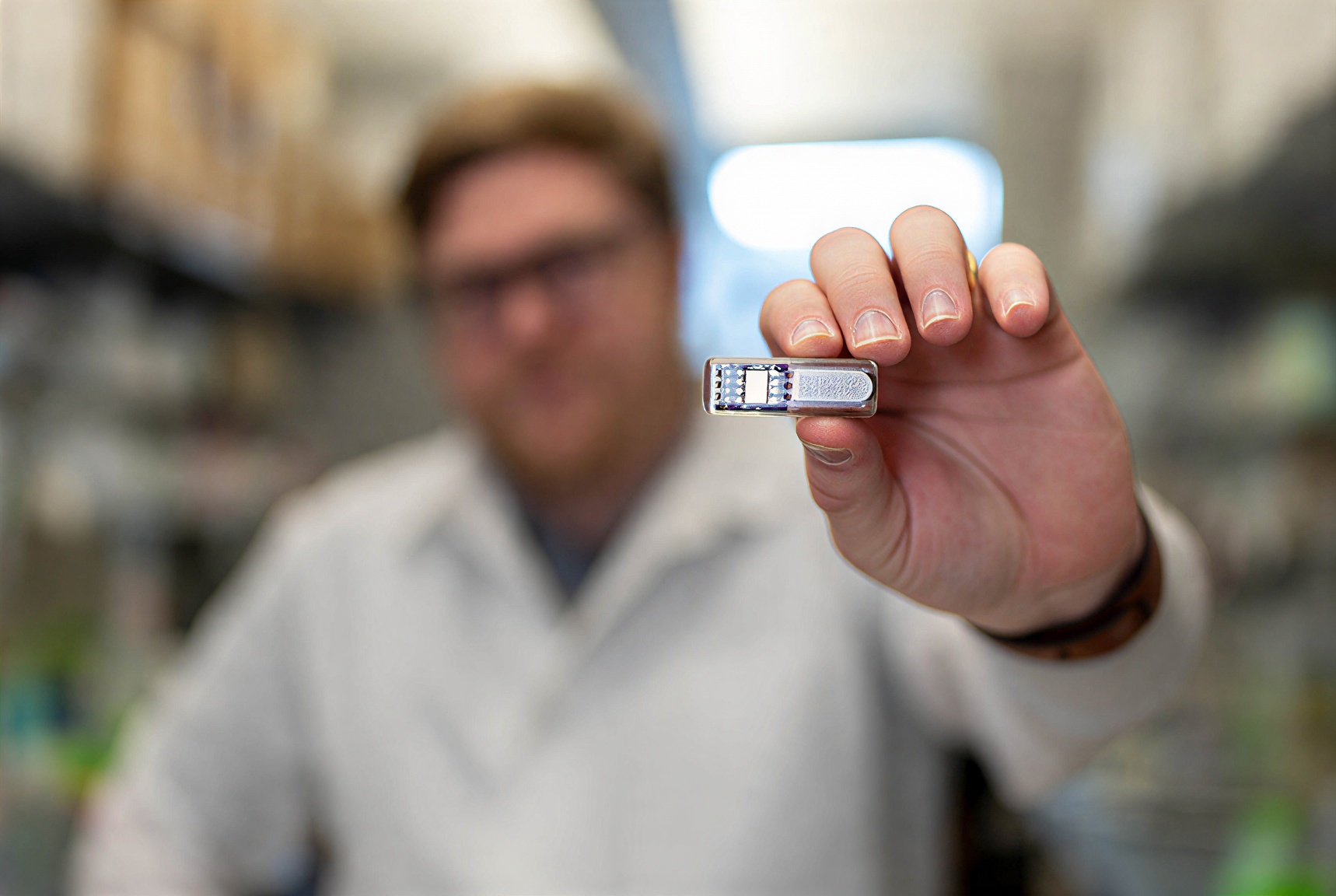
The wireless implant produces anti-HIV antibodies, appetite hormones, and diabetes medication simultaneously—all from a device the size of folded gum. You know the daily injection routine that plagues chronic disease management? Northwestern University researchers just made it obsolete with their HOBIT system, a fully implantable “living pharmacy” published March 27, 2026 in Device journal. This multi-university collaboration with Rice and Carnegie Mellon represents the first time engineered cells have successfully delivered multiple biologics on-demand for an entire month.
The Oxygen Breakthrough That Changes Everything
Electrocatalytic oxygenator keeps therapeutic cells alive six times longer than conventional methods.
HOBIT solves the biggest problem in cell-based drug delivery—oxygen starvation kills implanted cells within days. The device uses electricity from its onboard battery to split water molecules via an iridium oxide catalyst, generating oxygen directly inside your body. This breakthrough achieved 65% cell survival compared to just 20% in non-oxygenated controls, enabling six times higher cell densities. Think of it as a cellular life support system that transforms your subcutaneous tissue into a pharmaceutical factory.
Three Drugs, One Month, Zero Injections
Rat studies demonstrate stable production of HIV antibodies, metabolism hormones, and diabetes medication.
HOBIT simultaneously produced an anti-HIV antibody, leptin (appetite regulation), and exenatide—a first-generation GLP-1 drug for type 2 diabetes. Despite exenatide’s short 2.5-hour half-life, the system maintained steady drug levels throughout the month-long study. For patients juggling multiple daily medications, this represents a fundamental shift from external dosing to internal production. Your body becomes the pharmacy, eliminating adherence issues that derail treatment effectiveness.
Safety Data Clears Path to Human Trials
Primate study confirms safe implantation and removal with minimal immune response after one month.
A separate study in a seven-year-old cynomolgus macaque demonstrated safe implantation and removal of the cell-free device with no major health risks or serious immune reactions. “This work highlights the broad potential of a fully integrated biohybrid platform for treating disease,” says Jonathan Rivnay, Northwestern’s lead researcher. The wireless control system allows external programming while shielding cells from immune attack—addressing two critical hurdles for clinical translation.
From Diabetes to HIV, the Future of Chronic Care
Technology could expand to insulin production and other cell therapies requiring continuous delivery.
Next steps include larger animal testing and expansion to insulin-producing cells for diabetes treatment. HOBIT’s ability to produce biologics with vastly different properties simultaneously opens possibilities across chronic conditions requiring complex medication regimens. While human trials remain years away, this platform represents the kind of paradigm shift that turns science fiction into standard care—your implanted cells working 24/7 so you don’t have to.