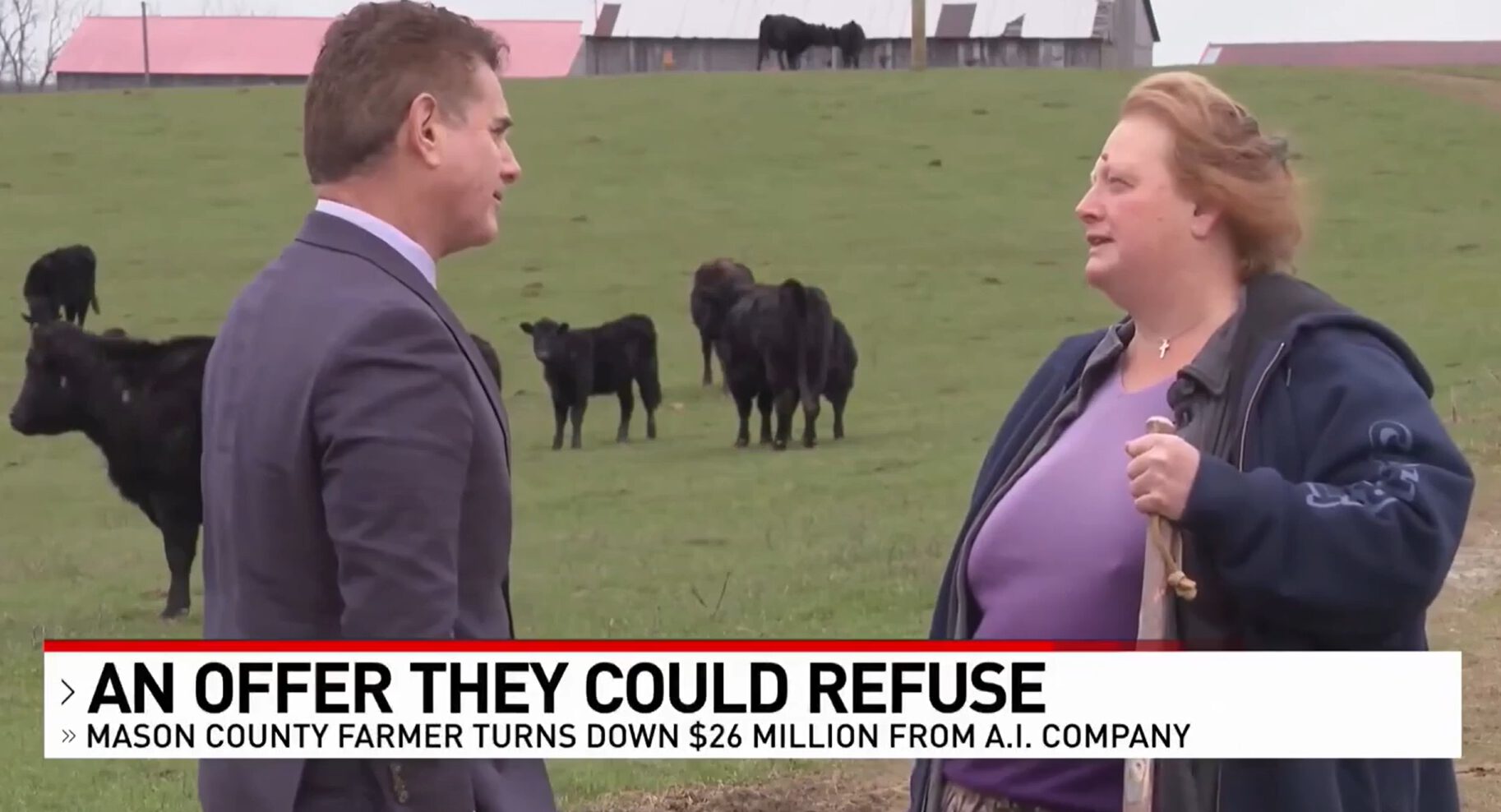
Twenty-six million dollars should change anyone’s mind about anything. That’s roughly ten times what farmland typically sells for in this part of Kentucky—an offer so extraordinary it defies local real estate logic. Yet according to reports, the Huddleston family looked at that figure from an unnamed Fortune 100 artificial intelligence company and said no.
The company allegedly wanted approximately half of the family’s farmland near Maysville for a data center project. At regional rates, the acreage might fetch a fraction of the reported offer. This represented the kind of financial windfall that transforms entire family trees. The Huddlestons apparently weren’t buying what the AI giants were selling.
Heritage vs. Hype
Four generations of farming carry weight that venture capital can’t measure.
Delsia Bare, reportedly Huddleston’s daughter, supposedly cut through the noise with clarity about their decision: “My grandfather and great-grandfather and a whole bunch of family have all lived here for years, paid taxes on it, fed a nation off of it.” Money talks, but apparently not loud enough to drown out the voices of ancestors who worked this same soil.
The family’s reported rejection didn’t derail the project—it just forced the company to pivot. They’re allegedly moving forward with land from more willing sellers, because in today’s AI gold rush, there’s always another property owner who’ll take the deal. The project continues its march through local planning processes.
The Real Cost of Progress
Behind every data center promise lies a community grappling with what development actually delivers.
Huddleston reportedly dismissed the company’s economic promises with skepticism, showing the kind of wariness that emerges when Silicon Valley meets rural America. Her perspective reflects broader tensions as communities watch data centers promise jobs and growth while questions remain about what these facilities actually deliver to local economies.
Reports suggest extensive rezoning efforts are underway, with public meetings potentially scheduled to determine the fate of this particular corner of Kentucky. But the Huddleston family has already voted with their feet—or rather, with their refusal to move them. In an era when everything seems negotiable, they’ve drawn a line that no algorithm can cross.
Their choice illuminates the cultural divide reshaping America: between those who see land as an asset to be optimized and those who view it as legacy to be preserved.