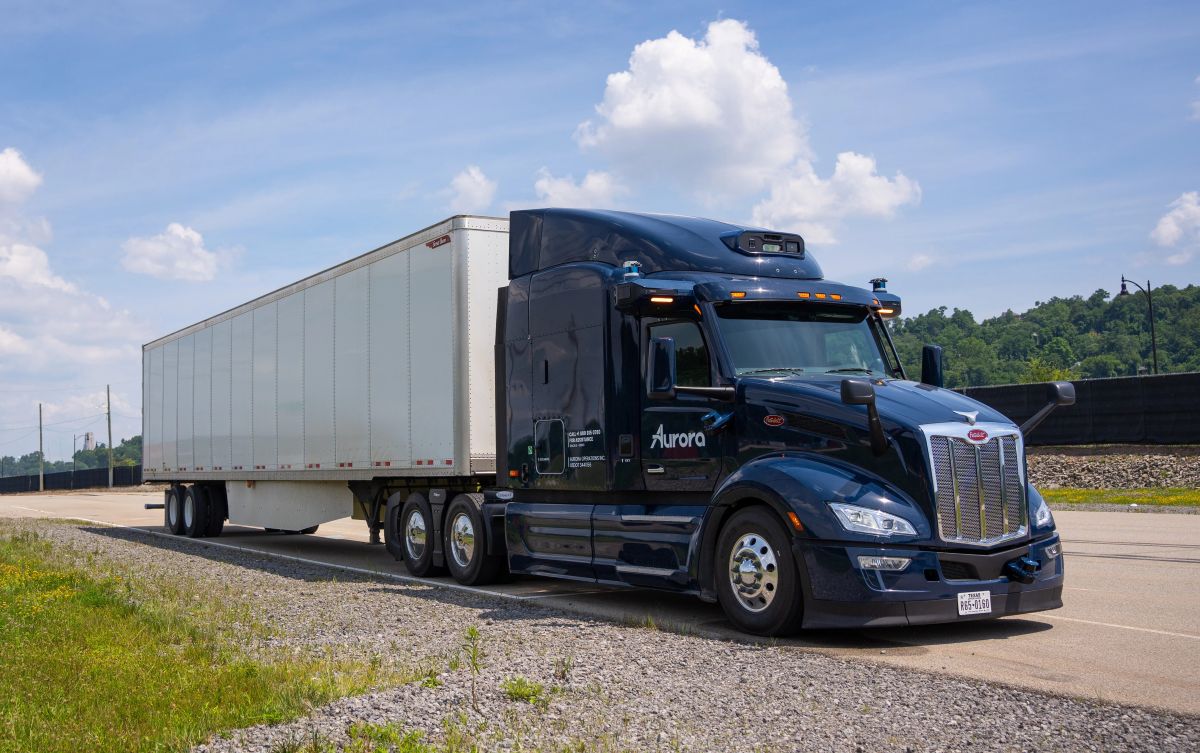
Sure, your fast-food order might soon arrive faster thanks to robotaxis driving the highways. Aurora Innovation just sealed a commercial deal with distribution giant McLane to haul actual cargo using fully driverless trucks between Dallas and Houston—no safety driver required.
From Testing to Trucking
This isn’t another “promising pilot program” announcement. Aurora’s trucks now run seven days a week carrying real McLane loads to supply fast-food chains across Texas. The setup works like a high-tech relay race: driverless Aurora trucks handle the highway stretch, then human drivers take over at terminals for local deliveries. A “human observer” rides along in the cab—think flight attendant, not co-pilot—because Paccar requires it, but they don’t touch the wheel.
The Numbers Behind the Breakthrough
The company’s safety case isn’t theoretical anymore. Aurora logged over 1,200 autonomous miles since launching commercial operations in April, building on three million supervised miles during testing. Their Aurora Driver system can predict red-light runners and detect pedestrians in low light—capabilities that matter when you’re hauling 80,000 pounds of cargo. Texas, New Mexico, and Arizona have all blessed driverless operations, making the Sun Belt America’s autonomous trucking corridor.
Beyond Dallas-Houston
McLane represents just the beginning. The company is expanding to distribution centers across the Sun Belt by December, with routes reaching:
- El Paso
- Phoenix
- Fort Worth
- Laredo
Nighttime runs start by mid-2025—because highways are emptier when most people sleep. Other partnerships include a 500-truck deal with Hirschbach Motor Lines and freight runs for Detmar Logistics, suggesting this technology is moving beyond one-off experiments.
Racing Past the Competition
“We are the first company to successfully and safely operate a commercial driverless trucking service on public roads,” declared Aurora CEO Chris Urmson. Competitor Kodiak achieved driverless deliveries in late 2024, but only on private mining roads. The difference matters—public highways mean real traffic, weather, and the chaos of human drivers cutting off 18-wheelers.
Your supply chains are about to get more predictable. Unlike human drivers who need breaks, sleep, and bathroom stops, these trucks can theoretically run 24/7. That efficiency could translate to faster restocking, fewer shortages, and potentially lower prices for everyday goods. The trucking industry’s $700 billion annual revenue is about to meet its algorithmic future—one highway mile at a time.