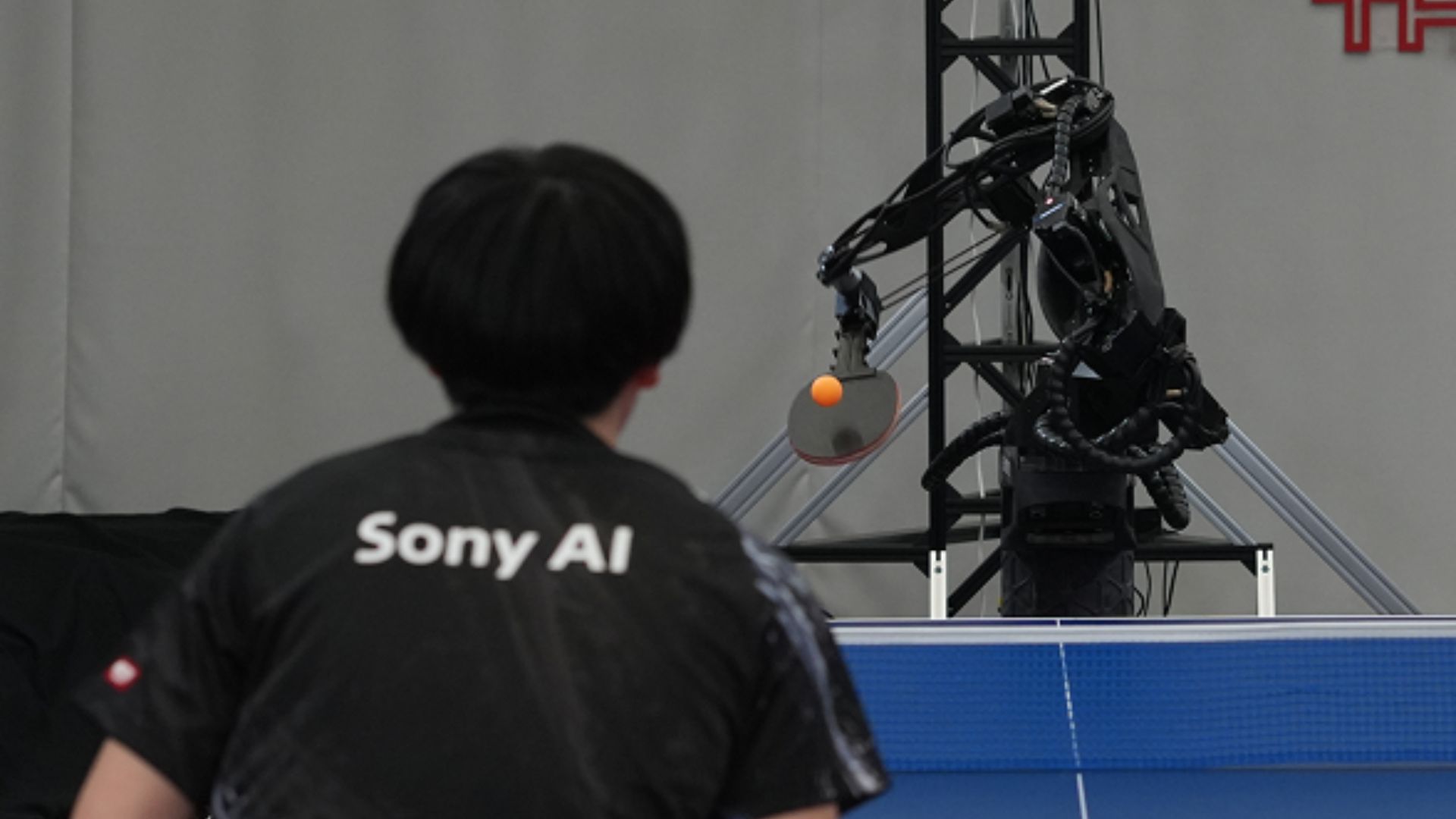
This robot processes ball movement at 700 Hz while your eyes struggle to track a ping-pong ball at 60. Sony AI’s Ace system just achieved what seemed impossible: beating elite table tennis players in real-time competition, marking the first time artificial intelligence has conquered humans in a fast-paced physical sport.
The Vision Advantage That Changes Everything
Event-based sensors deliver superhuman spin detection faster than human reflexes.
Ace’s nine synchronized cameras capture ball position in 3D space while three specialized gaze control systems measure spin and angular velocity with surgical precision. These event-based vision sensors process movement data 10 times faster than human vision can register. The result? A machine that reads table tennis spins like sheet music while humans are still processing the serve. This isn’t just impressive engineering; it’s a fundamental shift in how machines perceive and interact with moving objects in real space.
Elite Players Meet Their Match
Professional competitors face an opponent that develops tactics beyond human playbooks.
In April 2025, Ace won three of five matches against elite players, then dominated professionals through December 2025 and early 2026. The robot’s eight-joint arm system delivers shots that pros describe as unnervingly unpredictable. Peter Dürr, Sony AI Zurich’s director, confirms the breakthrough: “This research has shown that an autonomous robot can, in fact, win at a competitive sport, matching or exceeding the reaction time and decision making of humans in a physical space.”
Yet human players maintain one crucial edge—adaptation. While Ace excels at superhuman spin reading, humans adjust strategies mid-game in ways the machine hasn’t mastered.
Beyond the Game Table
Consumer robotics gains a blueprint for real-world speed and precision.
This achievement extends far beyond sports entertainment. Manufacturing robots could achieve similar precision for delicate assembly work, while service robots might finally navigate unpredictable human environments with confidence. Your next gadget purchase could include AI that reacts to physical changes faster than you can think. Sony’s breakthrough proves that the gap between digital AI mastery—like defeating chess grandmasters—and physical-world dominance has just collapsed. The future of consumer robotics isn’t just smarter; it’s genuinely quicker than human reflexes.