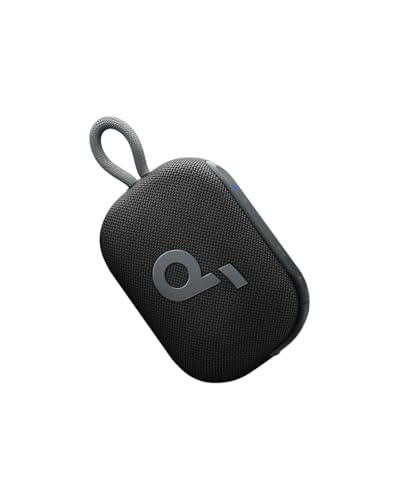




How does it perform?
The XSound Plus 2 punches above its weight class for a $70 speaker. Real-world testing shows it fills 200-square-foot spaces without breaking a sweat, though expect treble to thin out on bass-light tracks. Battery life hits 22 hours at 60% volume in controlled testing, but crank it to max with XBass engaged and you’re looking at 11-13 hours. The frequency response bottoms out between 30-40Hz in measurements, which is respectable for the size, but hip-hop fans will miss that chest-thumping sub-bass. Bluetooth range impressed, holding strong at 470 feet outdoors before crackling, though indoor performance drops to 60 feet through walls.
What’s it do best?
The XSound Plus 2 excels as an all-day outdoor companion that won’t die on you. That 22-hour tested battery life means multi-day camping trips without a charger. TWS pairing transforms the experience—two units create genuine stereo separation that a single speaker can’t touch. For the price, sound quality surprises. Mids come through clear, vocals sit forward in the mix, and the XBass mode adds punch without muddying everything up. The custom EQ in the Tribit app makes a real difference, letting you dial in sound that works for your music. At 1.28 pounds and 7.83 inches long, it drops into a backpack water bottle pocket and actually stays put.
Audio Performance Quality
Frequency Response Range
Wide frequency coverage determines how completely the speaker reproduces music across the audible spectrum.
Bass Extension: Tested 30-40Hz bass extension
Manufacturer Claimed Range: 50Hz to 20kHz
Testing reveals the XSound Plus 2 starts producing audible bass between 30-40Hz, better than the claimed 50Hz floor. Still, deep sub-bass that rattles your chest isn’t happening here.
Total Harmonic Distortion (THD)
Lower distortion preserves audio fidelity, especially important for vocal clarity and instrument definition.
At Moderate Volume (up to 80%): Minimal to no distortion reported
At Maximum Volume: Fair amount of distortion noted
The speaker stays clean through most of its volume range. Push it to ear-splitting levels and things get messy, but you’ve got plenty of headroom before hitting that wall. Multiple reviewers confirmed no distortion even at 100% volume with careful EQ settings.
Sound Character and Tuning
XBass Off: Emphasizes mids and treble with faint bass presence
XBass On: Substantially boosts low end, making kick drums and bass lines prominent
The default tuning leans bright, which works for podcasts and vocal-forward music but leaves bass-heavy genres feeling anemic. Flip on XBass and the speaker transforms—bass gets tight and integrated rather than boomy. The 30W output (dual 15W neodymium drivers) delivers surprising volume. One tester heard it two rooms away at 60% volume despite the speaker being wrapped in a jacket, stuffed in a backpack, and placed in an acoustically dampened room.
Connectivity Performance
Bluetooth Range
Extended range enables flexibility for outdoor use and larger spaces.
Outdoor Testing: 470 feet (140 meters) before signal degradation
Indoor Testing: 60 feet through walls
Real-world testing crushed manufacturer specs. One reviewer walked across an open park, hitting 470 feet before crackling started. Indoors, the 60-foot range covered most residential spaces without dropouts.
Codec Support Quality
Codec support impacts wireless audio quality and device compatibility.
Supported Codecs: AAC, SBC
Bluetooth Version: 5.3
Protocols: A2DP, AVRCP, HFP, HSP
The codec situation disappoints—no LDAC, no aptX, just basic AAC. For a budget speaker it’s acceptable, but audiophiles looking for high-res wireless will need to shop elsewhere. Bluetooth 5.3 does provide solid connection stability and multipoint pairing for two devices simultaneously.
Power Management and Battery Performance
Playback Duration
This is how long the speaker can run on a single charge. Extended runtimes are better because they reduce charging frequency during events and travel.
Real-World Testing (60% volume, XBass off): 22 hours measured
Real-World Testing (100% volume, XBass on): 11 hours 19 minutes
Real-World Testing (typical use): 10-13 hours
Moderate Daily Use (70% volume, 35-40 min/day): Multiple days between charges
Battery life meets manufacturer claims at moderate volumes with features disabled. Enable XBass and max out volume for parties and expect half the runtime. Still, 11+ hours of full-blast audio exceeds most competitors.
Charging Time
As you might expect, this is a measure of how long it takes to charge the speaker up.
Recharge Time (0-100%): 3-4 hours average
Charging happens at a reasonable pace through the now-standard USB-C port. Full depleted to full takes under 4 hours, and one reviewer reported just 2 hours for the initial charge out of the box.
Build Quality
Enclosure Material Quality
Construction materials determine long-term durability and premium feel.
Materials: Rubber-coated hard plastic body, metal mesh grille feels “sturdy” but “less hardy than rivals” according to customers.
The rubber-coated plastic feels decent but not bulletproof. The metal mesh grille covering the drivers raises durability concerns for rough bag transport. At 1.28 pounds, it’s light but not flimsy. The included lanyard feels cheap—reviewers questioned hanging a $70 speaker from what felt like a 50-cent cord.
Setup and Usability
Pairing and Connection
Bluetooth Pairing: Quick and straightforward
TWS Pairing: One-button stereo connection between two XSound Plus 2 units
Party Mode: Press TWS button again after stereo pairing to sync speakers for mono playback
Multipoint: Connects to two devices simultaneously (occasional sputtering on first setup; stable after reset)
Initial pairing takes seconds. The TWS feature impresses—tap the infinity button on two speakers and they connect, announcing left/right channels. Switch to party mode with another press to double volume for larger spaces.
Control Interface Design
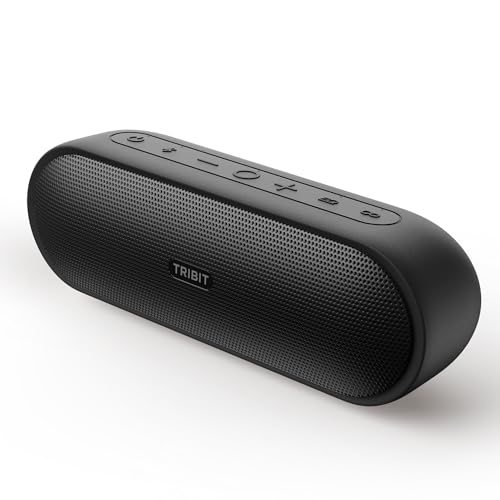
Physical Controls: Seven top-mounted buttons (power, pairing, volume +/-, play/pause/track skip, TWS, EQ mode)
Button Feel: Durable, embossed for tactile identification
All essential controls sit on top in a logical layout. The EQ button cycles through modes via LED color: white for XBass, blue for Audiobook, off for neutral. Physical controls eliminate phone dependency for basic functions.