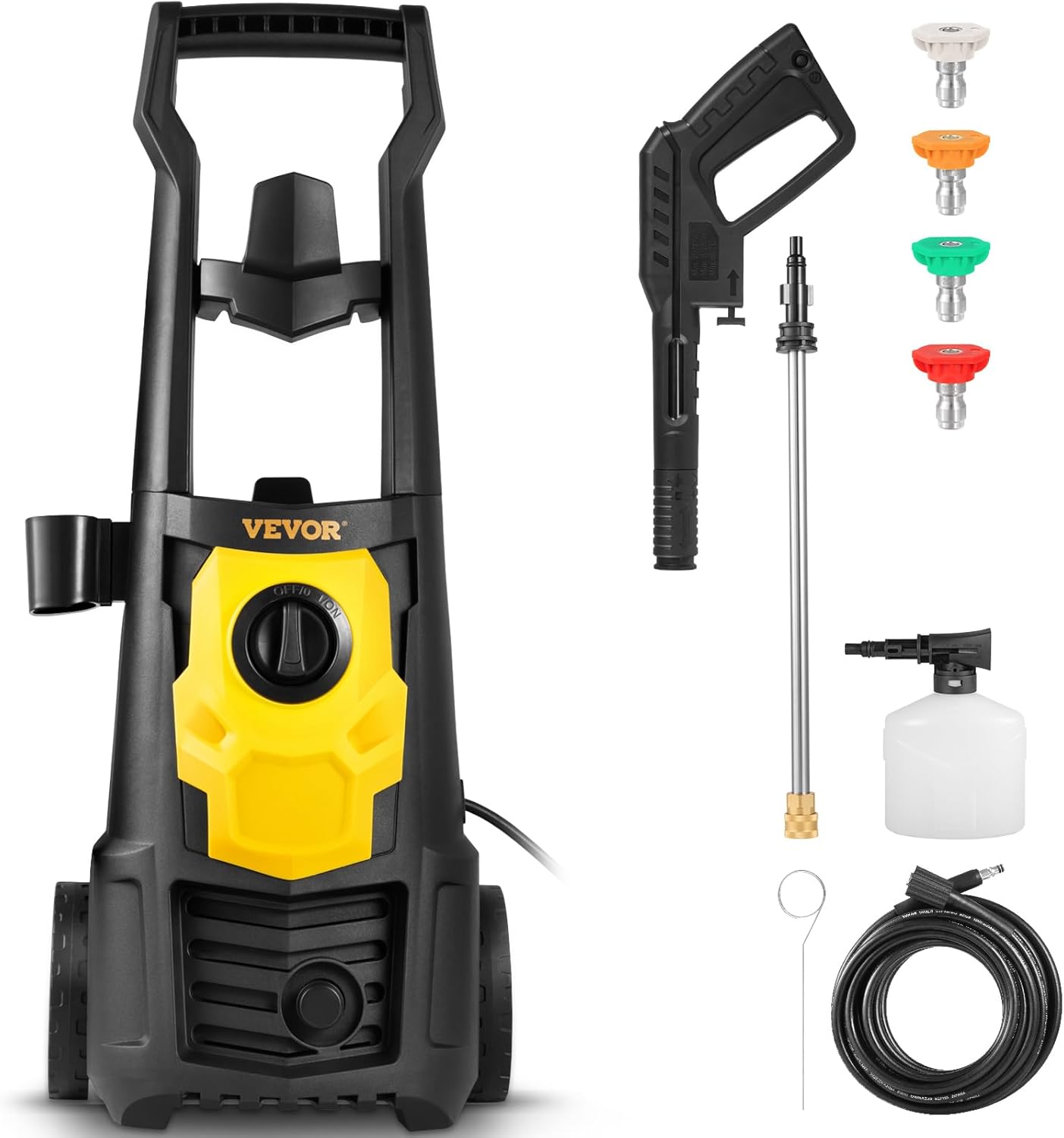






Dirt finds every outdoor surface you own. The patio, the siding, the car, the fence you keep meaning to scrub. I wanted a washer that could handle all of it without the noise, fumes, and upkeep of a gas machine. This Vevor electric model runs about $105, so I put it to work for a few weeks. The first thing it had to pass was the setup.
Setup
Setup took a few minutes. Four screws join the main pieces, and one person can build the whole thing. My one nitpick lines up with other owners. The printed instructions are thin, especially around the handle, so you work partly by feel. I still had it assembled and hooked to the garden hose fast, and from there I could see what the hardware promised.
The Specs
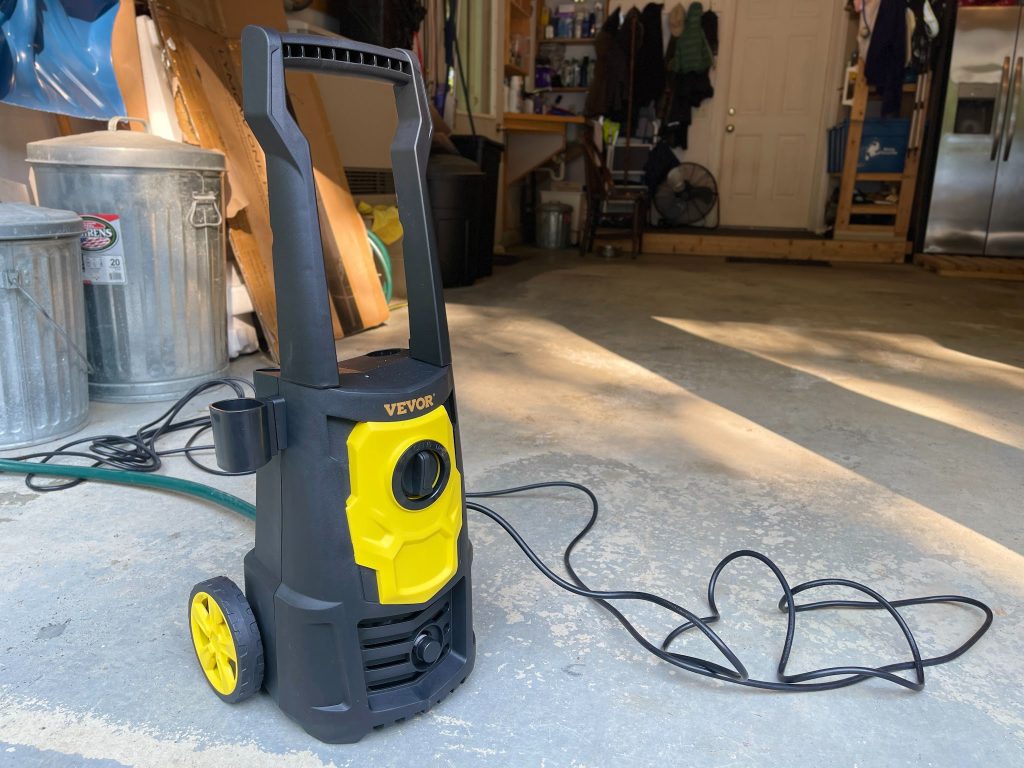
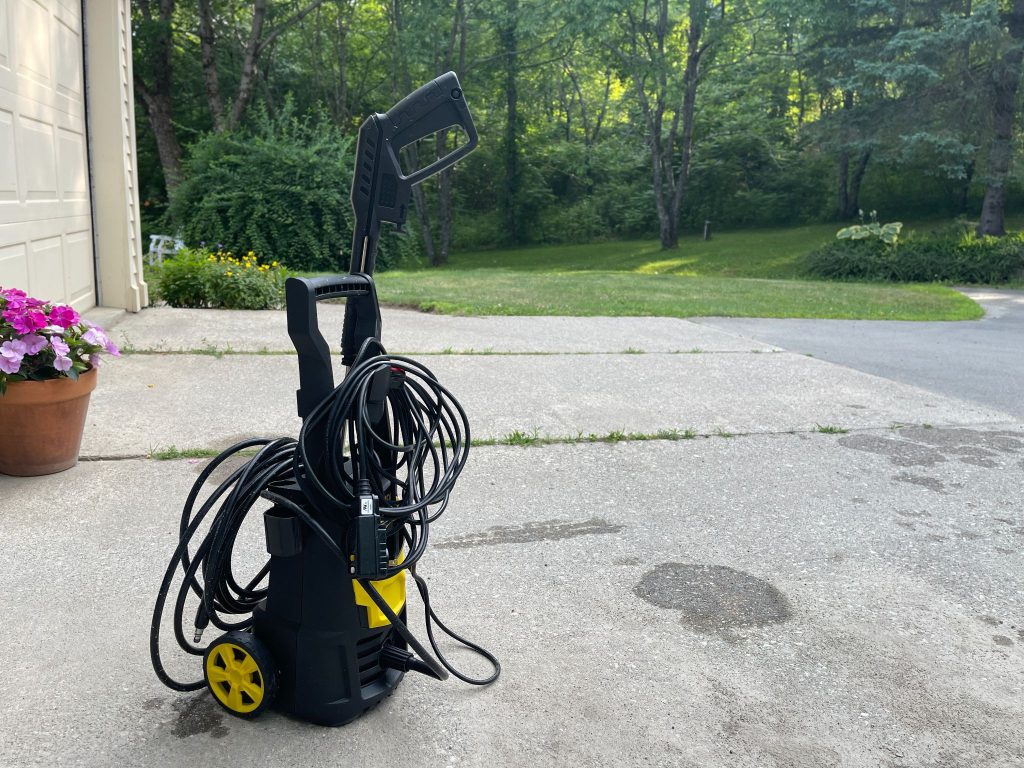
The numbers are simple. A 1500W motor drives it to a max of 2000 PSI and 1.76 GPM. It ships with a 30 foot high-pressure hose and a 35 foot power cord with GFCI protection. The body is IPX5 rated and ETL listed, weighs 19.8 pounds, stands about 26 inches tall, and shuts off on its own if the pump runs too hot. Vevor also recommends keeping sessions under three hours. Those numbers mean more once you line them up against the competition.
Where It Sits
In the budget electric class, this Vevor lines up against the Sun Joe SPX3000, rated near 2030 PSI by the PWMA, and the Westinghouse ePX3100, which claims 2300 max PSI at the same 1.76 GPM and adds anti-tip legs. Kärcher’s K1700 sits close at about 2125 PSI. Craftsman’s compact CMEPW1700 comes in lighter at 1700 PSI. Inside Vevor’s own line, you can pick 1.65, 1.76, or 1.8 GPM, with or without a hose reel. I tested the 1.76 GPM model without the reel. The spec sheet gets you interested, and picking the unit up is where it starts to earn the price.
Build and Feel
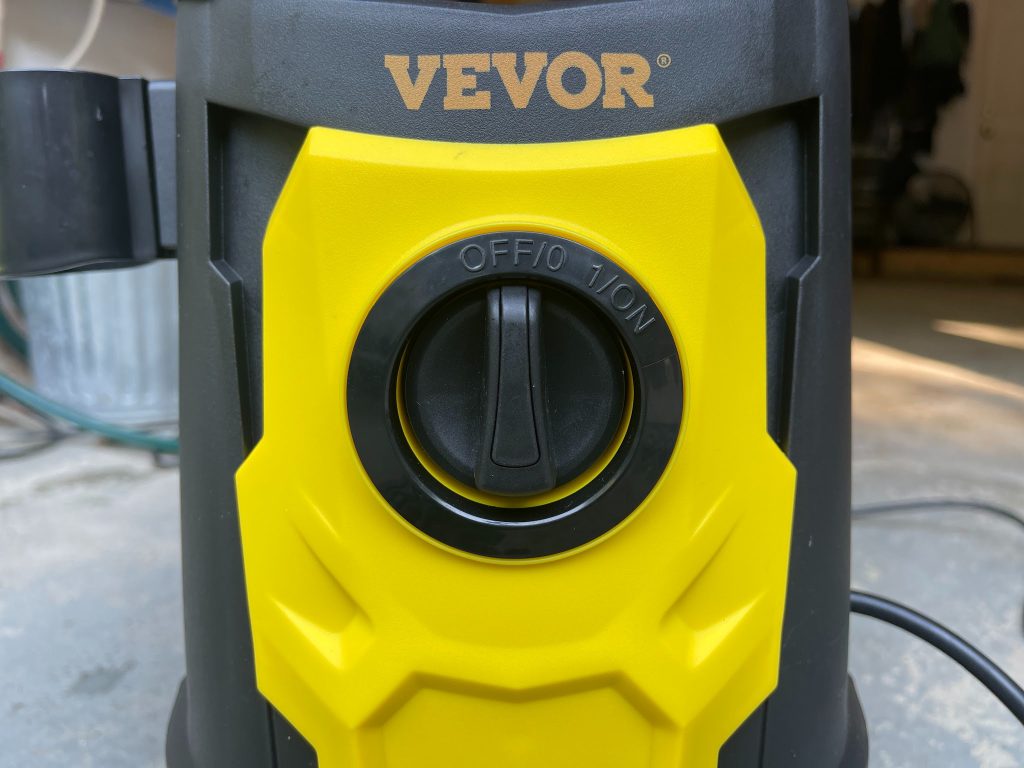
This is where the price makes sense. Fit and finish are clean, and a hands-on reviewer at The Gadgeteer found the same on their test unit. The trigger gun is the best part. It carries real weight, the trigger pulls smooth, and the press-type safety lock snaps in with a firm click. The motor runs on a Total Stop System, so it only fires while you hold the trigger, which keeps it quiet and eases wear on the pump. I trusted it with my kid nearby.
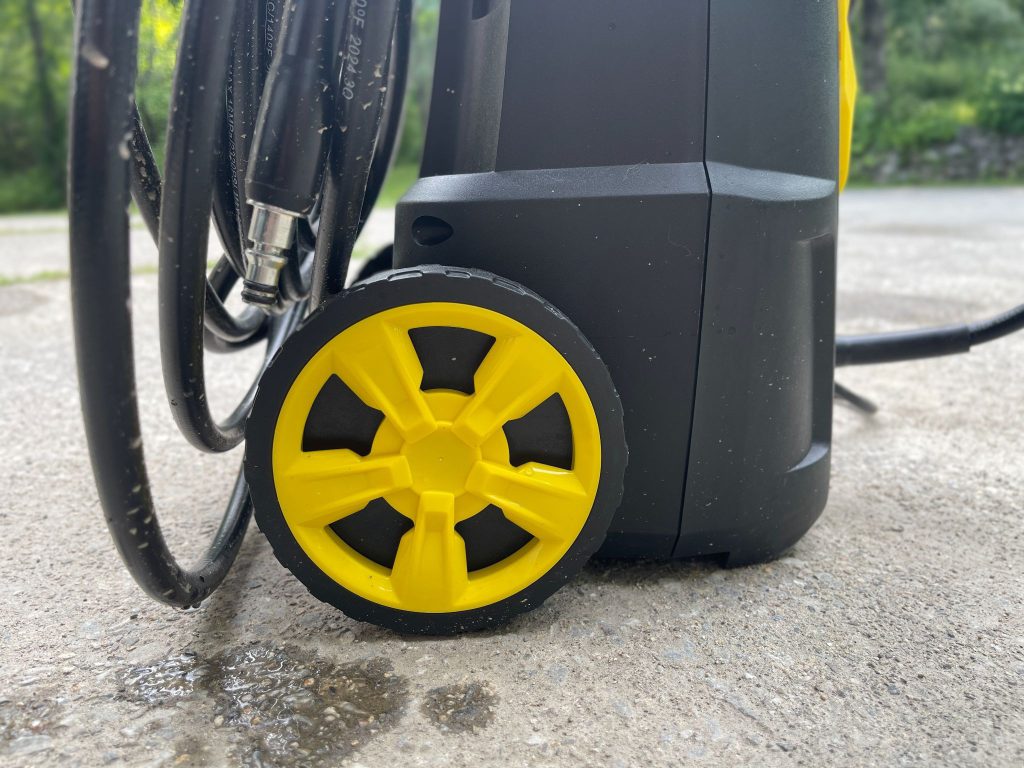
That solid feel carries into the materials. Vevor used metal in the parts that matter. The nozzles are metal, the water inlet and outlet are metal, and the garden hose connection is metal with rubber washers. Vevor even includes spare O-rings in the box. The shell is mostly PP plastic, tall and a little skinny, and light enough to carry with one hand. A few owners wish the plastic felt more heavy duty, which is fair at this price.
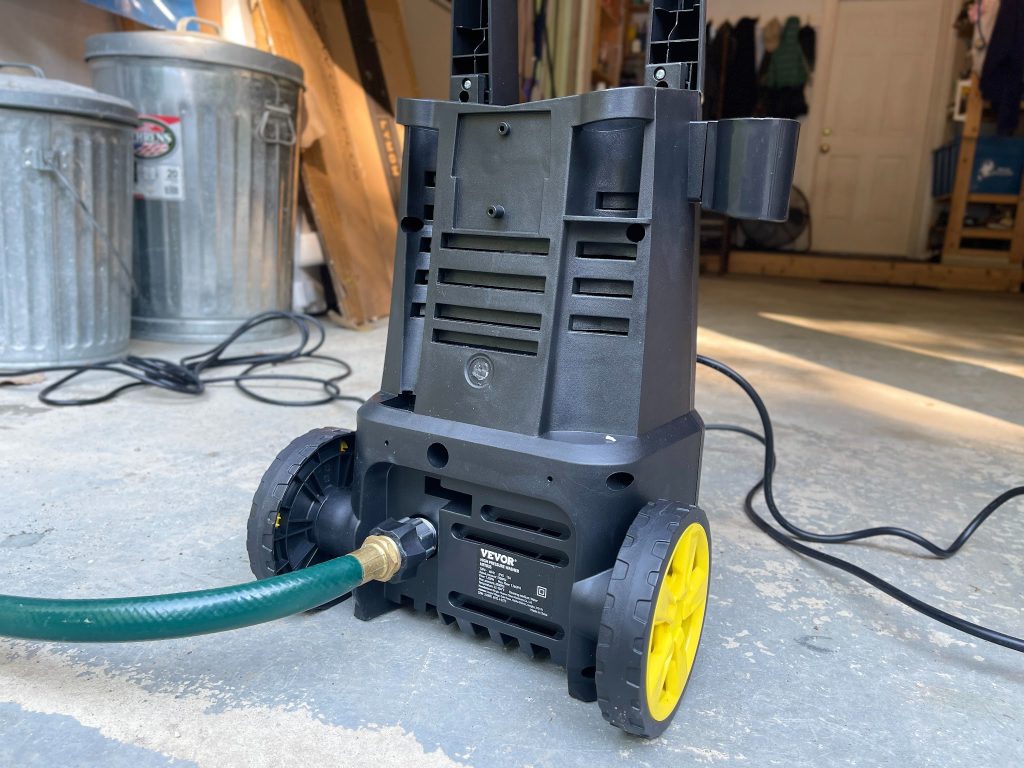
The plastic leads straight into my one real gripe with the build. The base is narrow, and the unit tips over when you reach the end of the hose and give it a tug. It never shut off when it fell during testing, and standing it back up takes a second. Set it on level ground with some hose slack and it behaves. With the build sized up, I wanted to know how it held up under real work.
How I Tested
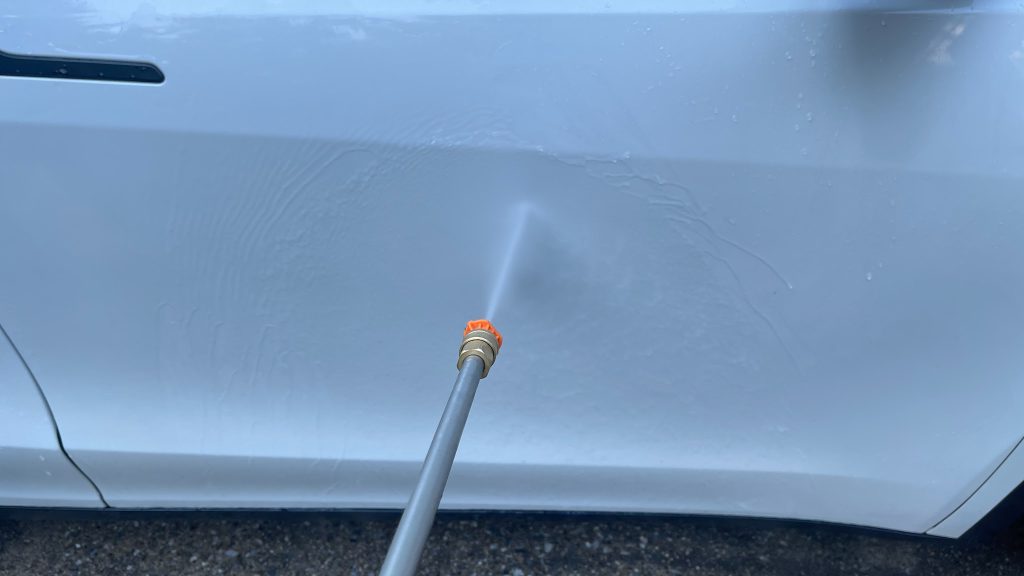
I ran the Vevor over those weeks on the jobs that stack up around my place. Patio brick, fence panels, siding, and the car. The car was the longest run. I used it for almost 30 minutes without stopping, and the machine ran clean the whole time. No overheating, no drop in pressure. A session that long shows how a washer handles heat and steady demand, and it set up everything I saw next.
Cleaning Power
The cleaning is the whole reason to buy it, and it delivers. That long car wash stripped most of the dirt and grime off the paint and trim, and the same steady pressure lifted caked patio grime, road film, and green buildup on the fence. It handled every home job I gave it. For a whole house or heavy commercial work, step up to something bigger, since a few owners found it underpowered on the hardest tasks. All that pressure reaches the surface through the nozzles, and that is where the design gets uneven.
Nozzles and the Missing Storage
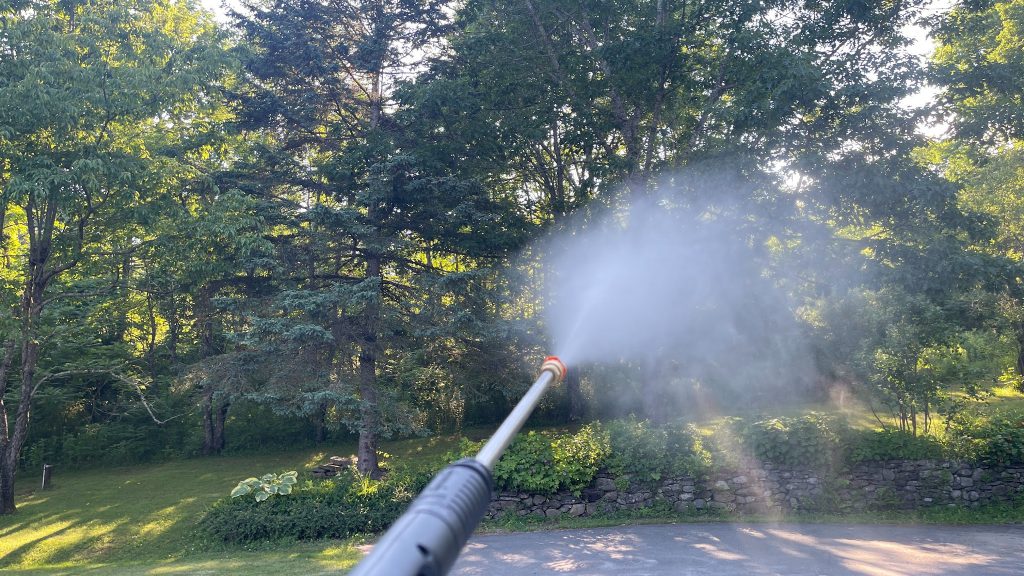
The kit includes four angled tips at 0, 15, 25, and 40 degrees, plus a turbo nozzle and a 500ml foam cannon. Those tips are your only spray control on my unit, since it has no pressure dial. Good to know before you buy: some versions do ship with a dial, so check the exact model if that feature matters to you.
The tips do their job well, which makes the next part more frustrating. The gun, cord, lance, and hose all have a home on the machine, and the four angle tips have nowhere to live. They end up loose in a drawer or a bucket. The Gadgeteer flagged the same gap on their unit. For a machine this tidy, it stands out.
The Lance and the Foam Cannon Swap
The nozzles were the easy part. The lance gave me the only real trouble. The angle tips snap into the wand and pull back out clean. The problem is the spray lance itself, the long wand that seats into the trigger gun. Mine locked in tight and would not release when I twisted and pulled.
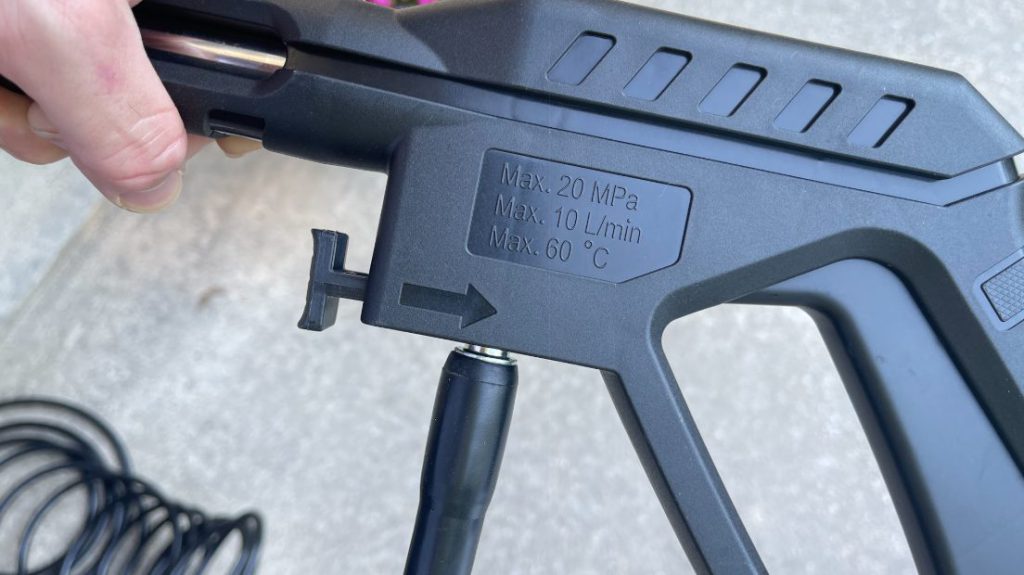
That matters more than it sounds, because the foam cannon does not attach to the lance. You pull the lance out of the gun and seat the detergent bottle in its place, so a stuck lance means no soap. Owners have asked Vevor about this exact thing, and the fix is quick. Turn the unit off, squeeze the trigger to bleed the line pressure, slide the locking collar back, then push and turn the lance to free it. Mine loosened up after that first stubborn pull.
The same fitting raises one more thing worth knowing for car folks. The gun and lance use a proprietary connector, so third-party stubby guns and fancier foam cannons will not fit. One buyer wanted that for detailing and added a Ryobi washer for his vehicles.