



Use Cases
🔦 Everyday Carry (EDC)
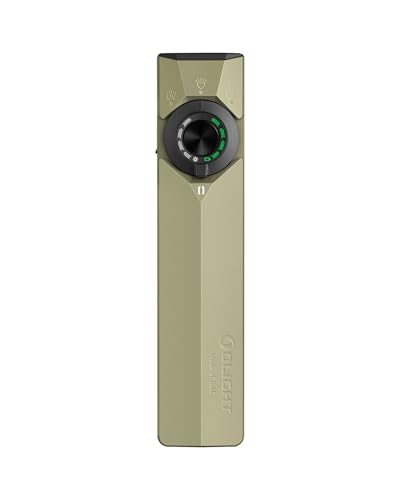
The flat 1.06″ × 4.88″ × 0.63″ profile disappears into a front pocket, the anti-roll shape keeps it off the floor, and the two-way clip mounts brim-up on a hat for hands-free use. The rotary dial makes mode switching fast and direct, no cycling through eight modes to find the one you want. At $130 it’s premium, but if you use all four modes regularly, the consolidation pays off.
🔧 Automotive & Mechanical Work
The 1,700-lumen flood, 800-lumen spot, magnetic tail cap, and UV mode for detecting fluid leaks with fluorescent dye make this a strong workshop tool. The magnetic mount holds well at roughly 2.5 lbs of force on toolboxes and door frames, though it won’t hold in vibration-heavy environments. The 67 CRI is the real knock here, electricians and painters will struggle with accurate color identification. Better for color-critical work: Acebeam E70 Mini or Convoy S21D, both offer 90+ CRI output for similar or lower cost.
🔬 Pest Control & Sanitation Inspection
The 365nm UV LED with dual-intensity modes produces strong output with minimal visible light contamination, which separates it from budget UV lights that wash everything in purple. Pest control operators, HVAC techs, and hotel inspectors all get what they need in one tool. The focused beam limits wide-area coverage, but for targeted inspection it’s excellent. Better for wide-area UV scanning: A dedicated 51-LED UV blacklight wand at $15-25 covers more surface area at once.
🏕️ Camping & Outdoor Use
Flood mode handles tent and task lighting well, the spotlight reaches 205 meters for trail scanning, and IPX7 waterproofing handles rain without issue. The non-removable 2,000mAh battery is the limiting factor on multi-day trips. Runtime on medium flood is solid for car camping and weekend use, but backcountry expeditions need swappable cells. Better for multi-day trips: Fenix PD36R Pro or ThruNite TC20 V2, both use removable 21700 cells for field-swappable runtime.
📊 Professional Presentations & Pointing
The Class 3R green laser is visible up to half a mile and works in daylight where red lasers fail. You can run it simultaneously with any light mode, which is useful on job sites. The ergonomics are the problem, holding a flashlight to point at a ceiling or whiteboard for 45 minutes is awkward and tiring. Better for presentations: Logitech Spotlight or any dedicated wireless presenter runs $40-100 and is built for the job.
💵 Currency & ID Authentication
The clean 365nm wavelength and low visible light contamination make this one of the better UV authentication tools in any multi-function EDC light. It reliably illuminates security threads, fluorescent inks, and watermarks on currency and IDs. Retailers, bouncers, and event staff who also want a primary flashlight will find this combination practical rather than gimmicky.
🚨 Home Emergency & Preparedness
It’s bright, waterproof, durable, charges via USB-C off any power bank, and the lockout mode prevents accidental battery drain in a go-bag. The integrated battery is the concern here. If it’s been sitting in a drawer for two years without a top-off charge, you can’t pop in a fresh cell. For a dedicated emergency light, that’s a real risk. Better for emergency prep: Streamlight MicroStream USB or Fenix E12 V2, both use replaceable cells you can find anywhere.
💰 Value
At $130, the ArkPro Ultra is the premium option in a category where you can spend a lot less and still get a capable light. The Wurkkos HD01 Pro does UV, laser, flood, and even throws in an RGB side bar for around $45. The Nitecore EDC17 covers similar multi-mode territory for about $65. On paper, those alternatives look like obvious wins. In practice, the gap between them and the ArkPro Ultra is real, and it shows up exactly where it matters most.
The Wurkkos is a genuinely good light for the money, but its two-button interface is confusing enough that experienced flashlight reviewers still fumble it. The build quality is noticeably softer, the waterproofing stops at IP65 versus the ArkPro Ultra’s IPX7, and there are documented reports of overheating. The Nitecore EDC17 is cleaner, but it ships with a smaller 1,500mAh battery, no magnetic mounting, and similarly weak CRI. Neither alternative comes close on build quality or control design.
Think of it like buying a Swiss Army knife. You can get one for $15 that has a blade, scissors, and a screwdriver. It works. Or you can spend $80 on a Victorinox and notice the difference every single time you use it, in how it opens, how it holds up, and how it feels in your hand after five years. The ArkPro Ultra is the Victorinox of multi-function EDC lights. You’re not just paying for the features. You’re paying for the execution.
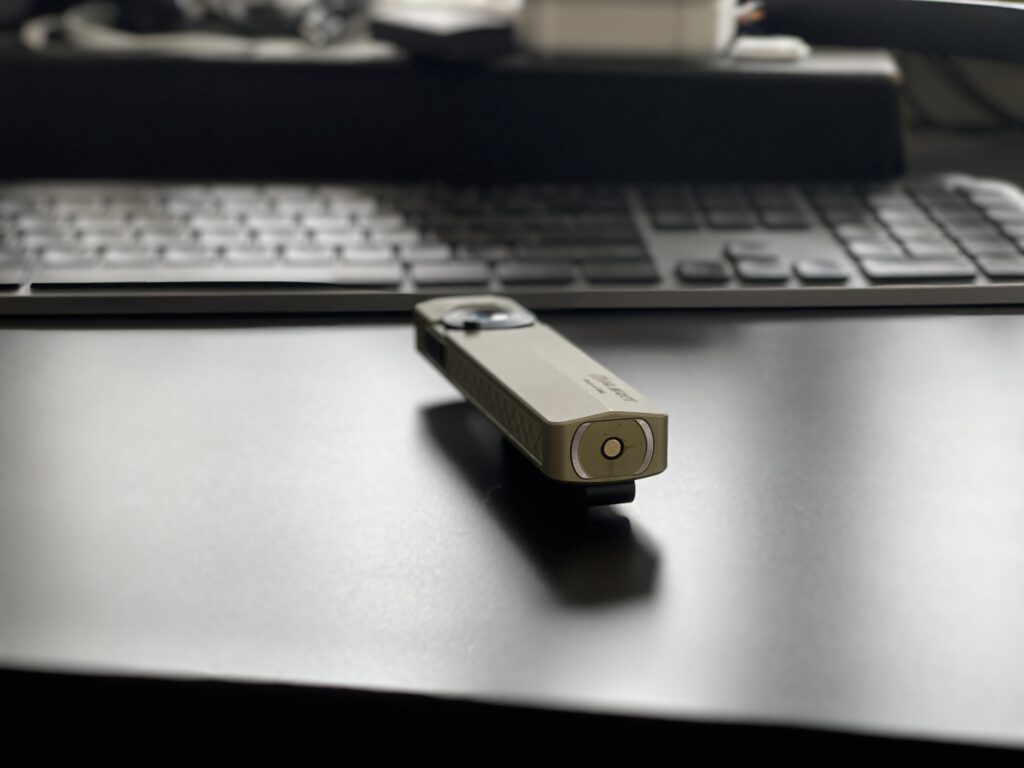
Across seven use cases, the ArkPro Ultra scores 7 or higher on six of them. No comparable light in this price range covers that many scenarios at that level of quality. The $85 premium over the Wurkkos buys you a meaningfully better interface, stronger waterproofing, superior UV output, a lifetime warranty, and a build that survives concrete drops without drama. For anyone who will actually use two or more of its functions regularly, that premium is easy to justify. If you’re a one-mode user who just needs a bright light that turns on, spend $50 and move on.
🎛️ Ease of Use
Most flashlights punish you for trying to switch modes in the dark. You end up clicking through strobe, SOS, and three brightness levels you didn’t want just to get back to the one you need. The ArkPro Ultra solves this with a rotary dial that snaps directly to flood, spot, or UV. Turn it, done. No memorizing click patterns. No accidental strobes at 2am.
The learning curve is about 30 seconds. The main button turns it on and off, press and hold to adjust brightness, double-click for turbo. The laser has its own dedicated button on the side so you never accidentally fire it while reaching for the light. First-time users figure this out without reading the manual, which says a lot.
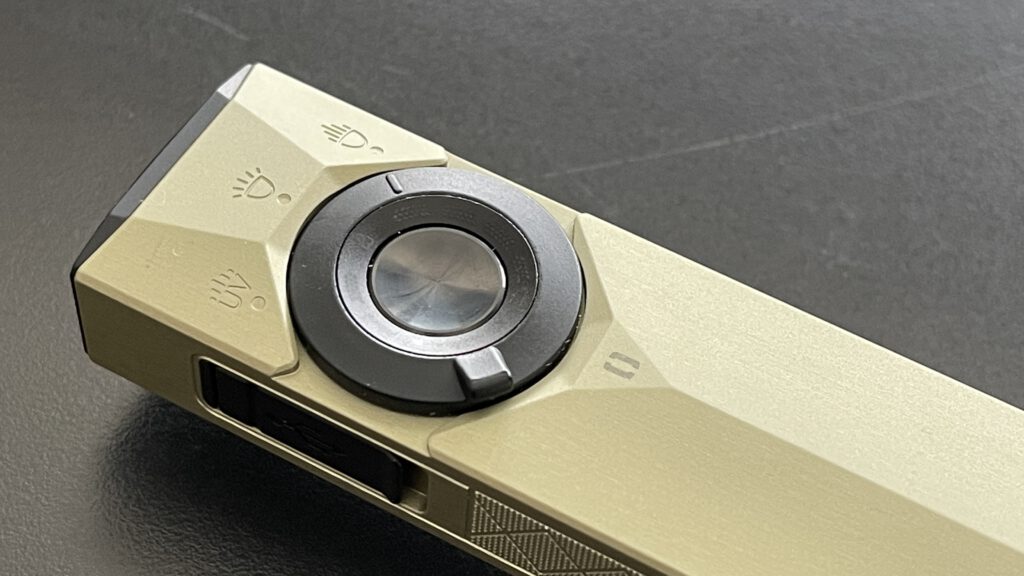
That said, there is one quirk worth knowing. Turbo locks out once the battery drops below 75% charge, so if you grab it half-charged and double-click expecting 1,700 lumens, nothing happens. Olight built this in to protect the battery and LED, but they don’t communicate it well. It will confuse you the first time it happens. Just know it going in.
This is not a light for people who want one button and one mode. If you just need something bright that turns on when you press it, the ArkPro Ultra has more controls than you’ll ever use and a price tag that reflects features you don’t need. For everyone else, the control layout is one of the best in its class.
✋ Hands-On Experience
Think of the ArkPro Ultra as the Apple of flashlights. The unibody OAL aluminum construction feels like a single machined piece, no seams, no flex, no rattles. Picking it up, you immediately notice the weight, about 4.3 oz, which is heavier than you’d expect for something this small. That weight is not a problem though, it actually signals quality. It feels dense and premium in a way that cheap lights simply don’t.
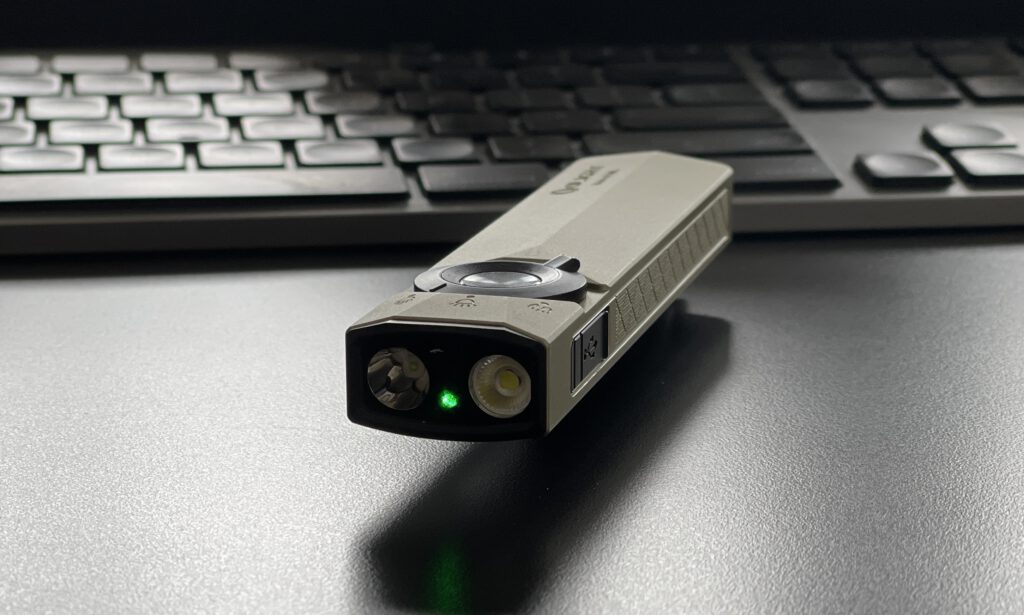
The controls are the best part of using this light day to day. Most flashlights make you cycle through modes by clicking a button over and over until you land on the one you want. The ArkPro Ultra has a rotary dial that snaps directly to flood, spot, or UV. Turn it, done. Double-click for turbo. It takes about 30 seconds to learn and becomes completely natural after that.
The brightness is legitimately impressive for a light this thin. This is not a novelty flashlight you pull out to show people. It’s genuinely bright enough to be your primary tool in dark environments, and the flood mode delivers a wide, even spread that lights up a room or an engine bay without hotspots.
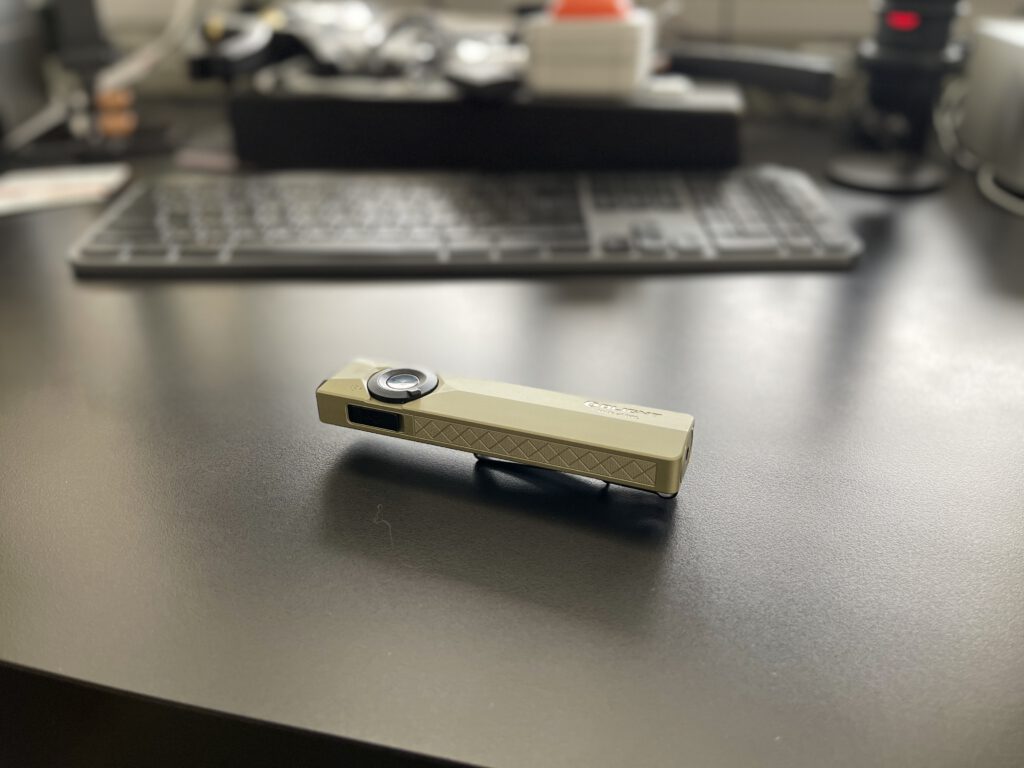
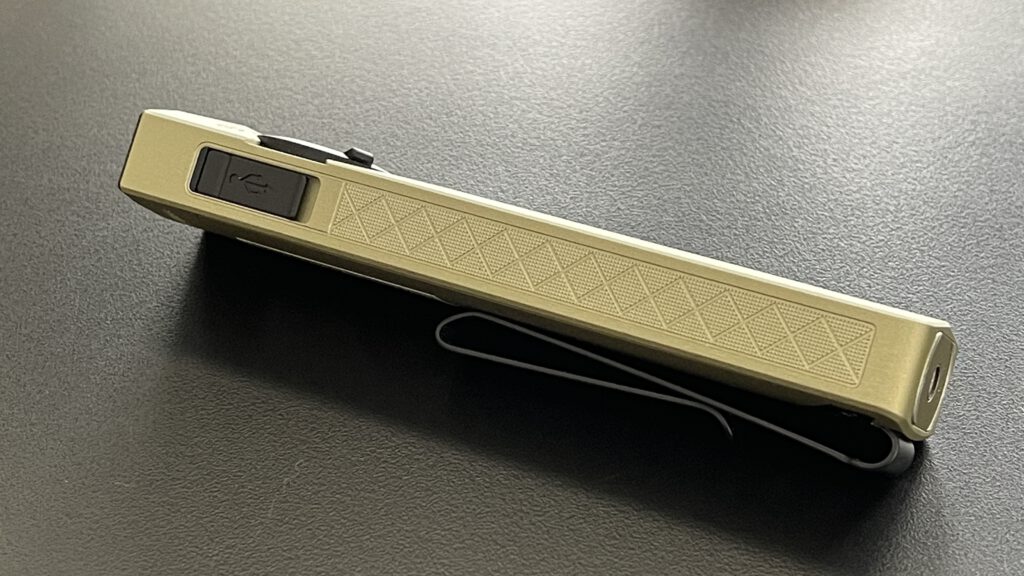
The magnetic tail cap is one of the most practical features on the light. Stick it to a toolbox, a car door frame, or any metal surface and it holds. It doubles as the magnetic charging connection, which is clever design. The USB-C port on the side is the more useful charger in practice, especially when traveling with a cable you already own. From flat, it charges in about 90 minutes.
One note: keep the laser away from kids. It’s a Class 3R green laser, visible in daylight at distance, and it is not a toy. For the average person it’s a nice bonus. For job site workers, teachers, or anyone who regularly points at things from a distance, it’s genuinely practical.