Federal agencies are finally catching up on body-worn cameras. Recent reporting shows many federal officers still lack bodycams despite years of funding debates and policy discussions, while local police departments have been using them for over a decade.
The gap isn’t about technology availability—it’s about procurement, policy, and deployment at scale. These cameras exist across every price point and feature set, from $44 backup units to $740 enterprise systems with evidence management integration.
This list covers options worth considering for federal deployment, starting with practical baseline choices and moving up to professional-grade equipment designed for long-term departmental use.
MyGekoGear Aegis 110 1080P HD Body Cam
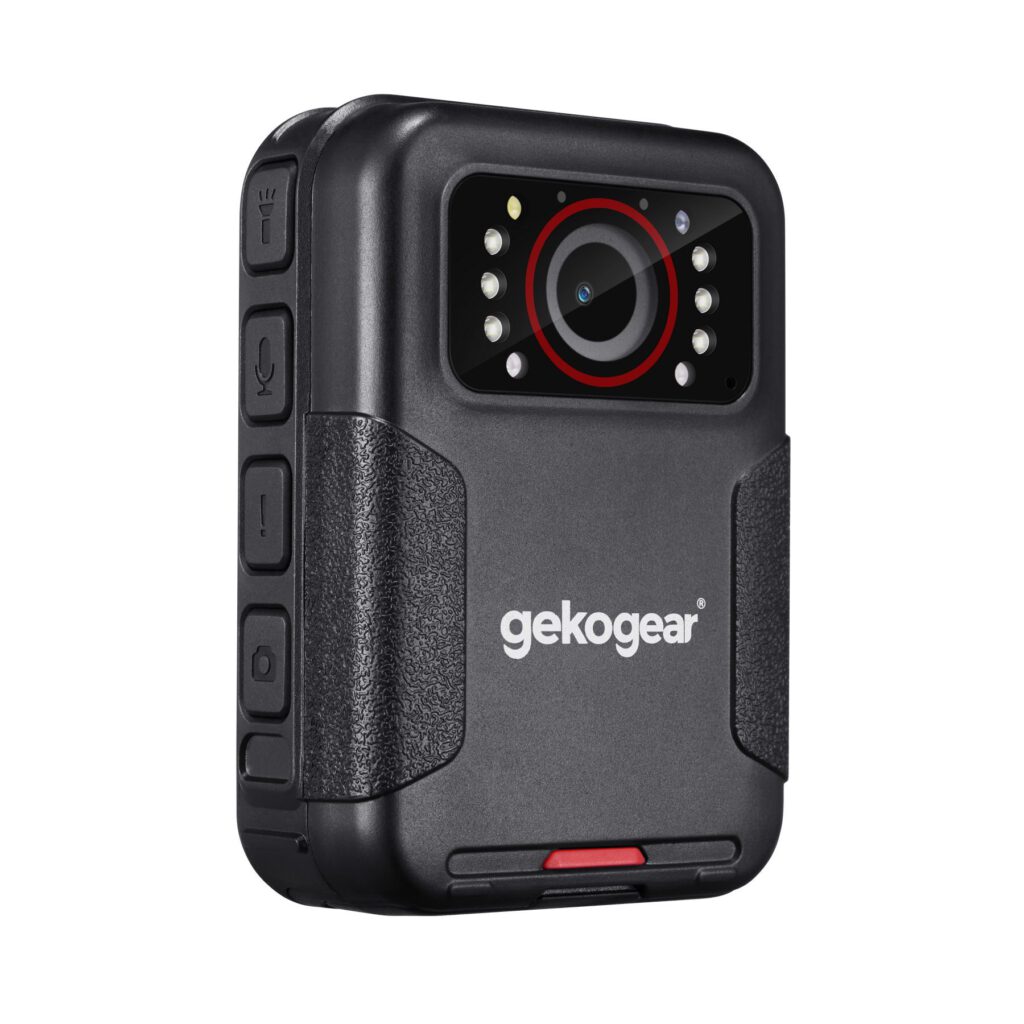
The Aegis 110 hits the sweet spot for pilot programs and broad outfitting where budget matters but reliability can’t be sacrificed. It records 1080p Full HD with a 110-degree wide-angle lens that captures enough peripheral activity to provide useful context in most situations.
Battery life runs up to 10 hours of continuous recording, which covers a full shift without needing a swap or recharge. The built-in 64GB storage handles roughly 8-10 hours of footage before loop recording kicks in and overwrites the oldest files. That’s enough capacity for daily use without constant data offloads.
Infrared night vision works in low-light conditions, and the IP65 weather-resistant rating means rain and dust won’t kill the unit during outdoor operations. Password protection keeps footage secure, and the built-in LCD screen allows officers to review recordings on-device without needing to connect to a computer.
This isn’t trying to compete with $600 enterprise cameras on features—it’s delivering the core functionality federal agencies need at a price point that makes department-wide deployment financially realistic. For agencies testing bodycam programs or outfitting divisions that don’t require advanced evidence management integration, the Aegis 110 provides reliable documentation without breaking procurement budgets.
Best for: Pilot programs, broad deployment where cost per unit matters, agencies testing bodycam policies before committing to expensive enterprise systems.
VEVOR 1440P HD Police Body Camera
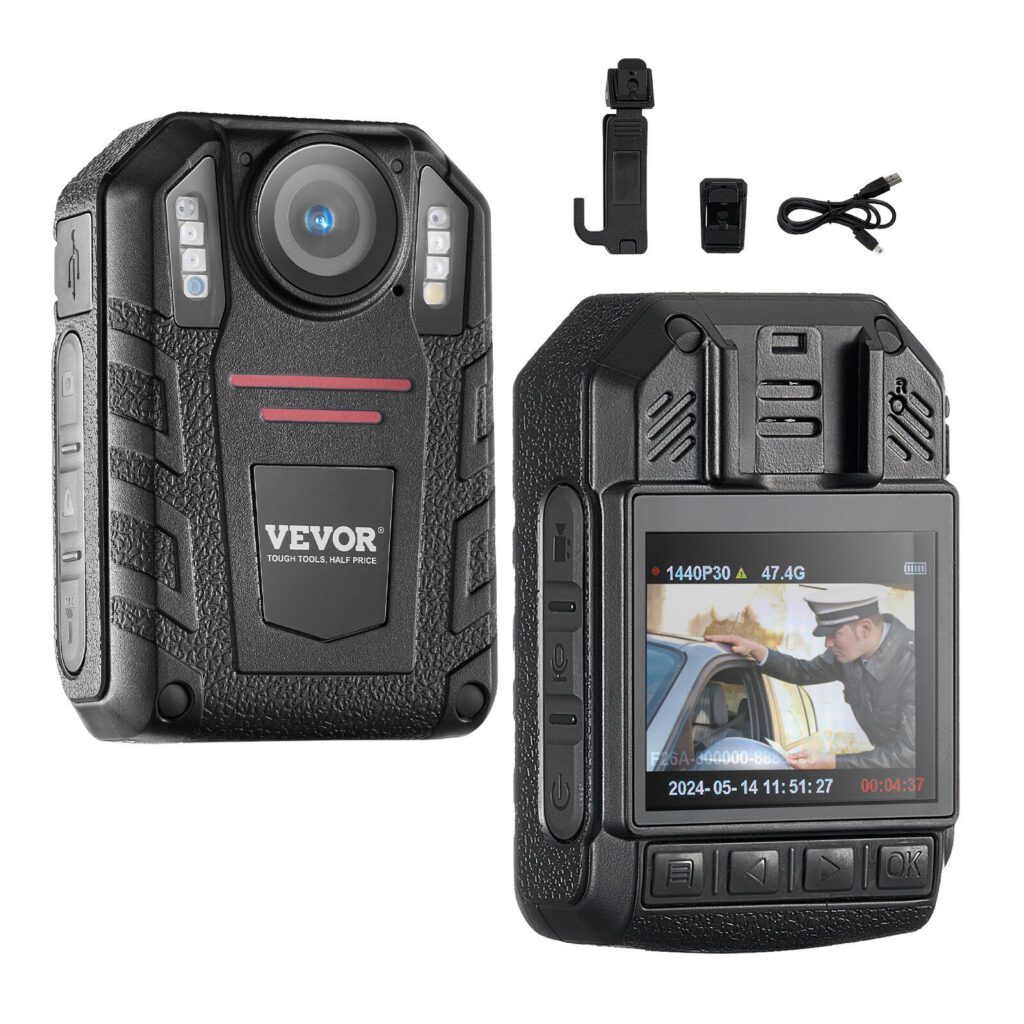
The VEVOR bumps resolution to 1440p while staying under $100, which gives you noticeably sharper footage than 1080p cameras when zooming in on details like license plates or facial features. The extra pixels matter during evidence review when prosecutors need to identify specific details.
Night vision and long battery life match what you get from pricier units, and user reviews consistently mention reliability across extended use. The build quality feels solid without the premium materials you’d find on cameras costing three times as much.
Controls are straightforward enough that officers don’t need extensive training to operate it, and the mounting clip works with standard uniform configurations. Storage capacity handles a full shift before needing to offload footage.
Best for: Agencies wanting better-than-baseline resolution without spending significantly more, departments where evidence clarity justifies the modest price increase over 1080p options.
Transcend DrivePro Body 70 2K Body Camera
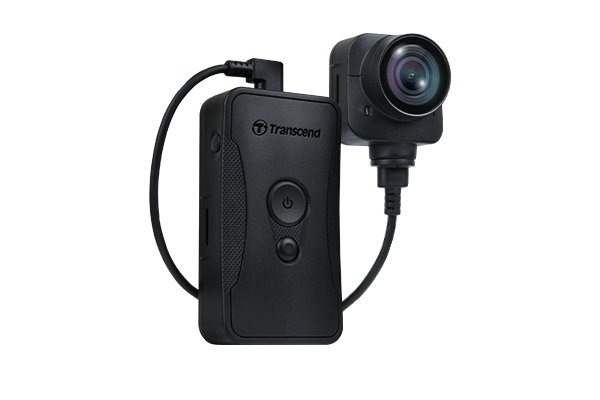
Transcend builds this camera for rough use with a tethered control unit that separates the recording trigger from the camera body itself. That design choice reduces fumbling with the camera during critical moments—officers hit the large control button clipped separately on their uniform instead of reaching for the camera mounted on their chest.
2K QHD resolution delivers sharp footage that holds up during courtroom presentation, and wireless data preview lets supervisors check footage without physically collecting the camera. The wireless transfer feature speeds up evidence workflows by eliminating the cable-and-dock routine at the end of every shift.
The rugged construction handles drops and impacts better than cheaper plastic-bodied cameras, which matters for federal officers working in challenging environments where equipment takes abuse. Battery performance supports extended shifts, and the storage capacity matches what you’d expect at this price point.
Best for: Agencies prioritizing ease of use and wireless evidence workflows, departments where officers need separation between recording controls and camera body for operational reasons.
PatrolEyes 1296p HD GPS Auto IR Night Vision Police Body Camera
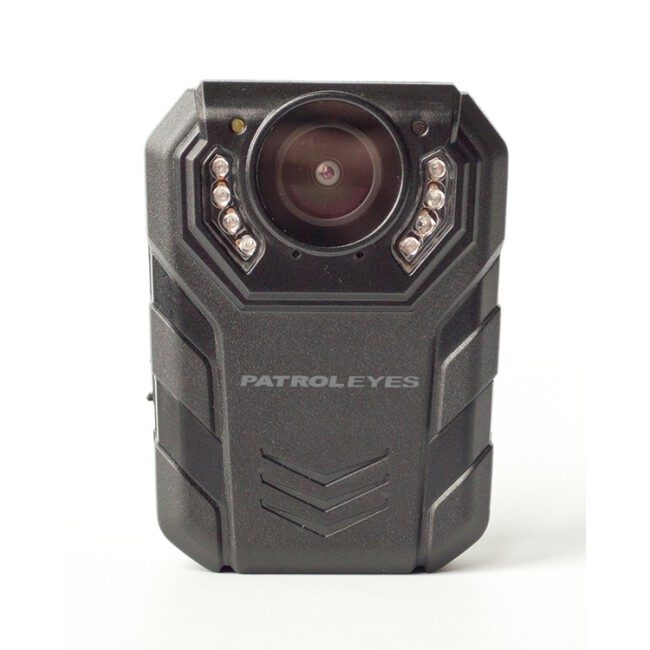
GPS logging sets this camera apart by tagging every recording with location data, which becomes critical evidence when timeline and position matter. The GPS metadata proves where officers were during incidents without relying on dispatch logs or officer testimony alone.
Automatic IR night vision switches on without manual intervention when ambient light drops below a threshold, so officers don’t need to remember to activate it when moving from daylight into dark buildings or starting night shifts. The 1296p resolution splits the difference between 1080p and 1440p while keeping file sizes manageable for departments without unlimited storage infrastructure.
The patrol-specific design shows in detail like the mounting options and control layout, which assume the camera will be worn during vehicle operations and foot pursuits. Battery life supports full shifts, and the weather resistance handles the conditions federal officers encounter during outdoor operations.
Best for: Agencies needing GPS-tagged evidence, patrol operations where location data adds evidentiary value, departments wanting automatic night vision without officer intervention.
Aolbea 1440P QHD Police Body Camera
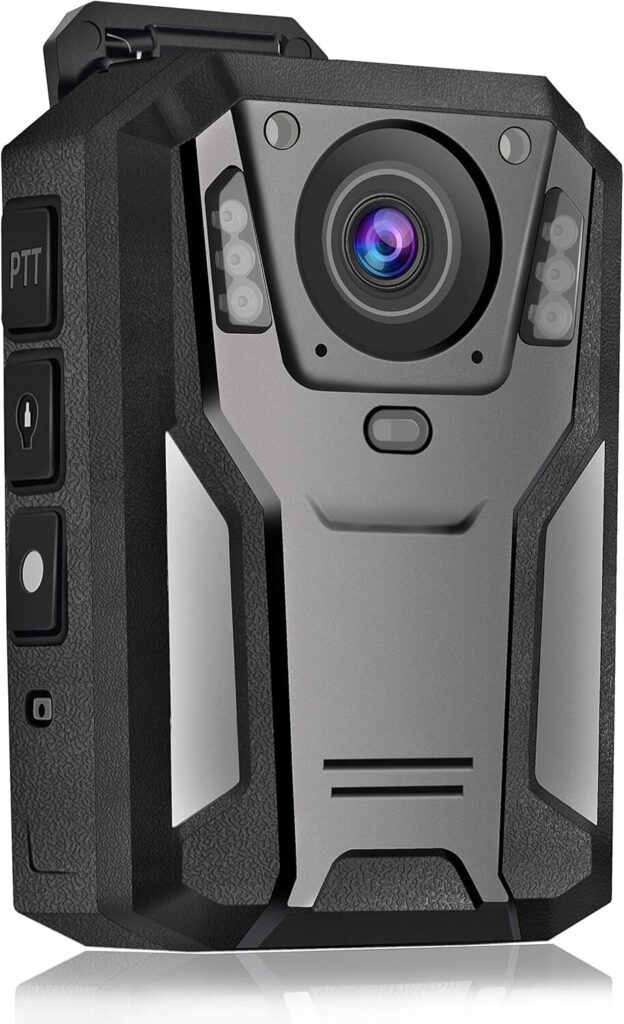
Another budget-friendly 1440p option that delivers higher resolution without premium pricing. The infrared night vision and durable construction match what cameras twice the price offer, and the straightforward operation means minimal training time for officers.
Build quality feels solid for the price, with weather resistance that protects the internals from rain and dust exposure. The mounting system works with standard uniform configurations, and the battery supports extended recording sessions without needing mid-shift recharges.
Storage capacity and loop recording handle daily use without constant data management, though departments will need to establish regular offload schedules to preserve important footage before it gets overwritten. The price makes this viable for departments outfitting large numbers of officers, where per-unit cost determines feasibility.
Best for: Large-scale deployments where quantity matters as much as quality, agencies with tight budgets that still want 1440p resolution for evidence clarity.
WA7-D Body Worn Camera
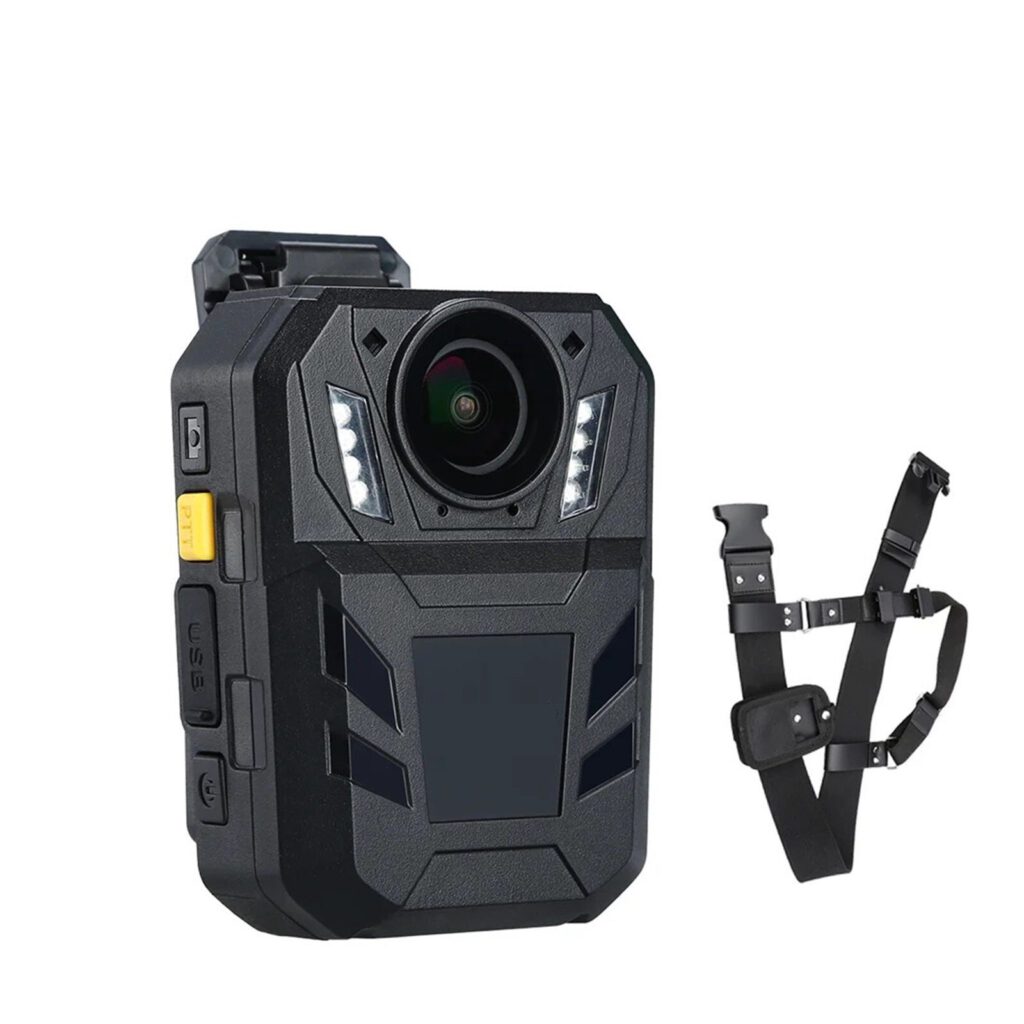
A mid-range bodycam that delivers HD capture quality without standout features that justify detailed analysis. It works for straightforward documentation needs where agencies want reliable recording without advanced capabilities like GPS logging or wireless transfer.
The construction handles normal field use, battery life covers standard shifts, and the recording quality provides usable evidence for most situations. Nothing about this camera excels, but nothing fails either—it’s a dependable workhorse option for agencies that need basic bodycam functionality at a reasonable price.
Best for: Departments wanting straightforward recording capability without paying for features they won’t use, agencies prioritizing simplicity over advanced functionality.
A2 Law Enforcement Bodycam Chest Recorder
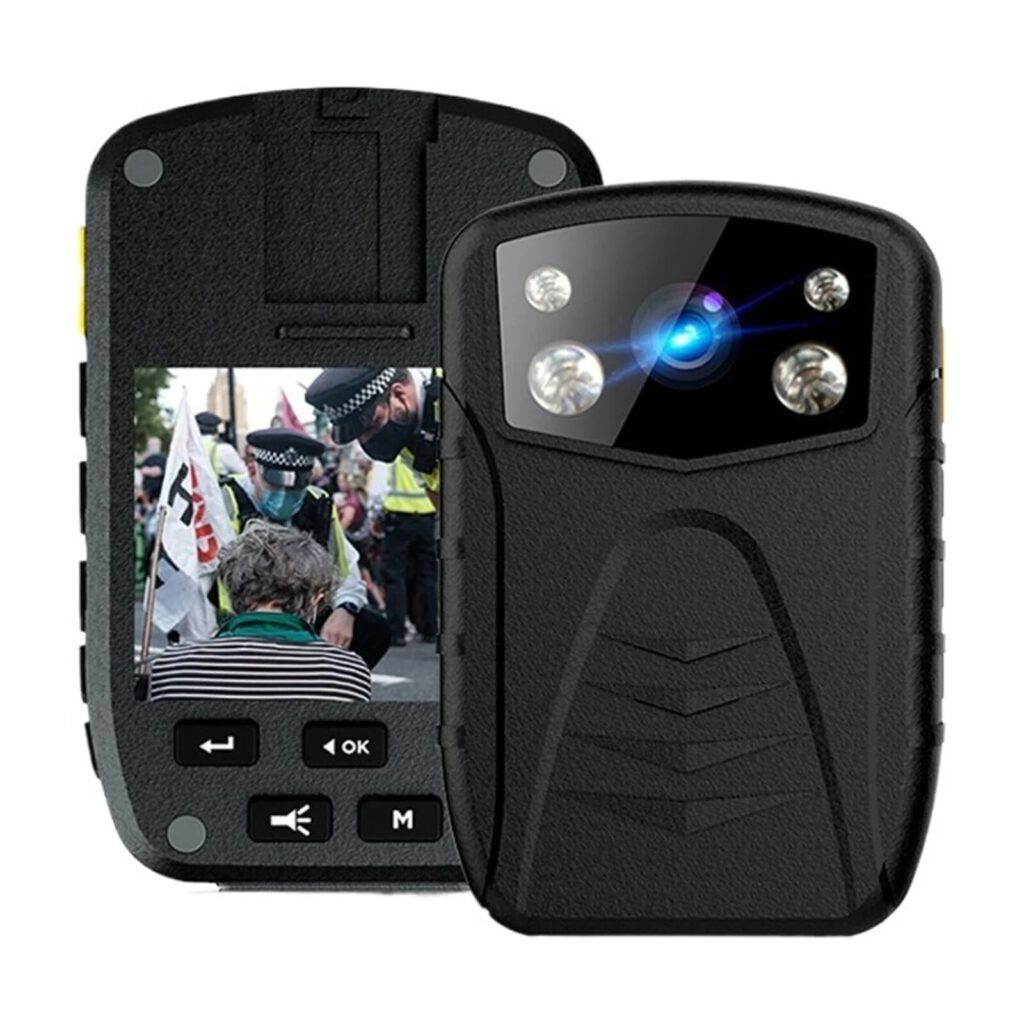
An affordable chest-mounted recorder designed for basic recording needs without advanced features. The weather-resistant construction protects against environmental exposure, and the chest mounting position provides stable footage during movement.
Recording quality covers basic documentation requirements, though don’t expect the clarity you’d get from higher-resolution cameras when zooming in on distant details. Battery life supports standard shifts, and the straightforward controls mean officers can start recording without complicated button sequences.
The low price makes this viable for backup units or trial programs where agencies want to test bodycam integration before committing significant budget to premium equipment. It won’t replace professional-grade cameras for primary use, but it serves specific needs where cost constraints override feature requirements.
Best for: Backup units, trial programs with minimal budget, agencies testing bodycam viability before investing in professional equipment.
SpyWFI Mini Rechargeable Night Vision Police Body Camera
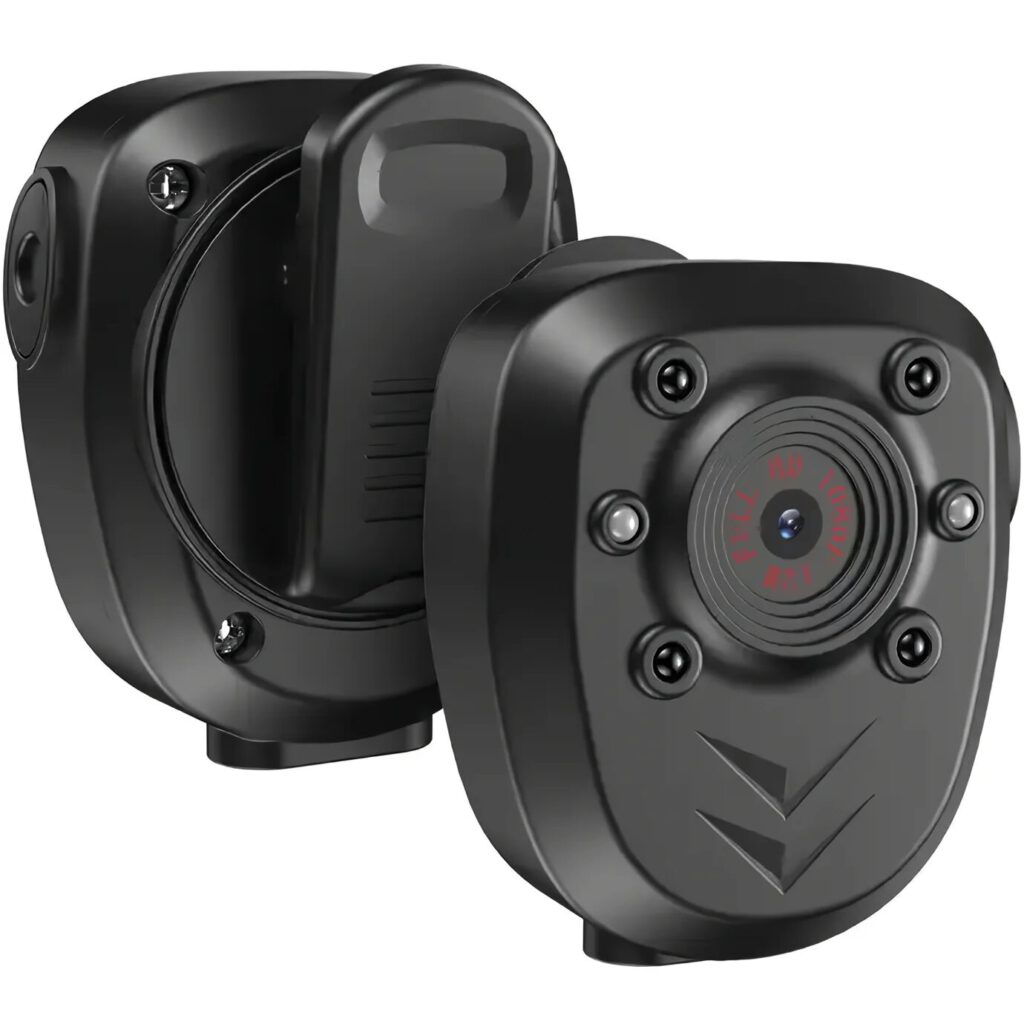
The budget option that proves bodycams don’t require triple-digit pricing to function. At $44, this mini camera delivers night vision and basic recording in a compact package that works as a backup unit or trial device for agencies exploring bodycam programs.
Recording quality and battery life won’t match what cameras costing 5-10 times as much deliver, but it captures usable footage for documentation purposes. The compact size makes it easy to wear without the bulk of larger professional cameras, though that small form factor comes with reduced battery capacity and storage.
This isn’t equipment for primary deployment across a department—it’s a backup option for officers who need redundancy or a trial unit for agencies testing bodycam policies on limited budget. The night vision feature at this price point is notable and makes it more capable than you’d expect from sub-$50 equipment.
Best for: Backup cameras for officers carrying primary equipment, trial units for policy testing, and agencies with severe budget constraints exploring bodycam viability.
AXIS W110 Body Worn Camera
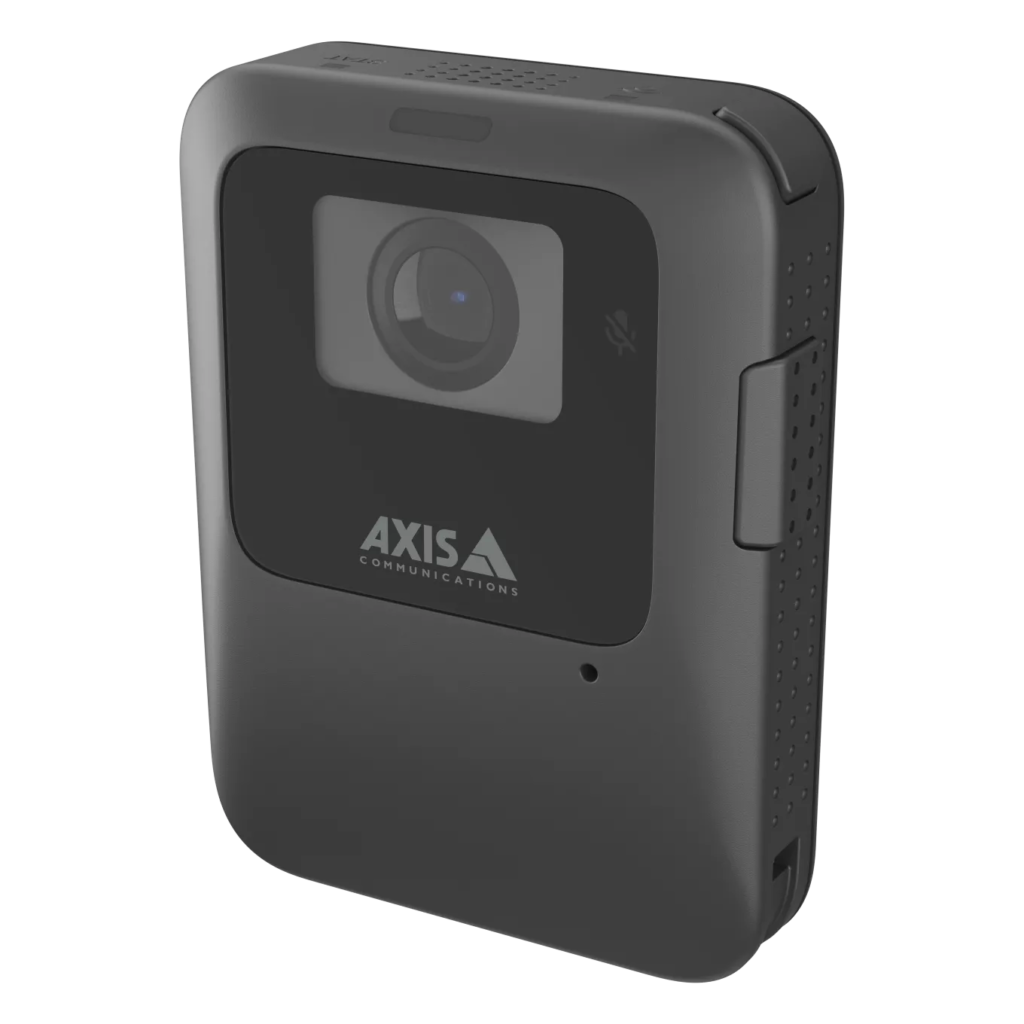
This is professional equipment designed for departmental deployment where reliability, evidence quality, and integration with existing systems matter more than per-unit cost. AXIS builds security and surveillance equipment for enterprise customers, and that expertise shows in the W110’s construction and features.
Imaging quality exceeds what budget cameras deliver, with better low-light performance and dynamic range that preserves detail in challenging lighting conditions. The enterprise features include secure evidence workflows, integration with evidence management systems, and durability that supports years of daily use without degradation.
The camera connects to AXIS’s broader evidence management ecosystem, which matters for departments managing footage from dozens or hundreds of officers. Wireless offloading, secure cloud storage integration, and automated retention policies reduce the manual work required to maintain the chain of custody for evidence.
Build quality justifies the premium pricing—this camera is engineered for sustained professional use where failure isn’t acceptable, and evidence integrity is paramount. Federal agencies deploying bodycams long-term will find the investment worthwhile compared to replacing cheaper cameras every 18-24 months.
Best for: Departmental deployment where evidence management integration matters, agencies prioritizing long-term reliability over initial cost,and federal operations requiring enterprise-grade equipment.
Motorola VT100 Body Worn Camera
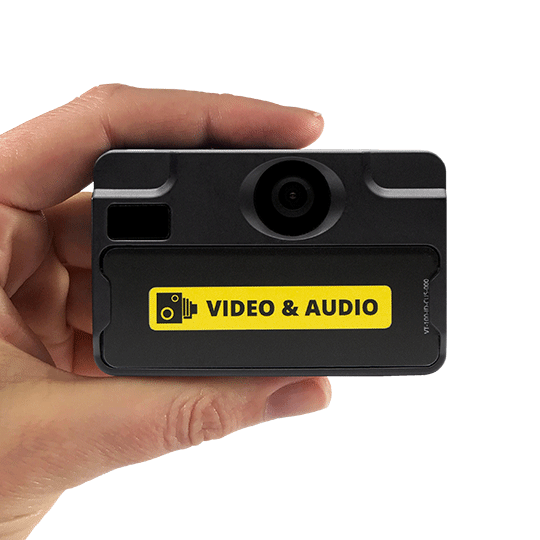
Motorola’s law enforcement technology expertise translates to proven field reliability in the VT100. This camera is built for extended duty cycles where officers depend on equipment working correctly every shift without maintenance issues or failures.
Recording quality, battery life, and durability match what federal agencies need for professional deployment. The camera integrates with Motorola’s evidence management systems, which streamlines workflows for departments already using Motorola equipment or planning comprehensive evidence management implementation.
The trusted brand behind this camera matters for procurement officers navigating federal buying processes and for departments needing vendor support that extends beyond the initial purchase. Motorola’s law enforcement presence means parts availability, firmware updates, and technical support that budget camera manufacturers can’t match.
Field reliability shows in design details that address real operational needs rather than checking feature boxes. Controls work with gloved hands. Mounting systems accommodate different uniform configurations. Battery performance supports shifts that run longer than scheduled without leaving officers with dead cameras.
Best for: Agencies wanting proven reliability from an established law enforcement equipment provider, departments planning long-term bodycam programs with vendor support requirements, and federal operations where equipment failure creates unacceptable risk.
CANARMOR Police Body Cam
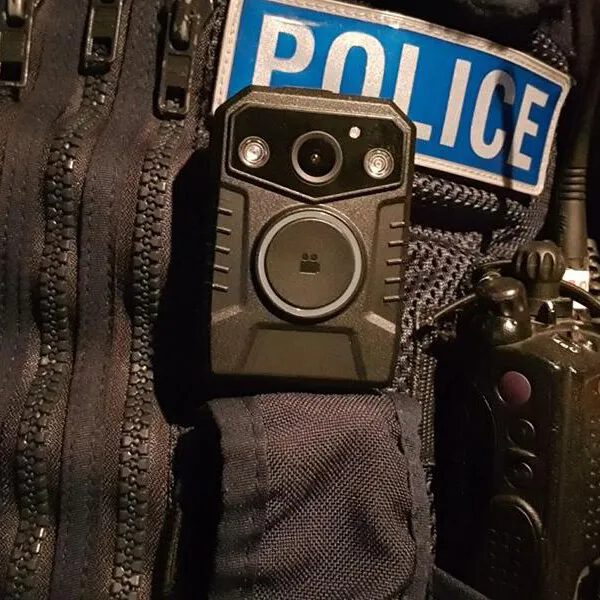
The premium option with rugged construction, designed for harsh conditions and high-definition capture that preserves evidence quality even when zooming deep into footage during investigation. Multiple storage options and advanced features justify the price for agencies prioritizing capability over cost.
The construction handles extreme conditions that would damage cheaper cameras—significant impacts, temperature extremes, and sustained moisture exposure. That durability matters for federal officers working in challenging environments where equipment protection isn’t always possible and replacement creates operational gaps.
Storage flexibility allows departments to configure the camera for their specific needs, whether that means extended recording time, higher bitrates for maximum quality, or redundant storage for critical operations. The advanced features include better low-light performance, wider dynamic range, and superior audio capture compared to budget and mid-range options.
This represents the top end of bodycam capability before moving into specialized equipment for tactical operations. Federal agencies with budget flexibility and demanding operational requirements will find that CANARMOR delivers performance that cheaper cameras can’t match.
Best for: Operations in harsh environments requiring maximum durability, agencies where evidence quality justifies premium pricing, and federal divisions with specialized requirements beyond what mid-range cameras provide.
Police Body Camera (Martel Electronics)
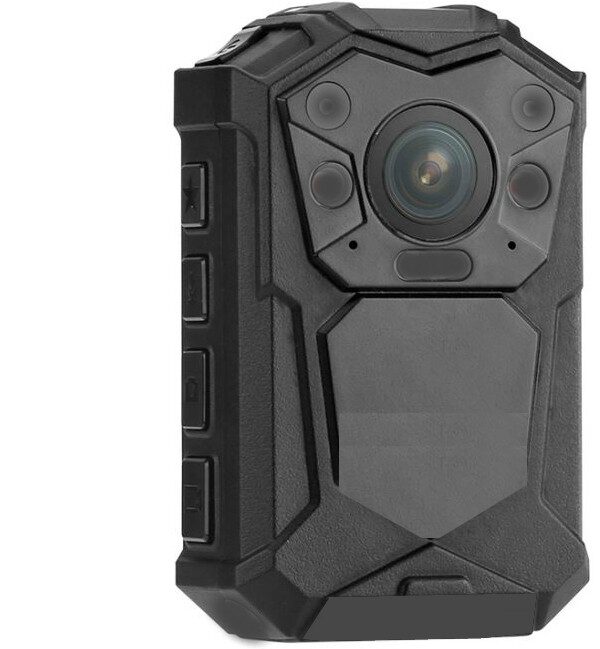
A law enforcement bodycam positioned at a higher price point without detailed specifications that explain what distinguishes it from cameras costing $200-300 less. This sits in an awkward middle ground between mid-range practical options and premium professional equipment from established vendors like AXIS and Motorola.
For departments ready to invest $500 per camera, the AXIS W110 at $629 or the Motorola VT100 at $370 provide clearer value propositions with established vendor support and proven field reliability. The Martel camera may serve specific procurement requirements or offer features not immediately obvious from available specifications.
Best for: Agencies with specific procurement requirements favoring this model, departments with established relationships with Martel Electronics, and situations where available specifications don’t capture relevant capabilities.
What Actually Matters When Choosing Bodycams
Video and audio quality determine whether footage provides useful evidence or ambiguous documentation that doesn’t hold up under scrutiny. Aim for 1080p minimum, with 1440p or higher when budget allows. Wide-angle lenses capture peripheral activity that provides context for central events.
Battery life and storage capacity must support full shifts plus overtime without requiring mid-shift attention from officers. Loop recording protects against storage-full failures but requires regular offload schedules to preserve important footage before it gets overwritten.
Durability requirements scale with operational environment—office-based investigators need less ruggedization than patrol officers working outdoors in all weather. Weather resistance ratings like IP65 or IP67 indicate protection levels against rain, dust, and impact.
Night vision and GPS represent operational enhancements that matter for specific use cases. Automatic IR night vision prevents footage gaps when officers move between light and dark environments. GPS logging provides location metadata that strengthens timeline evidence and removes disputes about officer positioning during incidents.
Data security determines whether footage maintains evidentiary integrity and protects privacy. Password protection, encrypted storage, and secure transfer protocols keep footage from unauthorized access or tampering. Evidence management system integration streamlines workflows but creates vendor lock-in that affects long-term costs.
Cameras Are Just the Starting Point
Body-worn cameras without clear use policies, officer training, and evidence management infrastructure create more problems than they solve. Footage means nothing if retention policies allow overwriting before investigations start, if officers don’t activate cameras during critical incidents, or if the chain of custody fails during evidence handling.
Real-world bodycam usage often lags behind funding and availability because policy development and training take time that equipment procurement doesn’t require. Federal agencies deploying bodycams need simultaneous investment in policy frameworks that define when recording is required, how footage gets reviewed, who can access recordings, and how long retention lasts.
The technology works. The challenge is organizational—building systems around the cameras that make footage useful rather than just creating massive archives of recorded shifts that nobody can effectively search or analyze when needed.