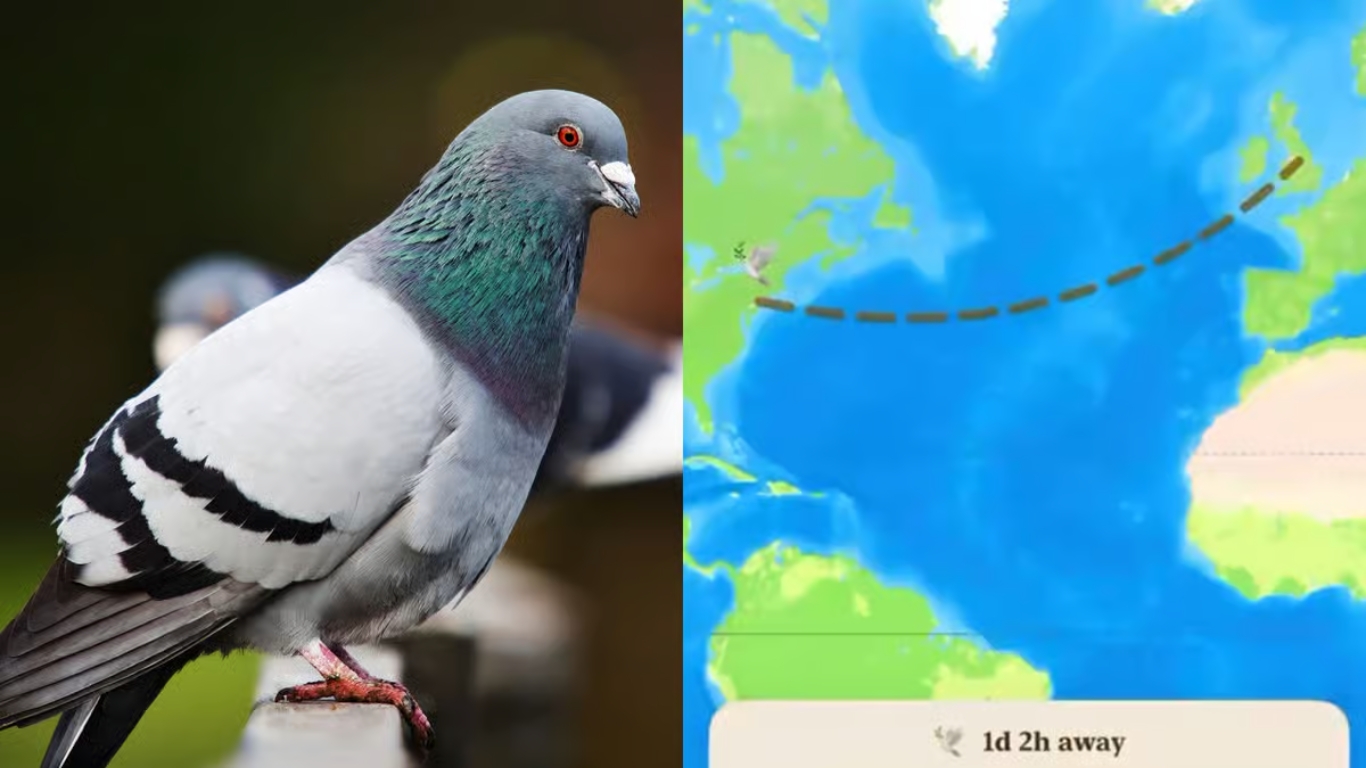
Your pigeon is somewhere over Ohio. It’s been forty minutes. Then, nothing. The bird is gone. So is your message. Welcome to Carrier Pidge, the free iOS app from developer Noah Iarrobino that replaces instant delivery with a virtual bird traveling at 110 mph — and a 0.2% chance your text simply vanishes forever.
Iarrobino built it in about three weeks, per Dexerto reporting. His own description of the product, as captured in the app’s App Store listing, is the most honest pitch in recent memory: intentionally “pointless” with “genuinely no practical use.” He’s not wrong — and that’s also not the point.
How the Bird Actually Works
Messages travel by GPS distance at real-time pigeon speed — delays, detours, and all.
Carrier Pidge calculates travel time based on actual GPS distance between you and the recipient. A nearby message might arrive in seconds. Send something cross-country and you’re waiting hours. Speed varies ±25%, so arrival is always approximate. The whole thing is trackable on a live map, which hits the same dopamine button as watching a delivery order crawl toward your building — except the stakes are lower and the bird might die.
The app’s terminology leans fully into the bit. Your contacts are a “flock.” Chats live in an “aviary.” Friend requests arrive as pigeons. The whimsy is consistent and deliberate, which is exactly what makes it work.
Here’s what you’re actually getting, free on the App Store:
- Travel speed: 110 mph, with ±25% variance
- Failure rate: 0.2% chance of permanent pigeon loss, message undelivered
- Distance-based timing: seconds locally, hours over long distances
- Real-time map tracking of your pigeon mid-flight
The Slow Social Moment This App Accidentally Documents
Roost pulled 300,000 users with the same concept — that’s not a gimmick, that’s a signal.
Carrier Pidge isn’t alone. Roost, a competitor using identical slow-delivery mechanics and live bird tracking, attracted 300,000 users within weeks of launch, according to reporting from TechCrunch. Both apps suggest the same cultural shift — people choosing friction on purpose, the way vinyl made a comeback not despite its inconvenience but because of it.
Instant messaging is frictionless. Frictionless, it turns out, can feel hollow for some users. When a competing app pulls 300,000 users by deliberately slowing communication down, that’s worth paying attention to.
The question Carrier Pidge quietly raises is genuinely uncomfortable: when did “delivered” stop feeling like enough? Voluntarily picking an app that might lose your message entirely is, at minimum, a pointed comment on what we actually want from the people we message.